Name and record the voice
Use your own voice or one with explicit consent. Record or upload at least ten seconds of clear singing; a focused 15–30 second passage usually gives useful variety without introducing unrelated production.
Train an AI voice from your own singing, then cover any song with it.
Record at least 15 seconds of your singing (up to 30 seconds), or upload a file. Clean vocals without background music work best.
Sign in to see your cloned voices.
Authorized singing voice model
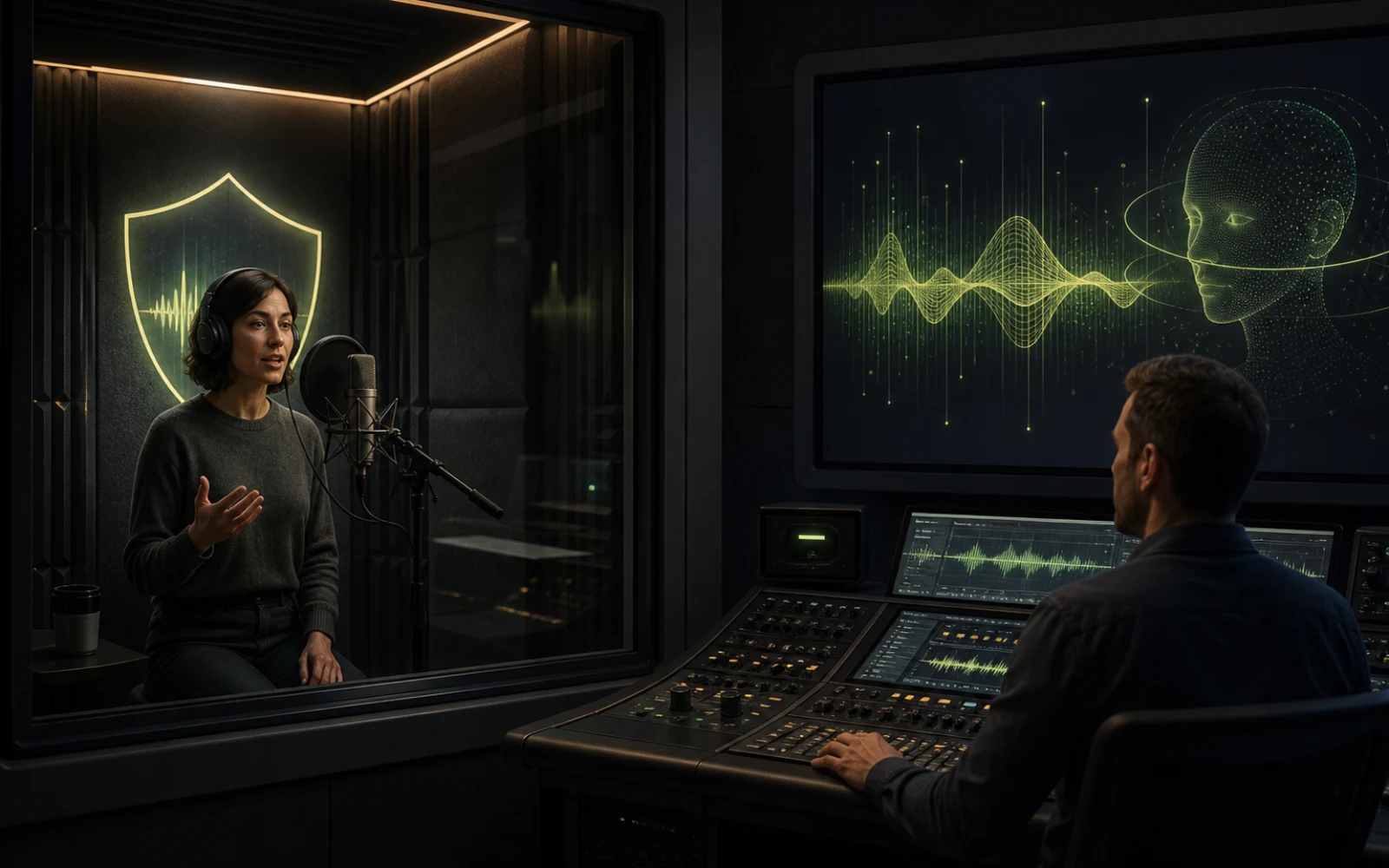
AI voice cloning creates a reusable voice model from recordings of a real person. In Creatune, the workflow is designed around singing: you provide a clean sample, the system analyzes it, you sing a generated verification phrase, and the model is trained after that verification succeeds. The saved voice can then appear in compatible cover and music workflows.
A voice clone is not the same as a single generated vocal take. It represents vocal identity—tone, resonance, articulation, and other patterns—while the later song workflow determines melody, lyrics, delivery, and arrangement. It is also not permission to imitate someone. Only clone your own voice or a voice whose owner has given explicit authorization for this exact use.
The quality of the input matters because the system can learn room noise, backing music, clipping, and effects along with the intended voice. A short, clean singing sample in a consistent register is more useful than a polished full mix. Verification adds an important boundary by requiring a fresh phrase rather than relying only on a previously uploaded recording.
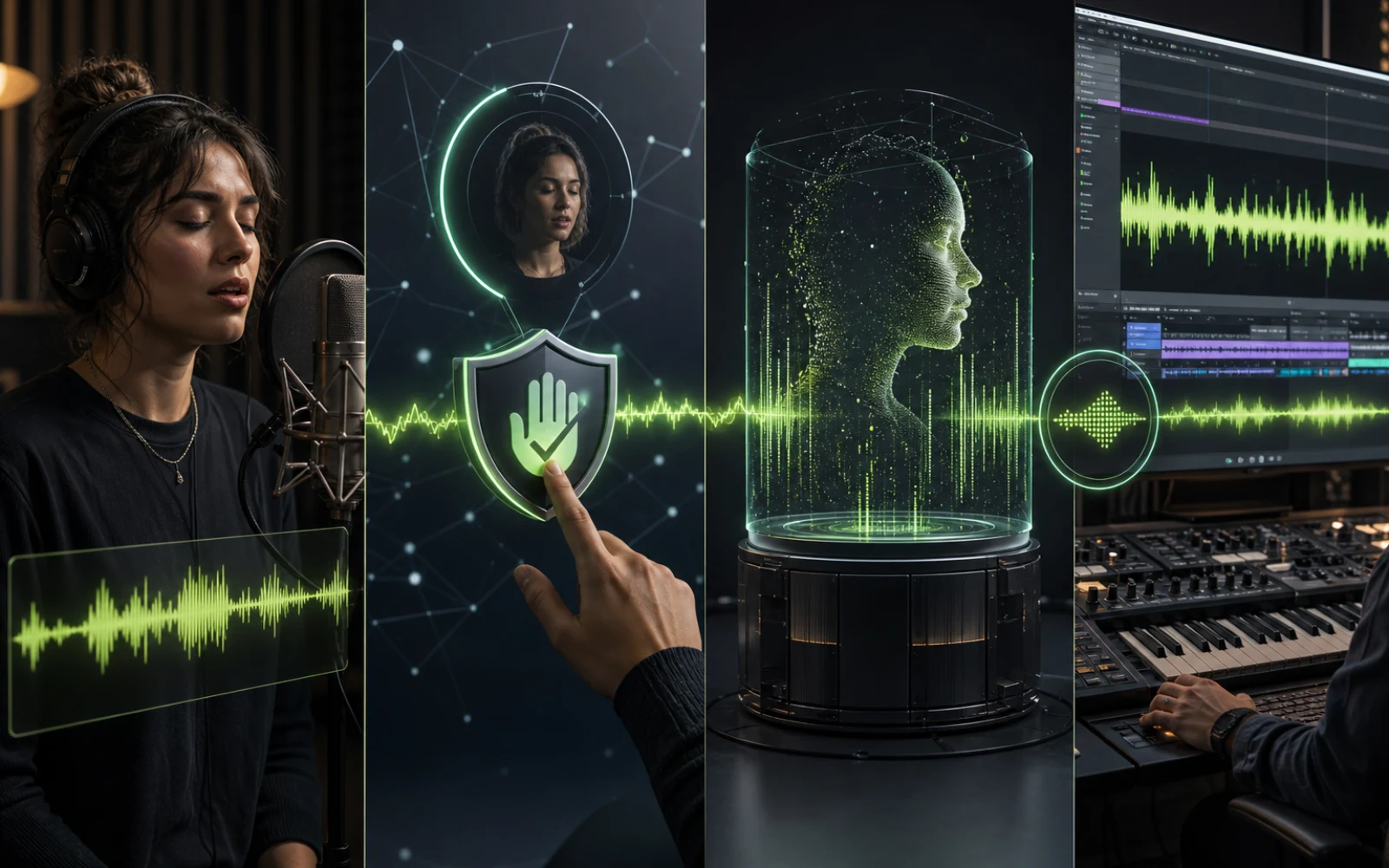
Verified four-step flow
Sampling and verification serve different purposes: one captures useful voice characteristics, while the other confirms a fresh authorized performance.
Use your own voice or one with explicit consent. Record or upload at least ten seconds of clear singing; a focused 15–30 second passage usually gives useful variety without introducing unrelated production.
Creatune uploads and checks the selected segment, then prepares a short verification phrase. Longer files can be trimmed to the strongest thirty-second region before submission.
Perform the new phrase rather than speaking it. Use the same authorized singer and a similar clean setup so the system can validate the voice without background music or another performer.
After verification, the model enters training. When its status becomes ready, select it in a compatible Voice Cover workflow while continuing to respect the authorization and intended use agreed with the voice owner.
Identity, performance, or arrangement
These workflows connect, but each answers a separate question in music creation.
| Workflow | Primary output | Main question |
|---|---|---|
| AI Voice Clone | A saved authorized voice identity | Which voice model may be used? |
| AI Add Vocal | A generated vocal performance over music | What should be sung over this track? |
| Voice Cover | A song performed with a selected voice model | How does this song sound in that authorized voice? |
| Style Cover | A reinterpreted arrangement and performance | How should the whole musical style change? |
Music creation uses
Voice cloning is most useful when it preserves access to a voice the owner wants to use repeatedly across legitimate creative work.
Hear how a composition or cover direction may fit your vocal identity before setting up another recording session. Use the output as a creative reference and review pronunciation, register, and phrasing carefully.
Use the same authorized voice identity when exploring alternate arrangements, genres, or drafts. A consistent model can make comparisons easier because fewer variables change between versions.
With explicit agreement from the singer, collaborators can explore authorized musical drafts without requesting a fresh demo for every small arrangement decision. Final release requirements should still follow the agreement and applicable rights.
A singer can test ideas during times when recording is inconvenient, or explore registers and styles as references. The model should extend the owner's creative control, not remove their consent or attribution.
Sample and consent guidance
Technical quality and authorization are equally important. A clear sample cannot make unauthorized cloning acceptable, and consent cannot repair a noisy recording.
Record one singer without backing music, harmony voices, strong reverb, delay, pitch effects, or room echo. Keep the microphone distance stable and avoid clipping. The model should hear the intended voice rather than the production around it.
Include natural vowels, consonants, sustained notes, and moderate movement in a comfortable register. Avoid whisper-only, scream-only, or effect-heavy samples unless that narrow behavior is genuinely the authorized goal.
The fresh phrase should be sung by the voice owner in a comparable environment. Speaking instead of singing or switching microphones and rooms dramatically can make the verification less representative.
Agree on who may create the model, which projects and platforms it covers, whether commercial use is allowed, how long authorization lasts, and how withdrawal requests will be handled. Do not clone public figures, artists, clients, employees, friends, or family without explicit permission.
Plans and credits
Use AI Voice Clone with flexible monthly, annual, or one-time credits shared across Creatune.
12,000 credits/year
billed annually
Save 33% — Limited Time Offer!
30,000 credits/year
billed annually
Save 50% — Limited Time Offer!
84,000 credits/year
billed annually
Save 56% — Limited Time Offer!
Credits per year
84,000
After payment, credits activate automatically for Creatune AI music, lyrics, audio editing, and music video workflows.
The payment methods shown at checkout vary by country, device, currency, and your Stripe configuration.
Voice model questions
AI voice cloning creates a model that represents vocal characteristics learned from recordings of a person. For Creatune's music workflow, the source should be singing. The model can later be selected in compatible tools, but it must only be created and used with the voice owner's explicit authorization.
Creatune requires at least ten seconds and can use a selected segment up to thirty seconds from a longer file. A clean 15–30 second solo singing passage is a practical target. Quality, variety, and freedom from music or effects matter more than simply uploading a long recording.
The fresh phrase helps confirm a new performance from the intended singer instead of relying only on an existing uploaded recording. It also gives the system another clean sample matched to the voice cloning workflow. The same authorized person should sing it rather than speak it.
Only with that person's explicit, informed authorization for voice cloning and the intended uses. Public availability of a recording is not consent. Do not clone artists, public figures, clients, employees, friends, or family from recordings without a clear agreement covering creation, access, publication, and commercial use.
Use dry solo singing with a stable microphone distance, little room echo, no background music, no harmony singer, and no heavy processing. Choose a comfortable passage with varied vowels and consonants. Avoid clipping, long silence, low-bitrate copies, and sections dominated by whispering or shouting.
No. A clone is a saved voice identity. A finished vocal track also needs melody, lyrics, phrasing, emotion, and musical context from another workflow. Voice Cover applies a selected identity to an existing song, while Add Vocal creates a vocal performance over existing music.
Record a clean authorized sample, complete the sung verification phrase, and save the ready voice for compatible music workflows.
Clone my singing voice