Explicitly faith-based
Use only the denomination, prayer language, and sacred references the family has named and approved.

A blessing in the family's own language
Begin with the actual tradition, the people making the promise, and the words this family uses for faith, belonging, and care. Shape a song for the ceremony, a godparent gift, or the gathering afterward without importing beliefs that were never requested.
Start the song
Replace each blank with real names, moments, and details—the more specific you are, the less generic the song. Everything stays editable in the studio before anything is generated.
What you are making
Christening, baptism, dedication, and naming ceremonies can share elements, but they are not interchangeable terms. The appropriate words depend on denomination, culture, officiant, family belief, and whether the music will be heard during the formal rite or at a private gathering. A respectful song begins by asking what the family calls the ceremony.
Use the Creatune prompt to record the speaker, child and name pronunciation, godparents or supporting adults, faith language that is welcome, language that is not, the blessing itself, and the exact playback setting. The music can then support the promise without claiming doctrine or making commitments on the child's behalf.
Sacred-language dial
Some families want explicit references to God, prayer, scripture, church, covenant, or a named religious community. Others are holding a naming ceremony centered on ancestry, welcome, and the adults' responsibilities. Many occupy a precise middle ground. Record the family's vocabulary verbatim rather than assuming ‘spiritual’ is a universal substitute.
If a scripture, prayer, or liturgical phrase matters, quote only the approved portion and confirm whether it may be adapted. Do not blend traditions for poetic effect. When multiple relatives hold different beliefs, the song can focus on shared commitments—protection, honesty, patience, presence—while leaving disputed theology outside the lyric.
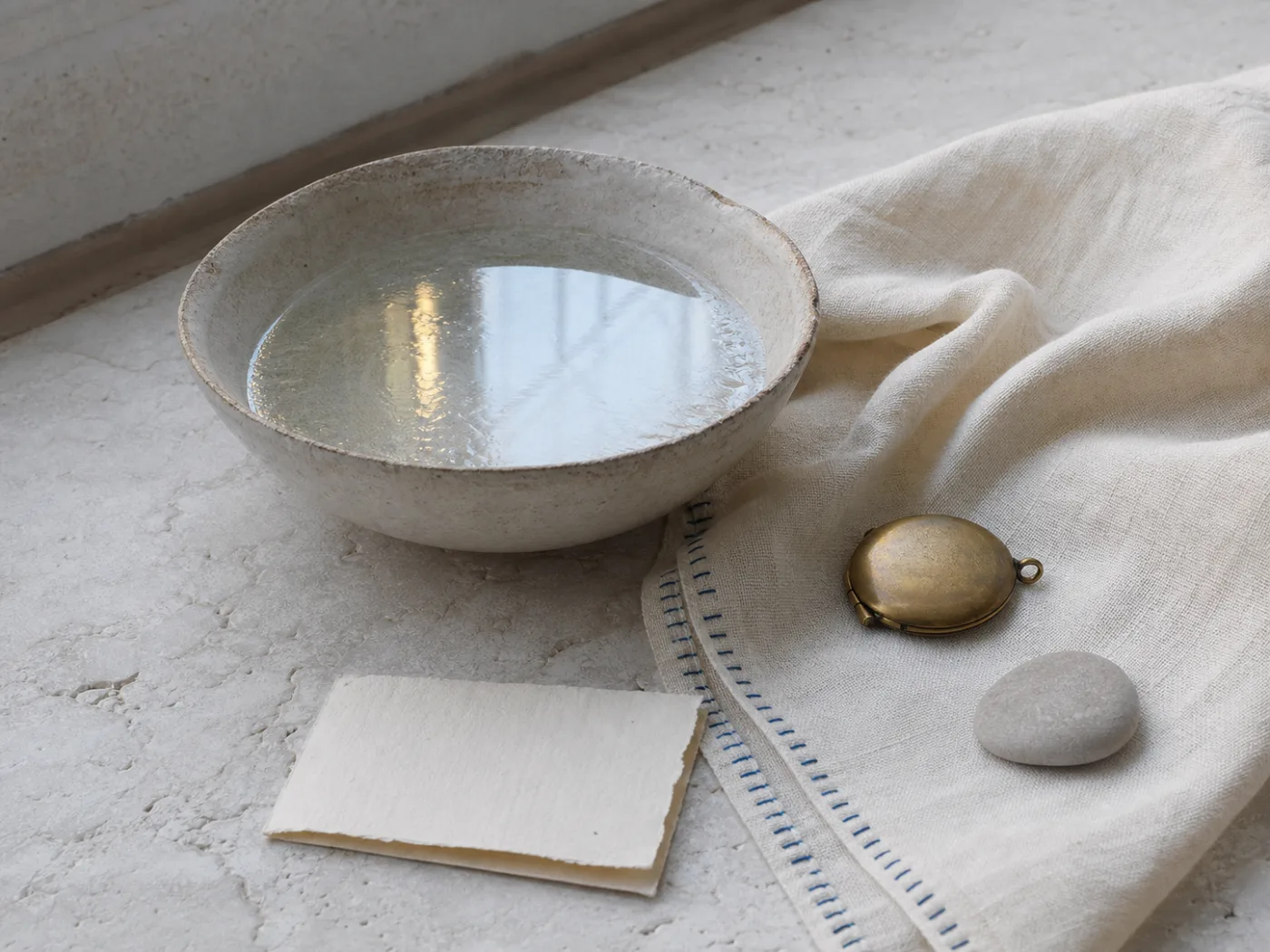
Use only the denomination, prayer language, and sacred references the family has named and approved.
Center the adults' promises, community support, name, ancestry, and hopes without adding doctrine.
Honor the meaning and pronunciation of the name, who chose it, and the community receiving the child.
Build from shared actions and values rather than smoothing meaningful differences into vague spirituality.
Who makes the promise
Parents can sing what they will practice: returning, listening, telling the truth, making a safe home, and asking for help. Godparents or supporting adults can describe how they will remain present beyond the ceremony. Grandparents can connect the child's name with family memory, provided the lyric does not turn heritage into a predetermined identity.
Avoid writing from the baby's imagined point of view when the lyric would assign belief, gratitude, or consent. A child can be addressed directly without being made to speak. If several adults contribute, use distinct promises in the verses and one collective commitment in the chorus.
Promise practices the adults control: presence, guidance, repair, protection, curiosity, and a home open to questions.
Name the relationship and the concrete ways they intend to accompany the child after the formal day.
Offer family continuity through names, objects, places, and stories while leaving the child's future open.
Use a collective chorus only when the people present are genuinely willing to stand behind its promise.
Ceremony appropriateness
Before planning ceremony playback, ask the officiant or venue whether recorded music is permitted, where it may appear, and how long it can run. A formal setting may need restrained volume, clear language, a short duration, and an instrumental opening or ending that supports movement. The celebration afterward allows more family detail and a brighter, less ceremonial arrangement.
A private gift to the parents or godchild can hold the fullest story because it does not have to represent the whole congregation. Decide whether guests need to understand every reference. If the song will accompany a video, leave room for spoken blessings and avoid placing important lyrics beneath conversation.
Confirm permission, timing, duration, volume, language, and who controls playback before final generation.
Use a reliable opening cue, fewer early lyrics, and enough musical space for movement.
Include more names, lineage, and private promises because the track does not need to function liturgically.
Increase warmth and room energy while keeping the child and family tradition at the center.
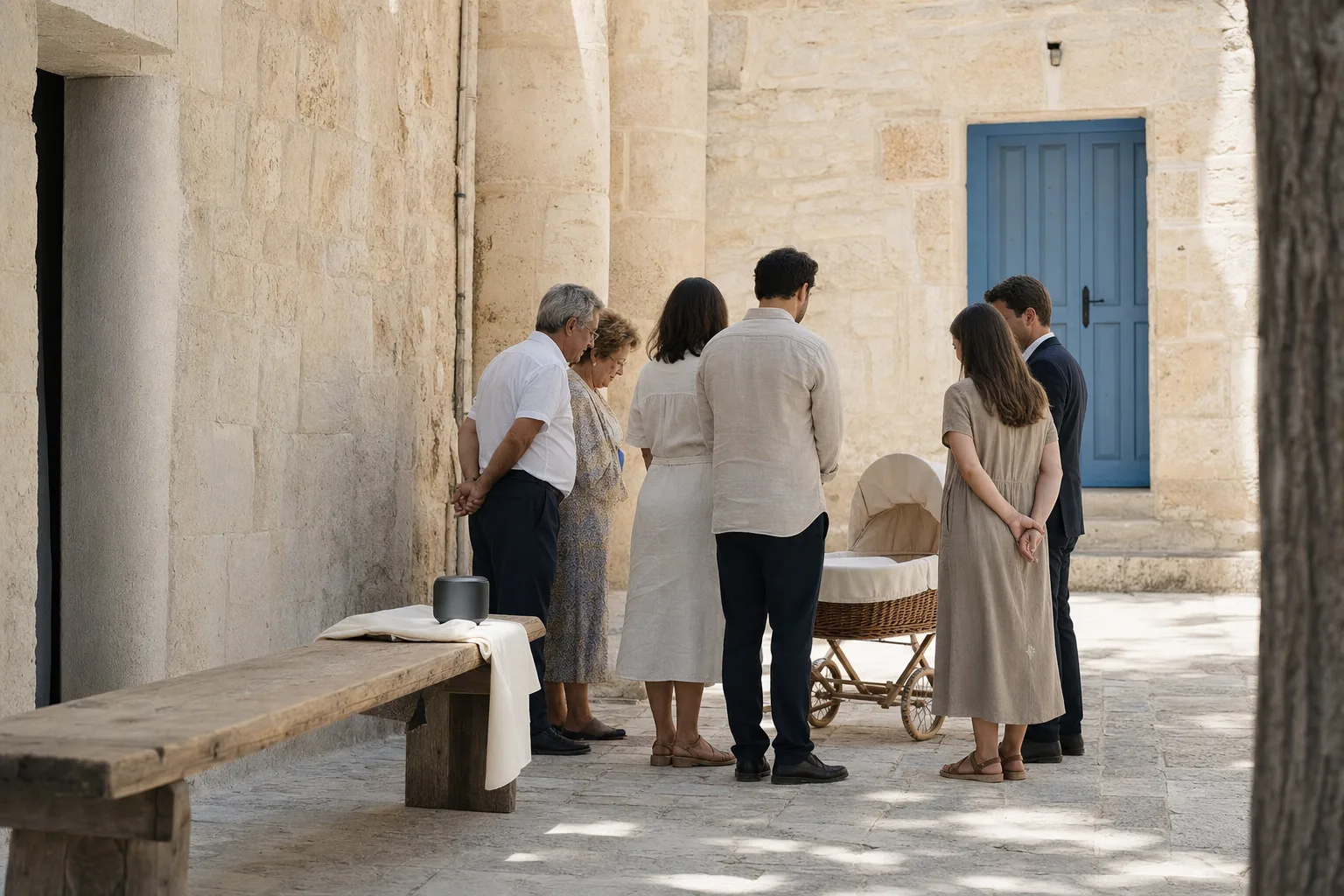
After the day
A ceremony song may be heard years later by a child who cannot remember the day. Save the written brief with the final track: who chose the name, who was present, which adults made the promise, and which tradition shaped the language. This context prevents the recording from becoming a beautiful but anonymous object.
Share public versions carefully when the song includes a child's full name, date, congregation, or family history. A private archive can keep more detail. If the track is replayed at a later milestone, explain that it records what the adults promised then; it does not define what the child must believe or become now.
Keep the audio, lyrics, brief, names, date, and one note about where the song appeared in the day.
Pair the track with a written version of the promise so the relationship remains concrete after the event.
Use an edit with space for spoken words, environmental sound, and the people who carried the ceremony.
Frame the song as a record of adult love and responsibility, never as an obligation placed on the child.
Story examples
These are transparent story examples, not fake audio demos. They show how real details become a creative direction and a singable lyrical moment.
Story Example
Parents Ana and Michael create a short song for their daughter Lucia's christening. Her godparents will stand with them, and the family welcomes explicit references to prayer and grace but does not want scripture paraphrased. Include a linen gown sewn by Lucia's grandmother and the promise to make room for questions as she grows.
Direction: Chamber folk with nylon guitar, quiet strings and a clear two-minute arc. Use the family's faith words sparingly, pronounce Lucia as ‘loo-CHEE-ah,’ and keep the promises in adult voices.
Story Example
A secular naming ceremony for baby Idris, whose name honors a great-uncle known for repairing radios and welcoming neighbors. The parents want to speak about ancestry and community without telling Idris who he must become.
Direction: Intimate piano with subtle electronic warmth. Let the family object—a small radio dial—connect generations, and state that a name offers history rather than a fixed path.
Story Example
Two godmothers give a song to Mateo after the ceremony. Include the blue courtyard, their tradition of Sunday walks with his parents, and their promise to show up for ordinary days—not only birthdays and photographs. Keep religious language limited to the family's phrase ‘held in grace.’
Direction: Luminous, restrained soul with close harmonies and brushed drums. Give each godmother one verse detail and make the chorus a practical promise of presence.
Keep exploring
Creatune Personalized Songs
A welcome made from the first true details
Belonging written with consent
Questions before you create
Yes, if the officiant and venue permit recorded music. Confirm where the song may appear, its maximum length, acceptable language, volume, and playback responsibility. A ceremony version often needs a restrained arrangement and a clear cue; a private gift can hold more story detail.
It can be explicitly faith-based, a secular family blessing, or something carefully between. State what the family calls the ceremony, which sacred words are welcome, and which are not. Do not add doctrine, scripture, or blended traditions that the family did not request.
Yes. Godparents or supporting adults can describe the concrete ways they intend to remain present after the ceremony. Include their relationship, shared family details, the child's preferred name and pronunciation, and a promise they can genuinely keep rather than a broad ceremonial statement.
Not automatically. The terms, theology, customs, and music rules vary by family, denomination, culture, and venue. Use the family's own term and explain the setting. For locales where these searches are not distinct, the content should be localized or merged rather than translated as synonyms.
Consider keeping a child's full legal name, date, congregation, family history, medical information, and private adoption or fertility context out of public versions. Review the complete lyric with parents and any adult whose promise or story is represented before sharing the song beyond the ceremony.
Your turn
Describe what the ceremony means, who is making the promise, and which language belongs in the blessing.
Create a christening song