Then
One place, object, hope, mistake, or ritual that captures the scale of the early relationship.
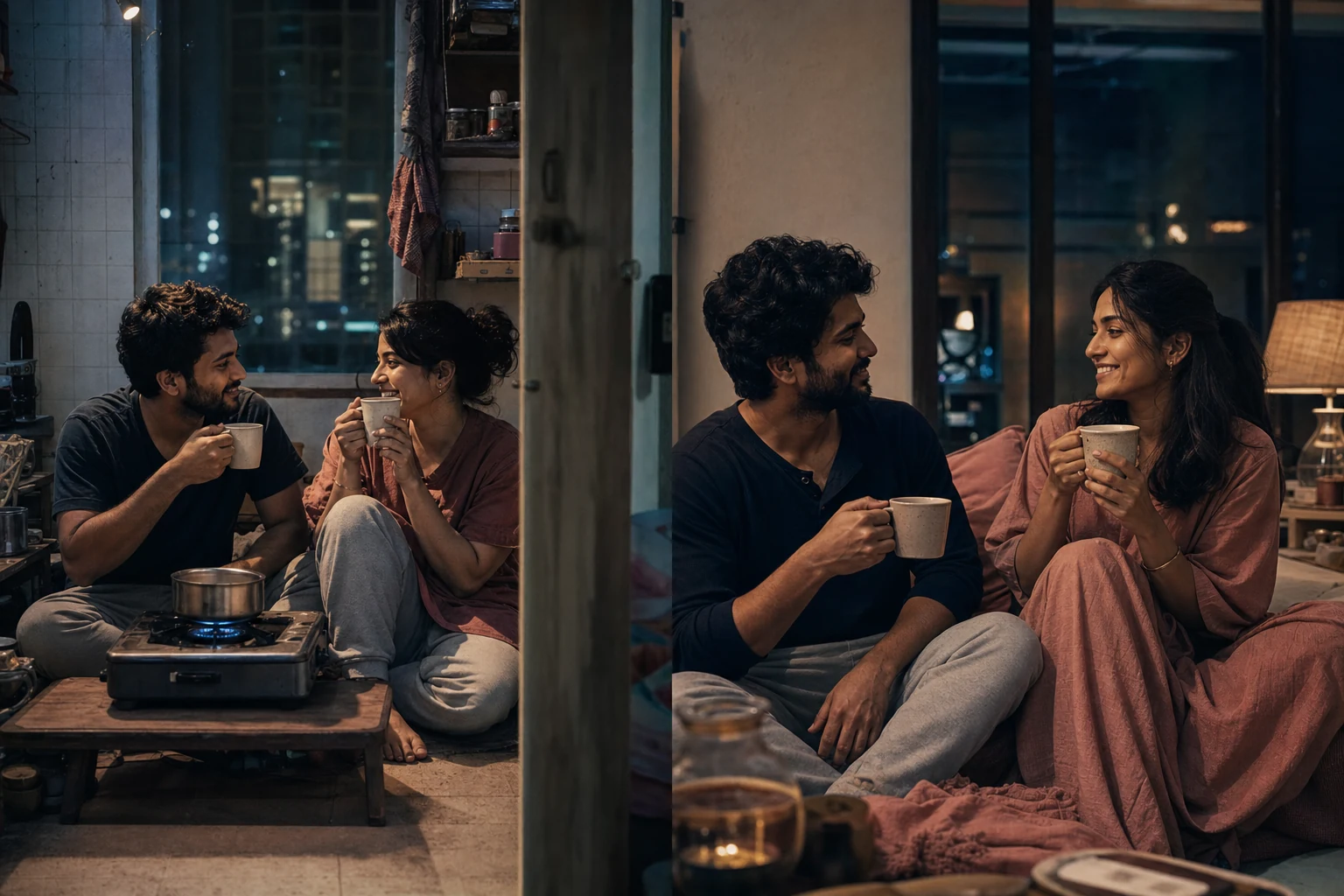
Then, middle, now, and the decade ahead
Place an early version of the relationship beside the life you have now, trace the changes between them, and let one unchanged ritual carry the chorus forward.
Start the song
Replace each blank with real names, moments, and details—the more specific you are, the less generic the song. Everything stays editable in the studio before anything is generated.
What you are making
Ten years rarely feel like a straight timeline. The people at the beginning may have lived in a different city, worked differently, wanted different things, or lacked language they now use every week. A personalized 10th anniversary song becomes specific when it places those earlier versions beside the current relationship and asks what changed, what was carried through the middle, and what the couple still chooses.
Creatune uses a four-part split screen: then, middle, now, and next decade. The agent collects one early scene, one shift or hard season, one present-day contrast, and the ordinary ritual that survived. It does not claim every difficulty made the relationship stronger or require children, marriage, property, or a conventional decade. The chorus rests on a repeated action, while the final section leaves both people room to keep changing.
Then / middle / now / next
A decade needs versions, not ten annual summaries.
For ‘then,’ choose an object and a mistaken expectation: a borrowed mattress, one shared umbrella, a train card, an overconfident plan, or a kitchen with one working burner. The point is not to mock the early couple. It is to show the scale and language of the life before later moves, work shifts, family changes, grief, health, new identities, chosen community, or different ambitions reshaped the relationship.
The middle deserves one turning point, not every event. Name the safe, observable change: calls became scheduled during a move, Sunday lunch survived a demanding work year, apologies became shorter and earlier, or separate creative rooms made the shared home kinder. ‘Now’ answers the early object with its current version. ‘Next’ names a practice rather than a prediction, allowing the relationship to evolve without promising that the hard parts are over.
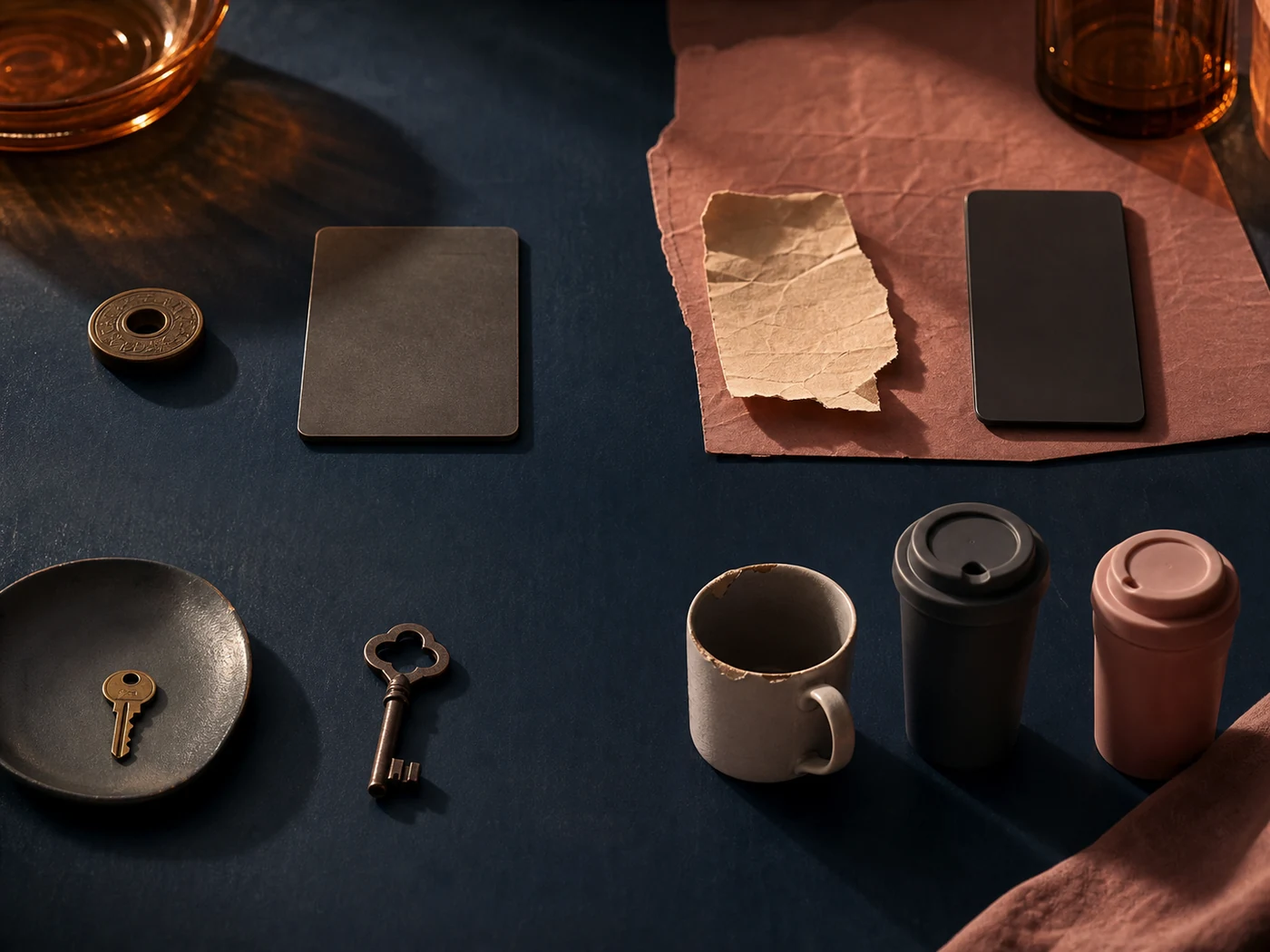
One place, object, hope, mistake, or ritual that captures the scale of the early relationship.
A move, pressure, change, or repair described through action and consent rather than dramatic summary.
A paired scene showing what is genuinely different and what the couple understands more clearly.
A flexible practice or choice both people can keep while future versions remain unknown.
The continuity anchor
Continuity may be tea left by the bed, a photograph sent after arriving, the same bad song in the car, a weekly question, a walk after conflict, or the way one partner checks a door while the other checks the route. It should be directly witnessed and mutually recognizable. Avoid converting invisible labor into romance or praising one person for permanently stabilizing the other.
Repeat the ritual in two eras. The chipped mug in the first flat can become two travel cups after a decade of commutes. A handwritten grocery note may become a shared phone list, while the same joke remains at the top. This echo gives the chorus structure and emotional credibility. Ten years matter not because nothing changed, but because the relationship kept finding new containers for a chosen action.
The original room, object, route, technology, or circumstance surrounding the ritual.
How the same care or humor appears now without pretending the people are unchanged.
What the couple understands differently about the action after ten years of practice.
No partner is described as the only reason the relationship, home, or other person survives.
Music for contrast
Cinematic pop can begin with a narrow early sound and widen into the present without making the relationship theatrical. Mature R&B supports conversational then-and-now verses, a steady pulse, and layered response around the unchanged ritual. Indie folk carries moves, rooms, travel, weather, and objects through acoustic texture. Choose from the couple's taste and translate artist references into instruments, tempo, vocal grain, and dynamic shape.
Avoid filling every bar with history. Leave instrumental air after a major contrast and reduce name density. A private version may include one difficult shift; a gathering version should use public-safe evidence. If old recordings appear in a photo film, secure permission and keep their audio from competing with the lyric. The song should feel like dialogue between versions, not narration over an archive.
Narrow opening, controlled expansion, clean diction, and a final chorus that looks toward the next decade.
Restrained pulse, conversational vocal, subtle harmonies, and an ordinary ritual strong enough to repeat.
Acoustic detail, travel and room imagery, textured imperfection, and change without spectacle.
A fuller private story and a shorter public version when the middle decade contains protected material.
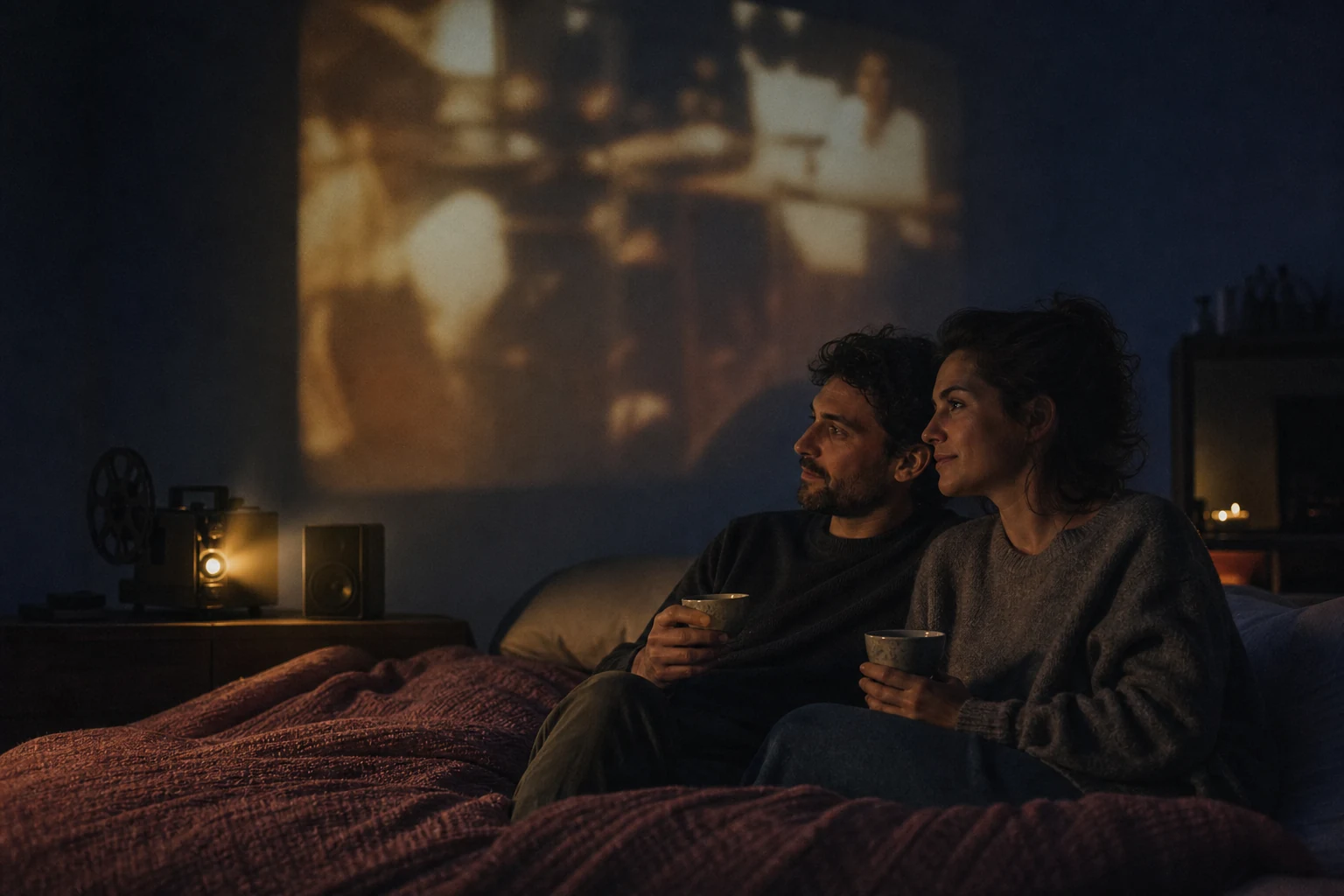
Project the versions, not the verdict
A projection-room listen can place early clips beside present-day footage, but it should not embarrass the couple or make one partner's archive public without permission. Group media into then, middle, now, and next rather than year by year. Check that screenshots, messages, children, former homes, workplaces, health details, and other people's faces are safe to show.
For a private dinner, play the song before explaining the contrasts and let recognition happen. Download the file, disable notifications, and keep a second copy. Afterward, invite both partners to correct the brief and save the final lyric with the source notes. Future anniversary songs should not rewrite year ten as if the next decade was already known.
Then, middle, now, and next organize footage without forcing ten equal annual chapters.
Both partners approve messages, faces, family details, and difficult-period material before public projection.
The full contrast can land without a room interpreting it or demanding a visible reaction.
Save the sources and what remained uncertain so later years do not manufacture hindsight.
Story examples
These are transparent story examples, not fake audio demos. They show how real details become a creative direction and a singable lyrical moment.
Story Example
Mae and Jo began in a tiny flat with one working burner and now commute from a home outside the city. A difficult work year taught them to protect Friday dinner and ask before offering solutions. Keep health and employer details private. Their next-decade choice is more local travel, not a dramatic relocation.
Direction: Mature R&B with warm bass, restrained drums, electric piano, and a close response vocal. Pair the first kitchen with current travel cups and make Friday dinner the unchanged chorus action.
Story Example
Alejandro and Priya moved across three cities, welcomed a child, and changed how they divide planning after an exhausting middle period. Their ritual is asking ‘what can wait?’ on Sunday night. Exclude fertility history, finances, and blame. The song will be private with a short family-safe edit.
Direction: Cinematic pop with piano, low pulse, strings entering after the middle shift, and instrumental space before the final chorus. Let three rooms change around the same question.
Story Example
Noah and Elias spent the first two years traveling for work and still send a photograph of the view after every arrival. Ten years later the jobs and phones have changed, but the ritual remains. Mention one missed connection they repaired, not private messages. The next decade is intentionally open.
Direction: Indie folk with fingerpicked guitar, brushed drums, cello color, and a conversational vocal. Use paired airport views rather than a travel list and keep the final promise open.
Keep exploring
The life between the milestones
Five years of building a life in practice
A couple's story, braided with the people who witnessed it
Questions before you create
Include one early scene, one middle shift, one present contrast, the ritual that survived, and a flexible next-decade choice. Add relationship language, private-topic boundaries, source ownership, listening setting, and musical direction. The page uses contrast rather than ten annual milestones, so the decade feels lived instead of summarized.
Yes, when both partners accept the framing and the purpose is understanding rather than blame. Describe what changed in practice, not confidential causes or a claim that suffering improved the relationship. Create a public-safe edit when health, family, finances, work, identity, children, or unresolved conflict should remain private.
A 10th anniversary song uses a then-middle-now-next split screen and a continuity anchor. It asks how both partners changed across a decade and what repeated action still connects their versions. A general anniversary page can cover any timeline and does not need decade-specific contrast or archive decisions.
Yes, with permission from both partners and anyone else identifiable. Avoid private messages, children, workplaces, difficult-period footage, or former relationships without explicit consent. Use media by story panel rather than year, keep audio from competing with the song, and let the couple decide what enters the lasting archive.
Cinematic pop supports widening time, mature R&B fits conversational contrast and a repeated ritual, and indie folk suits places and objects. Choose tempo and vocal feel from the couple's taste. Keep lyric density moderate so the listener can register each paired scene and the next-decade chorus.
Your turn
Bring one early object, one middle change, one present contrast, and the ritual that stayed. The agent will shape the split screen.
Create a 10th anniversary song