Family verse
One childhood continuity detail and current respect, without babying, advice overload, or a family claim over the future.
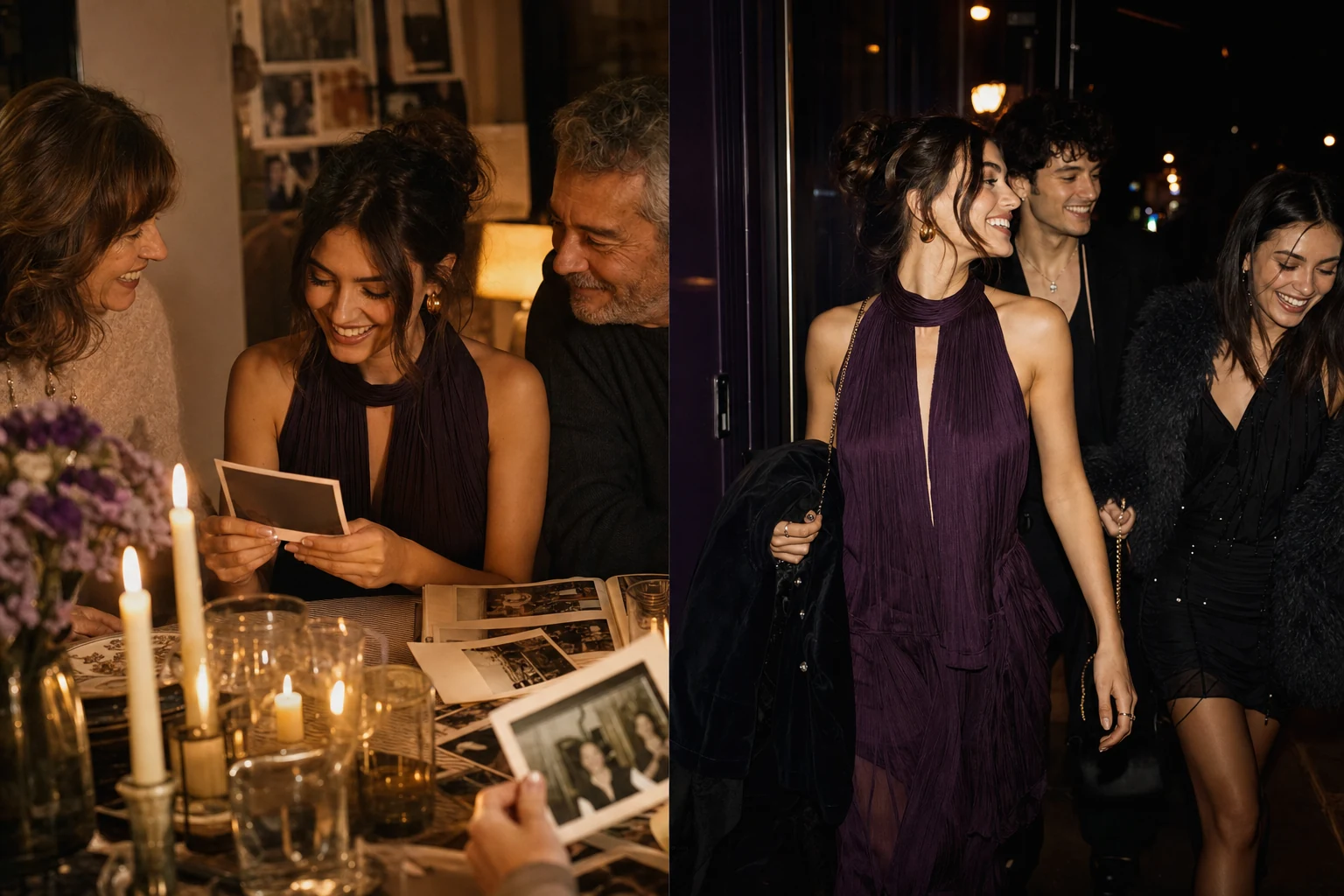
One milestone, two rooms, one recognizable person
Start by choosing the room. Then connect a childhood detail, a current ritual, and the version of adulthood the recipient actually wants to celebrate.
Start the song
Replace each blank with real names, moments, and details—the more specific you are, the less generic the song. Everything stays editable in the studio before anything is generated.
What you are making
Twenty-one carries distinct social meaning in some English-speaking markets, particularly around legal drinking age and the overlap between family recognition and adult nightlife. In other places it is simply another birthday or has a different family tradition. A dedicated personalized 21st birthday song should first confirm that the milestone matters to this recipient and locale. When it does, the creative problem is often a two-room arrangement: family knows the long arc, friends know the present person, and neither group owns the whole story.
Creatune asks whether the track is for a family table, friends' night out, party entrance, private gift, or both audiences. The agent collects one childhood scene, one current friendship or adult-life ritual, contributor voices, roast limits, venue, singalong needs, and explicit consent for alcohol or nightlife references. It never assumes drinking, dating, clubbing, or a reckless persona. The chorus can celebrate agency, community, creativity, work, study, care, travel, or chosen responsibility with just as much room energy.
The two-room arranger
Two verses can hold different eras; the chorus should reveal the person both groups see now.
Give family and friends the same evidence prompt. Family supplies one childhood object, one trait that persisted, and one choice they respect now. Friends supply one current ritual, one act of care, and one public-safe joke. Then identify the shared quality: the person makes plans possible, notices the newcomer, researches every option, keeps a room moving, says the difficult true thing, or turns ordinary nights into stories. Use that quality in the chorus rather than ranking one group above another.
Do not let the family verse infantilize the recipient or let the friends' verse expose a private adult persona. A childhood bath story, dating history, drinking incident, academic result, family conflict, identity detail, or embarrassing video does not become safe because one room already knows it. The family table may need a warmer acoustic edit; the entrance may need a faster hook. Two versions can share the same chorus and still respect different evidence sets. That is better than a single track everyone endures politely.

One childhood continuity detail and current respect, without babying, advice overload, or a family claim over the future.
One current ritual and act of care, with jokes reviewed for mixed company and no private-night mythology.
A quality both groups can support, expressed through present agency rather than age, alcohol, or social status.
The same emotional core shaped for a family table and a higher-energy entrance when audience boundaries differ.
Adult references by explicit choice
Ask directly whether alcohol references are welcome. A recipient may not drink for personal, cultural, religious, recovery, medical, family, or no stated reason. They do not owe the song an explanation. When drinks are included, keep the language celebratory rather than pressuring consumption, glorifying risk, or exposing past incidents. A toast can be one image, not the entire identity. Venue staff, family members, younger guests, and the recipient's own boundaries still shape what belongs in the lyric.
Build an adult-ritual menu beyond nightlife: first apartment key, cooking for friends, voting, paying for a shared trip, leading a project, caring for someone, finishing a course, starting a craft, crossing a city independently, hosting a weekly table, or choosing to ask for help. These details create a more durable song. Humor can target the overpacked bag, the six-tab itinerary, the playlist spreadsheet, or the chair always claimed first. Exclude body, money, relationship status, sexual history, employment insecurity, health, identity, intoxication, and failures with real consequences.
No drinking, bar, shots, hangover, or pressure language unless the user explicitly chooses and approves it.
One bounded celebration image with no encouragement of excess, risky behavior, or disclosure of past incidents.
A real act of agency, care, work, study, creativity, community, travel, or responsibility that matters to the recipient.
Harmless planning, playlist, fashion, route, snack, or hobby detail the recipient can enjoy in the actual audience.
Room energy and chorus architecture
Brass pop can create an entrance with punchy drums, syncopated bass, short horn answers, and a name cue inside the first twenty seconds. Party hip-hop supports contributor details through conversational verses and a melodic group chorus; describe cadence and production rather than naming an artist. Warm acoustic music works at a family table or as a private gift, especially when the two-room story needs clarity more than volume. A hybrid can begin acoustically with family evidence and switch rhythm for the friends' section, but the transition should serve the story rather than function as a gimmick.
Design participation intentionally. If friends will sing, keep the chorus short, place names and tricky pronunciation outside the group line, and share words beforehand. If the track is an entrance cue, confirm the exact moment doors open, the walk duration, and whether the chorus should arrive immediately or after the recipient reaches the room. A private gift can be longer and more reflective. Do not make a quieter recipient perform a high-energy persona simply because the venue expects a birthday anthem.
Fast recognition, confident rhythm, short horn replies, and a chorus timed to the physical arrival.
Conversational detail, rhythmic public-safe humor, melodic hook, and no imitation of a real performer.
Clear family and friend evidence, lower room pressure, and a message that works without a crowd response.
Fuller story, closer vocal, sensitive material removed from public use, and no demand to replay it at the party.
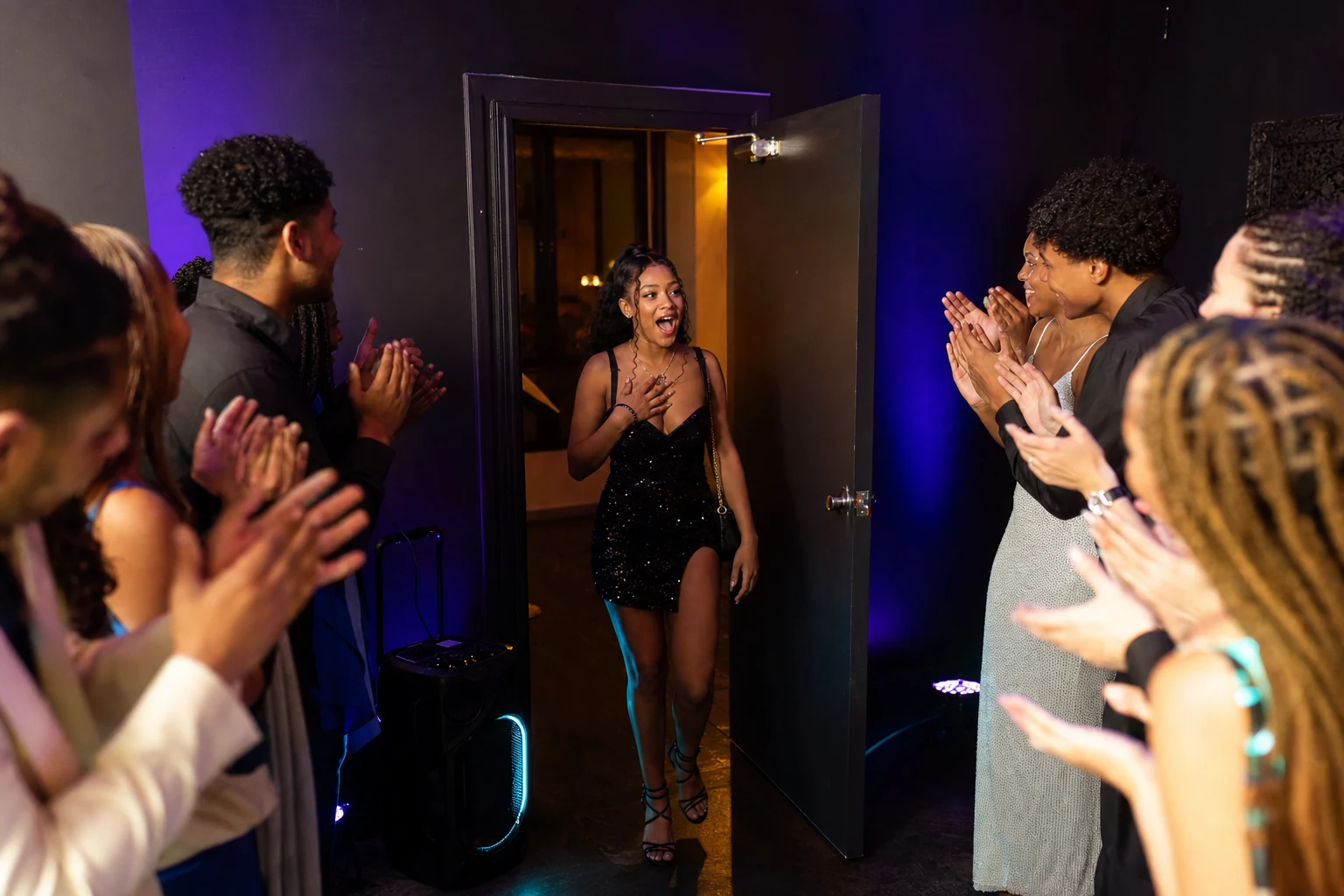
Entrance, table, or night out
Name one event owner, one audio device, one backup, and one start cue. Test the file at the venue's real volume. Download it to two devices, turn off notifications, confirm Bluetooth or cable connection, and use a clearly labeled final version. For an entrance, measure the walk. For a table, place the speaker where lyrics remain intelligible without becoming painful. For a night out, assume the network will fail and the environment will be louder than expected.
Review who is present. Younger siblings, relatives, colleagues, partners, and friends from different eras may change what is safe. Do not use the track to announce pregnancy, engagement, job news, identity, travel, or another private decision. Ask before filming or posting reactions. If alcohol is part of the event, assign playback to someone who can manage the equipment reliably. The gift should create recognition, not become evidence of how the recipient behaved on the night.
Measured walk, early hook, responsible operator, downloaded file, and no wait for a streaming ad or network.
Intelligible lyrics, mixed-audience safety, short introduction, and no public future-plans interrogation afterward.
Venue volume test, opt-in adult references, safe roast, backup device, and consent before recording or posting.
One shared chorus plus separate evidence sets or edits when intimacy, pace, and audience safety genuinely differ.
Story examples
These are transparent story examples, not fake audio demos. They show how real details become a creative direction and a singable lyrical moment.
Story Example
Nia turns twenty-one in the United States. Her family remembers the yellow chair she used to pull into every adult conversation. Her friends know she now saves a seat for newcomers at weekly trivia. Alcohol references are not wanted. The song will open a mixed party and should connect both rooms through her instinct to make space.
Direction: Brass pop with punchy drums, bright bass, short horn replies, and the name cue after eight bars. Use the yellow chair in the family verse, trivia in the friends' verse, and a shared chorus about making room without calling her the mother of the group.
Story Example
Mateo's friends make an entrance song about his detailed trip spreadsheets, color-coded playlists, and the time he found everyone's late train home. Mateo welcomes one light toast reference but no hangover jokes, dating stories, money, or work details. Family will also be present.
Direction: Party hip-hop with crisp drums, warm sub-bass, percussive keyboard, and a melodic group hook. Keep the spreadsheet joke affectionate, make planning evidence of care, use one toast line only, and land the chorus before the entrance walk ends.
Story Example
Harper's parents create a private song for a twenty-first birthday that is meaningful in their family but not connected to drinking. Harper recently moved into a shared apartment, cooks Sunday soup, and keeps the old family habit of placing keys in a ceramic bowl. Exclude rent, relationship details, and parental anxiety about the move.
Direction: Warm acoustic with nylon guitar, upright piano, brushed percussion, and close duet vocals. Connect the family bowl with the new apartment bowl, make Sunday soup a chosen tradition, and let the chorus offer a place to return without implying ownership.
Keep exploring
A birthday song that knows the person
A coming-of-age song grounded in real life
Celebrate a self-defined life, not a deadline
Questions before you create
Include whether twenty-one matters in the recipient's locale, the intended room, family and friend contributors, one childhood memory, one current ritual or act of care, the shared quality the chorus should name, explicit choices about alcohol and nightlife, roast limits, playback timing, and a musical direction suited to the recipient.
No. Alcohol references are opt-in, never assumed. The song can celebrate agency, community, work, study, creativity, care, travel, a first home, or another adult ritual. The recipient does not need to explain why drinking is excluded, and an alcohol-free song can still carry full party energy.
Yes. Give family one childhood continuity scene and friends one current ritual, then identify a shared quality for the chorus. Review jokes and collective claims. Use separate public and private edits when the family table and friends' night require different intimacy, pace, or adult references.
Place a recognizable name or detail early, measure the entrance walk, keep the chorus compact, and assign one operator. Download the exact final file to two devices, test venue volume and connection, turn off notifications, and avoid streaming dependence. Match the energy to the recipient rather than the room's stereotype.
Use the general personalized birthday page unless twenty-one has a real cultural, family, or personal job for this recipient. A dedicated 21st page should not be published or used merely because the English-language keyword exists. The story needs an independent threshold or event to justify it.
Your turn
Bring one family memory, one current ritual, and the adult references the recipient actually wants. The agent will arrange both sides around one true chorus.
Create a 21st birthday song