Before the group
One early place, decision, sound, or object that introduces the bride as a person rather than as the center of an event.
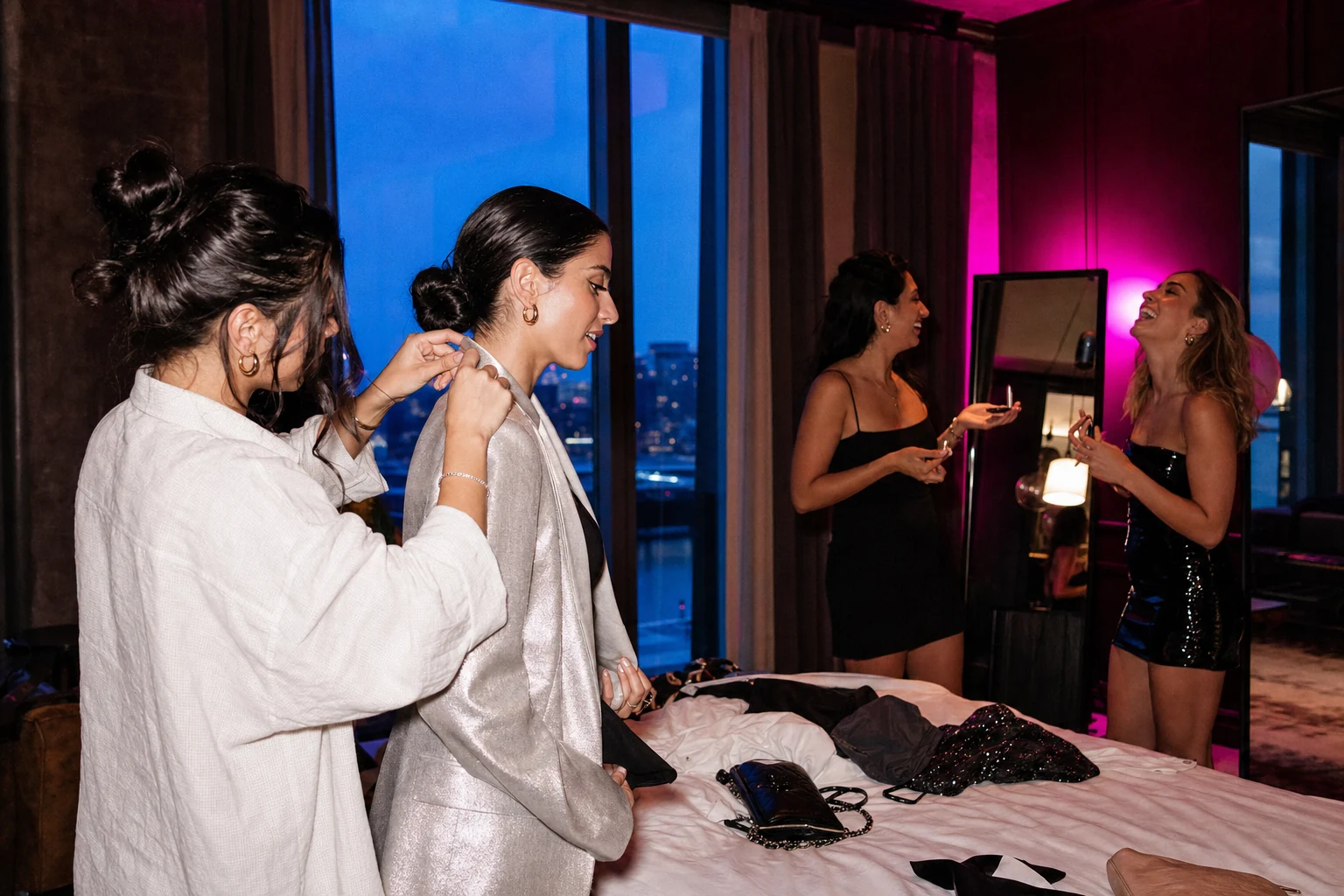
Her friends know the missing verses
Build a bachelorette party song from the versions of the bride her friends witnessed: the old apartment, the first brave decision, the phrase that survived three group chats, and the dance move everyone knows is coming.
Start the song
Replace each blank with real names, moments, and details—the more specific you are, the less generic the song. Everything stays editable in the studio before anything is generated.
What you are making
The friends in one bachelorette room may know completely different versions of the bride. One remembers the school bus, another the first impossible job, another the apartment after a breakup, and another the relationship that led to this wedding. A strong personalized song does not rank those histories. It finds a behavior, value, or phrase that runs through them, then lets each era contribute one specific scene. The bride should hear a self she recognizes, not a generic collection of champagne, dresses, and countdown language.
Creatune's agent asks what the bride should feel first: seen, playfully roasted, or ready to dance. That choice controls the opening, joke density, emotional turn, and cue. The brief also records contributors, shared eras, approved teasing, partner references, former-partner exclusions, venue, arrival timing, clean-language needs, and the chorus shout. The result is designed for this friend group rather than produced by changing the pronouns in a bachelor-party template.
The friendship-era map
Draw four columns before collecting copy: early years, first independence, difficult change, and life now. Ask each contributor for one place, object, action, or phrase from the era they actually witnessed. The high-school friend may contribute the midnight bus; the work friend may know the presentation rehearsed in a stairwell; a newer friend may notice how the bride makes space inside a crowded room. Select evidence that reveals continuity instead of claiming every person shared every chapter.
Do not turn the lyric into a hierarchy of closeness or a roll call. A chorus can use the group point of view—‘we watched you keep becoming’—while verses move through distinct scenes. If contributors disagree about a memory, remove the disputed fact or describe only what all sides recognize. Check names and preferred language. Chosen family, queer friendships, mixed-gender groups, and nontraditional weddings should fit without being translated into a bridal script they did not ask for.

One early place, decision, sound, or object that introduces the bride as a person rather than as the center of an event.
A flat, class, commute, job, trip, ritual, or repeated line that gives one contributor's chapter physical detail.
A risk, recovery, boundary, new confidence, or act of loyalty described without exposing the private cause.
Connect earlier evidence to the bride's present choice without implying marriage completes or replaces her existing life.
Teasing with consent
Safe teasing uses material the bride performs openly: the seven-minute voice notes, the emergency snack inventory, the color she buys in every form, the playlist that always takes over the car, or the way every quick goodbye becomes another hour. The joke can grow through exaggeration while the underlying fact remains harmless. Avoid body commentary, sexual history, fertility, finances, diagnoses, intoxication, family conflict, private messages, old partners, or anything shared in confidence.
Partner references should sound like welcome, not surrender. Do not frame the wedding as her friends losing her, the partner stealing her, or freedom ending. If the bride dislikes sentimental attention, let the emotional message stay brief and factual: she shows up, remembers the detail, names what others avoid, or turns ordinary plans into community. Create a public-safe master before considering any private alternate, because clips and files often travel beyond the original suite or dance floor.
Use an accurate detail she rarely hears reflected back and keep the arrangement spacious enough for the line to register.
Choose a public habit, keep exaggeration proportional, and pair the joke with the value hiding inside it.
Exclude private bodies, relationships, health, money, messages, histories, and identities regardless of how loudly one contributor votes.
Welcome the next chapter while stating friendship as an ongoing choice, not a rivalry with the partner or wedding.
Arrival, game, or dance floor
For an arrival surprise, keep the first seconds clear and give the cue person a predictable downbeat. The lyric can begin with the bride's name after she has entered. For a party game, make references legible and leave short pauses for guesses or responses. For a dance-floor turn, shorten the narrative opening, move the first hook earlier, and build a second chorus that friends can sing after hearing the first one. Do not ask one track to perform all three jobs without choosing a primary moment.
Dance-pop provides a clean rise and drop, disco keeps several generations moving, and cheeky pop-rock makes group shouting natural. Describe energy, rhythm, vocal character, and instrumentation rather than requesting imitation of a real performer. Test whether the bride's name lands clearly at volume and whether the response uses words the group can remember. A detailed friendship verse can live in the private version while a shorter event edit protects momentum and privacy.
A predictable opening, one person watching the door, and no lyric that exposes the surprise before the bride can see the room.
Recognizable clues, controlled pacing, clean facts, and pauses that allow the group to answer without talking over the track.
Early beat, compact chorus, open response, lower lyric density, and enough repetition for people joining on the second pass.
Longer stories and subtler emotional language for the suite, car, breakfast, or a first listen without an audience.
Group production without group chaos
Invite contributions with constraints: one story under three sentences, one phrase the bride uses, one quality proved by an action, and one red line. The editor selects material; voting on every lyric usually produces a long, cautious song or an escalation contest. Share the near-final lyric with one person who understands the bride's boundaries and a different person responsible for names and facts. The bride does not need to approve a surprise, but her known preferences still govern it.
Export and label the correct version, download it to two devices, disable notifications, and test the actual room. If the venue controls sound, hand the file and start cue to staff early. Do not surprise the bride by uploading her reaction or circulating the track afterward. Ask when the event is over. A song created by friends should leave her feeling more accurately known and more in control of the next chapter, not less.

One scene, one phrase, one witnessed strength, and one excluded subject keeps the material comparable and usable.
One person protects the arc, resolves repetition, confirms consent boundaries, and stops the song becoming a democratic list.
One sober person watches the door or room, starts the correct file, and knows the reset plan if timing changes.
Ask before sharing the audio, lyric, photos, or reaction; do not treat participation in the party as publication permission.
Story examples
These are transparent story examples, not fake audio demos. They show how real details become a creative direction and a singable lyrical moment.
Story Example
Nina's friends know her from college, her first design job, and the years she rebuilt life in a tiny apartment. Mention the blue mug that moved through three kitchens, her two-minute goodbyes that last an hour, and the way she always makes a new friend feel expected. The song cues her entrance to a rented suite. No former partners or financial detail.
Direction: Modern disco-pop with warm bass, bright strings, and a clear eight-bar entrance. Use the mug as the era marker, make the goodbye habit the playful refrain, then open the second chorus for the group to answer ‘there was always room.’
Story Example
Priya sends epic voice notes, brings backup flats for everyone, and once coordinated a missed-flight recovery from an airport floor. Her friends want a clean party-game song where guests guess each story. Avoid work-client names, body jokes, and partner teasing.
Direction: Cheeky pop-rock with stop-start drums and short clue verses. Pause after each setup for the group to name Priya, then turn the backup-flats detail into proof that her overplanning is how she cares.
Story Example
A mixed friend group wants a dance track for Jules, who met different contributors through community theater and Sunday football. The shared thread is that Jules pulls hesitant people onto the floor without making them perform. Use no wedding clichés and welcome their fiancé Alex with one warm line.
Direction: Bright dance-pop with percussion-led verses, a rising pre-chorus, and a six-word group hook. Keep names clear, avoid role labels, and let ‘meet me in the second chorus’ function as both the friendship habit and the real dance cue.
Keep exploring
Creatune Personalized Songs
Your story, composed for the room
A birthday song that knows the person
Questions before you create
Include the bride's preferred name, two or three friendship-era details, one safe inside joke, the message her friends want her to hear, the exact party cue, and a chorus people can join. Record partner, former-partner, body, family, health, money, sexuality, and privacy boundaries before lyrics are created.
A bachelorette song is told through the friend group's witnessed history and built for a specific reveal, game, private listen, or dance-floor cue. It should show who the bride was before the wedding and who she remains, rather than relying on bridal stereotypes, countdown language, or interchangeable celebration phrases.
Yes. Ask each person for one scene from an era they actually witnessed, then select a shared value or behavior that connects the chapters. Do not rank friendships or list every contributor. Verify disputed facts, names, and pronunciation, and credit unused contributors outside the lyric so the narrative stays coherent.
Roast a public habit she already laughs about and pair it with the strength inside the behavior. Avoid private messages, bodies, sex, fertility, money, diagnoses, intoxication, family conflict, and former partners. Make a public-safe master, then test whether she would willingly repeat each line after the party is over.
Only after checking the usage rights in the applicable Creatune plan and obtaining consent for names, stories, voices, and reactions. Use a clean public-safe edit and remove anything that depended on the private room for context. A surprise gift at one event does not automatically grant permanent publication permission.
Your turn
Tell the agent which eras belong, which jokes are safe, and whether the first beat should reveal, tease, or pull everyone onto the floor.
Create the bachelorette party song