Person A
One repeated action, one recognizable phrase or object, and the value the giver learned from that specific person.
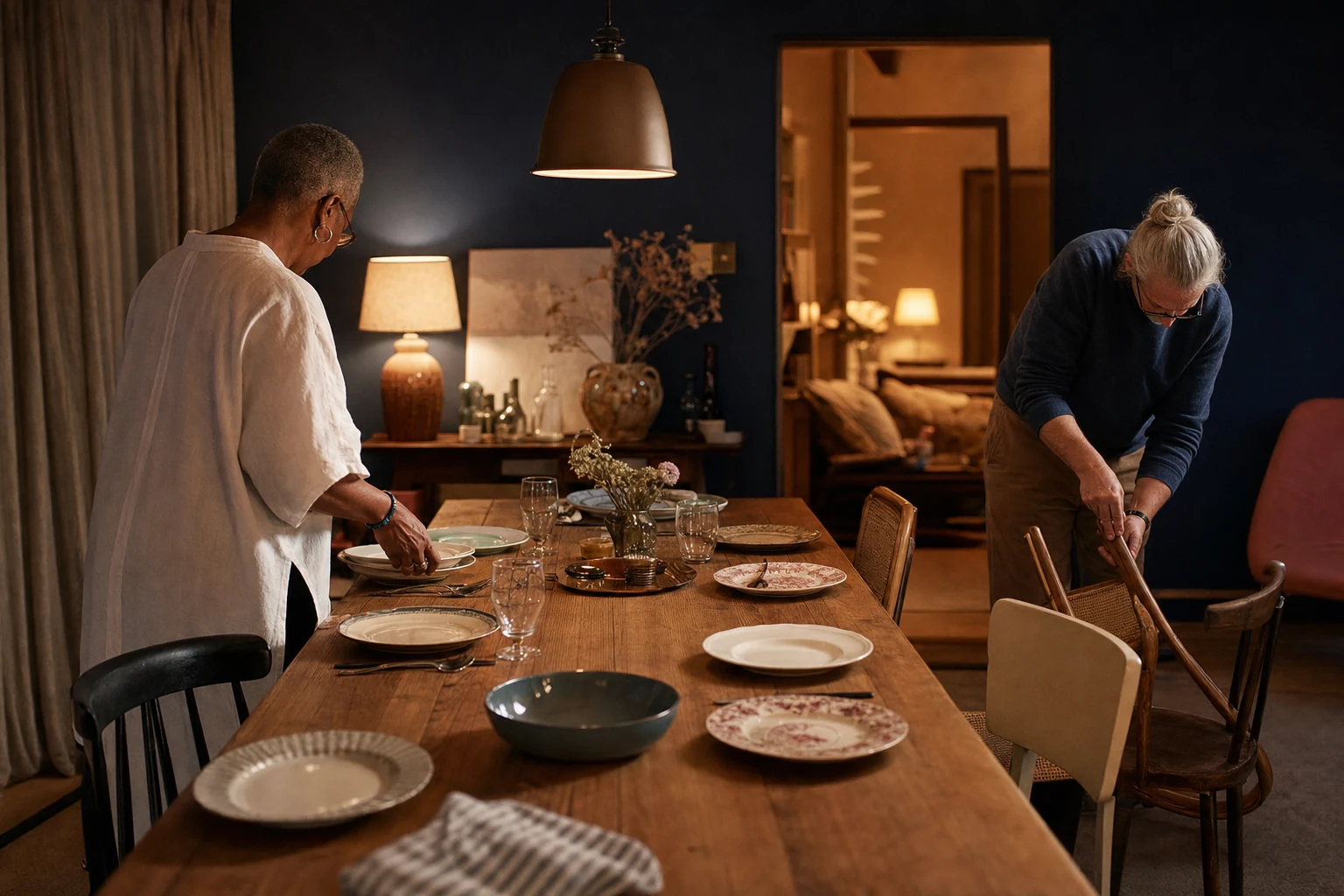
Two stories, one family culture
Give each parent or caregiver an unmistakable action, a phrase, a place, or a form of care. Then bring both stories to the table where traditions, compromises, and repeated choices became the way your family learned to live.
Start the song
Replace each blank with real names, moments, and details—the more specific you are, the less generic the song. Everything stays editable in the studio before anything is generated.
What you are making
When one song thanks two caregivers, generic language creates a predictable problem: one person disappears inside ‘you both,’ or the verses become alternating award citations. Personalization requires distinct evidence. One parent may have created adventure and asked difficult questions; another may have remembered every practical need and kept the household connected. The shared story is not that their contributions were identical. It is what their different actions made possible together.
Creatune uses a three-part balance board: Person A, Person B, and Together. The conversation records accurate family titles and pronouns, the giver or sibling voice, one detail unique to each caregiver, one shared ritual or value, challenges and sacrifices that are safe to mention, complicated or blended family structure, the occasion, audience, and musical direction. The chorus can then name the family culture the giver carries forward instead of flattening two people into a single parental role.
The two-voice balance board
Create three columns. In the first two, list only actions, phrases, places, objects, and qualities the family genuinely associates with that person. The first caregiver may have taught everyone to leave early, asked about the day at the kitchen door, or turned repairs into lessons. The second may have made playlists for long drives, noticed when someone needed quiet, or kept birthdays connected across distance. Select details with similar emotional weight even when the forms of care differ.
In the Together column, look for something they built or sustained: a Sunday table, a blended household, a language of hospitality, a commitment to education, the ability to repair after conflict, a sense of humor during scarcity, or a home that included people beyond the immediate family. Do not invent harmony. Separated parents may have built stability through respectful co-parenting; one caregiver may have carried more of the work; chosen parents may not be a couple at all. Use the family structure supplied by the giver and let accuracy matter more than a symmetrical verse count.

One repeated action, one recognizable phrase or object, and the value the giver learned from that specific person.
Different evidence with equal emotional clarity, not a generic second verse or supporting role.
A shared ritual, home, value, boundary, recovery, or family culture created through both contributions.
The habit or value the giver now repeats in another home, relationship, friendship, or generation.
Name the family accurately
Ask who the song is actually for before choosing ‘Mom and Dad,’ ‘parents,’ or a shared pronoun. A grandparent and aunt may have raised the giver together. Adoptive parents may want a family story that centers belonging without disclosing origin information. Divorced or separated parents may receive one song at a wedding, but the lyrics should not imply a romantic partnership that no longer exists. A surviving parent and the memory of another require a different point of view from two recipients sitting in the same room.
The giver controls whether the song acknowledges inequality, absence, repair, or a blended family. It can thank two people for different chapters without pretending every chapter was easy. If the history is too sensitive for joint playback, create separate tracks or a public-safe shared chorus with private verses removed. Siblings contributing memories should agree on factual events, titles, and names while leaving each person's private interpretation outside the lyric. A family song becomes safer when it does not require everyone to endorse one official version of the past.
Distinct roles, shared rituals, and how their partnership or teamwork shaped the household.
What each person contributed and which shared value remained, without implying a relationship that is no longer true.
Use accurate titles, protect origin stories, and center the acts that created belonging.
Balance direct gratitude with continuing memory, and review shared details with relatives before playback.
Where the two stories meet
Separate verses can introduce each caregiver, but a strict alternating structure may sound like equal-time accounting. Instead, use images that begin apart and converge. One person unlocked the door before dawn; another kept the table warm after dark; together, they taught the giver that people should have somewhere to return. The chorus names that shared result. It can use ‘you both’ when true, but concrete nouns—table, road, light, language, room—often carry more meaning than repeated pronouns.
Family soul can hold alternating vocal colors and a large shared chorus. Orchestral pop can suit a wedding thank-you when the arrangement remains beneath the lyric. An acoustic ensemble can suggest different people contributing to one home without turning the song into a duet stereotype. Keep the emotional claim proportional. Do not say they sacrificed everything unless the family would use those words. Show what they protected, risked, taught, or repaired, then let gratitude arrive through the evidence.
Distinct verse textures, warm piano or organ, and a chorus that gathers every voice around one value.
Best for a wedding or milestone when the story needs lift without burying names and family detail.
Several instruments with visible roles, conversational lyric, and room for siblings or family voices.
Private, low-density arrangement for complicated gratitude, remembrance, or a family that avoids theatrical emotion.
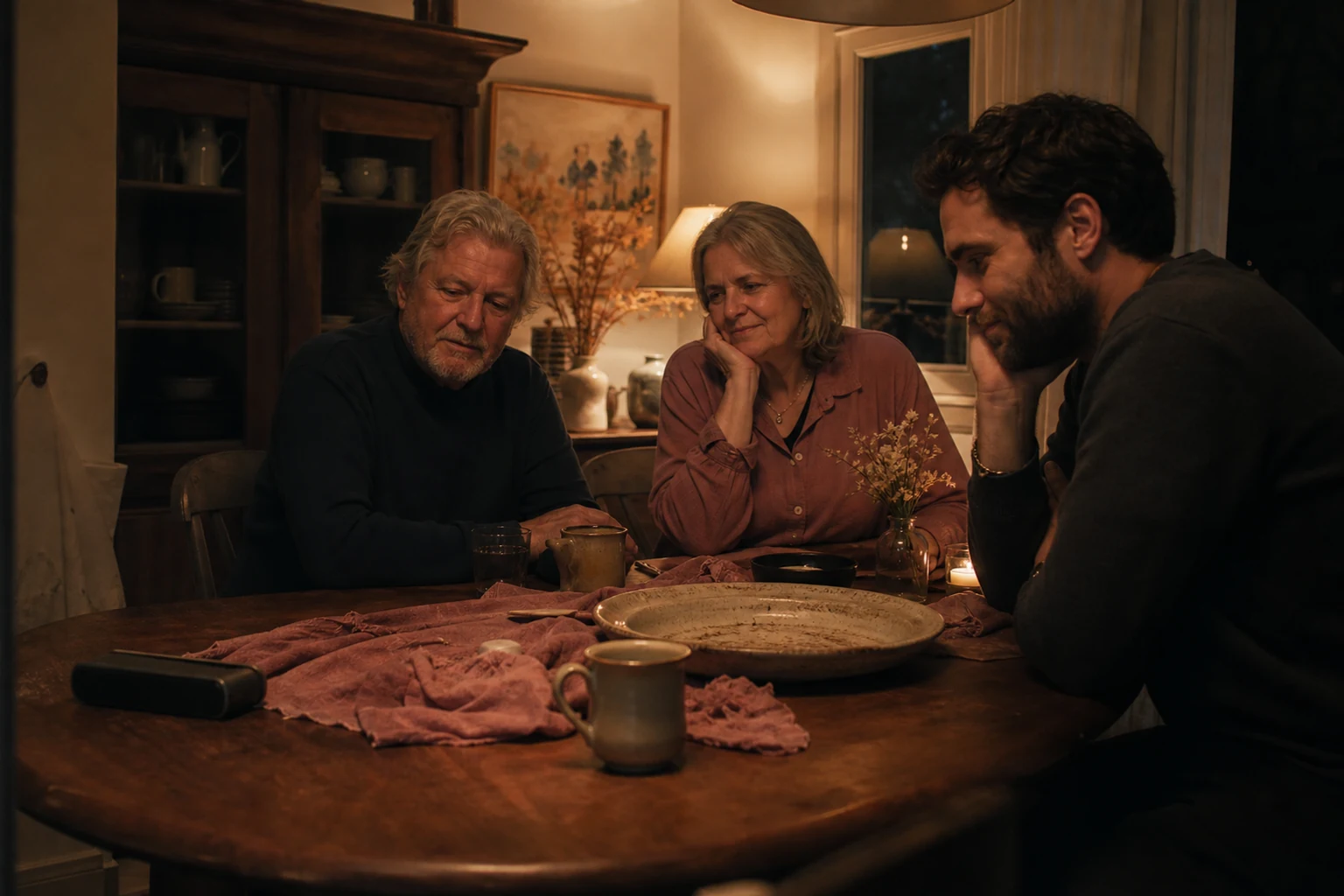
One song, two recipients
A family dinner works when the details are safe for everyone at the table and both recipients are comfortable receiving a shared gift. A wedding thank-you can connect the homes that raised the couple to the home they are beginning, but it should not require divorced parents to share a romantic frame or expose family conflict to guests. A milestone anniversary for the parents can include their relationship, while a ‘just because’ song may focus more on how their caregiving shaped the giver.
Before playback, ask each contributing sibling whether names, deceased relatives, financial hardship, fertility, illness, adoption, separation, and family conflict are appropriate. Confirm that both recipients will hear the version intended for them. Download two copies and allow the song to end without demanding a joint speech or synchronized reaction. Give each person the final file, and consider including the separate Person A / Person B / Together notes so they can see the distinct memories that did not all fit inside the lyric.
Balanced, public-safe details, a warm shared chorus, and no unresolved history introduced as a surprise.
Accurate family roles, clear timing, DJ handoff, and a message that moves from upbringing into the new household.
Their shared history may be central, but keep the giver's gratitude distinct from an anniversary biography.
Best for complicated family form, grief, repair, or specific gratitude that deserves listening without an audience.
Story examples
These are transparent story examples, not fake audio demos. They show how real details become a creative direction and a singable lyrical moment.
Story Example
Nina thanks her mother Elena and stepfather Rob at a private family dinner. Elena called every evening during Nina's first year away; Rob quietly kept the old bicycle working so it was ready whenever she came home. Together they hosted Sunday dinners for friends who had nowhere else to go. Do not mention Nina's biological father.
Direction: Family soul with warm piano, restrained organ, and two distinct verse textures that meet in a shared chorus. Let the phone light and workshop light begin separately, then make the open Sunday table the family culture Nina carries forward.
Story Example
Two brothers are creating a wedding thank-you for parents who are divorced but remained cooperative. Their father planned road trips from paper maps; their mother kept a blue bowl by the door for keys, notes, and emergency cash. Both attended every school concert and taught the brothers to show up even after plans changed. The song must not imply the parents are still a couple.
Direction: Orchestral pop with separate first-person verse images and a chorus about reliable presence rather than marital togetherness. Keep strings controlled, state the family value in ‘you each showed up,’ and create a four-minute public-safe wedding edit.
Story Example
Jordan thanks an aunt and grandmother who raised them together. Aunt May handled school forms and taught practical independence; Grandma Ruth cooked late after work and told family stories while folding laundry. Together they made a home for cousins, neighbors, and friends. Use their real titles and avoid legal or origin details.
Direction: Acoustic ensemble with guitar, upright bass, hand percussion, and two melodic motifs that join in the chorus. Make paperwork and folded laundry specific without turning either caregiver into a stereotype, then widen to the chosen family table.
Keep exploring
Creatune Personalized Songs
A thank-you made from real details
Some fathers speak in actions
Questions before you create
Give each caregiver one distinct action, phrase, place, or object with similar emotional weight, then identify one shared ritual or value. Let the chorus describe what they built together instead of alternating generic compliments or forcing identical contributions.
Yes, when the lyrics use their current relationship accurately. Thank each person for distinct caregiving and name a shared value such as showing up or co-parenting without implying they are still a romantic couple. If joint playback would be uncomfortable, create separate versions or give the song privately.
Yes. Collect one memory from each sibling, verify names and events, and sort the material into Person A, Person B, and Together. Use a separate memory card to credit every contribution so the lyric remains coherent and no sibling must endorse another person's private interpretation.
Yes. Connect specific care from each parent or caregiver to the new household being formed. Confirm the wedding moment, length, DJ handoff, family titles, divorce or blended-family boundaries, and which details are appropriate for guests before generating the final track.
Do not manufacture symmetry. Give each person's real contribution clear evidence and use the shared chorus only for values or outcomes that genuinely belong to both. A balanced song offers equal clarity, not equal claims, equal verse length, or a rewritten family history.
Your turn
Then bring both stories to the ritual, value, or home they created together. The agent will keep the gratitude balanced without forcing the history to become symmetrical.
Create a song for your parents