New
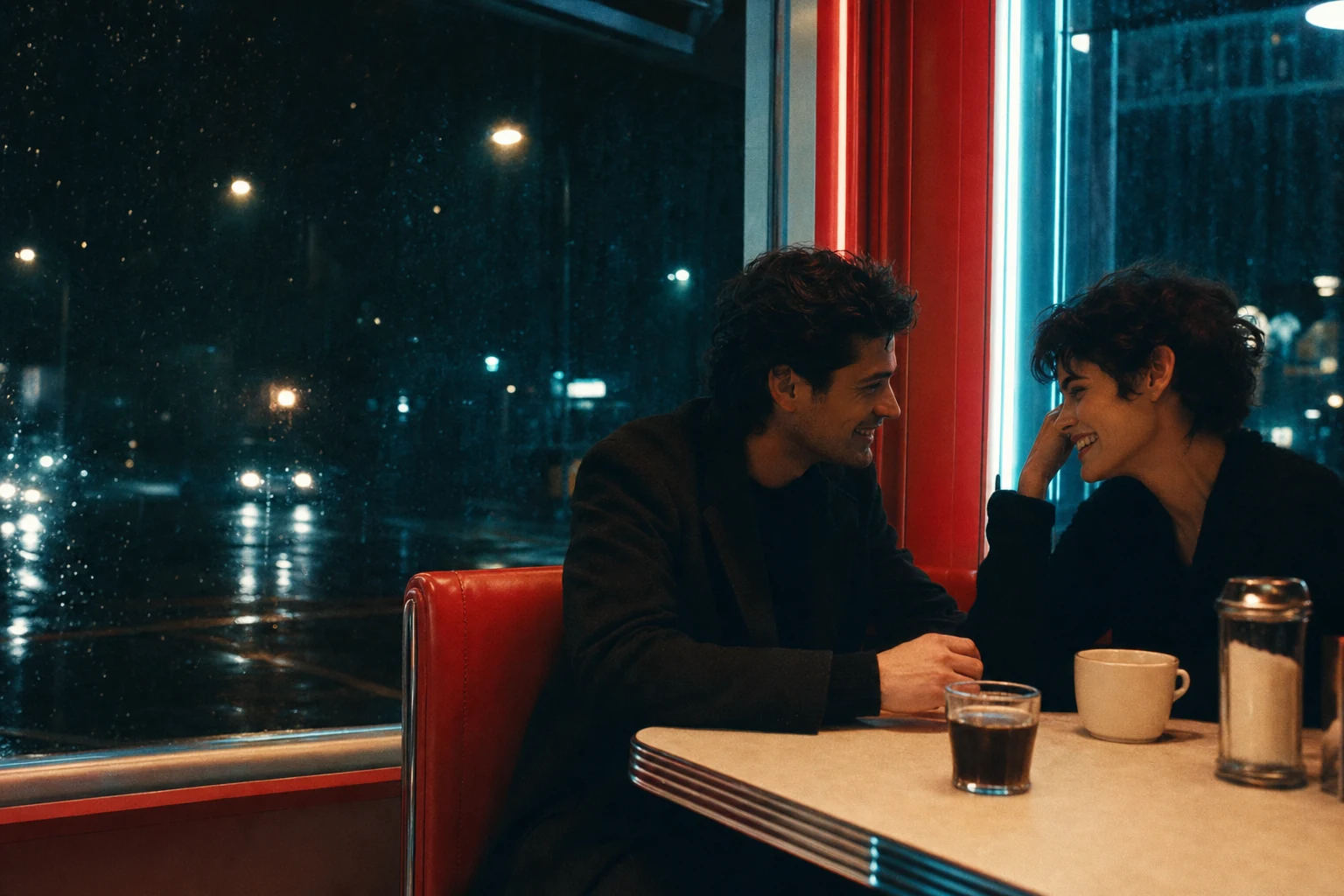
Flirtation, attention, first rituals, and honest curiosity without treating early chemistry as a settled future.
A love song sized to the relationship you have
Start with the relationship as it is now: new and electric, long-established, married, long-distance, playful, complicated, or quietly steady. Give the agent the detail only your person would recognize and the promise you can honestly make this year.
Start the song
Replace each blank with real names, moments, and details—the more specific you are, the less generic the song. Everything stays editable in the studio before anything is generated.
What you are making
Red roses, candlelight, and forever language can make a Valentine song sound less personal, not more. Recognition comes from the Saturday train, the wrong coffee order remembered correctly, the phrase used after a difficult day, or the way a two-hour time difference structures every evening call. Those details show attention—the real emotional currency of the holiday.
Creatune begins with relationship stage because a third date, a tenth married Valentine's Day, and a long-distance reunion cannot carry the same promise. The conversation identifies what happened, what the listener should recognize, how direct the message can be, and whether the track arrives during a public date, a private evening, or from another city.
Relationship-stage selector
In a new relationship, a good song can say ‘I notice you’ without jumping to a lifetime promise. Use the first routine already forming, the moment the conversation changed, or the surprising ease of an ordinary date. An established couple can write about repeated choices, difficult seasons, and the domestic evidence that affection has become durable.
Marriage does not automatically require a grand ballad. A playful track about packed lunches may be more intimate than another declaration of eternal love. Long-distance relationships need their own architecture: time zones, departures, arrival boards, saved voice notes, and the specific next meeting. The promise should match what the couple has discussed, not what the holiday is supposed to demand.
Flirtation, attention, first rituals, and honest curiosity without treating early chemistry as a settled future.
Shared routines, a turning point, conflict survived, and the choices that keep the relationship active.
Domestic knowledge, changing seasons, humor, partnership, and love expressed through ordinary work.
Time zones, travel, digital rituals, waiting, and a concrete reunion rather than abstract distance.
Evidence before adjectives
Generic praise makes the listener responsible for believing the song. Specific evidence lets them recognize it. Instead of saying someone always supports you, write the cold coffee they reheated during an exam week, the route they walk when you cannot sleep, or the exact joke they repeat when a room becomes tense. The detail does not need to be impressive; it needs to be true.
Collect a memory, a present-day habit, and one change the relationship has made. Those three pieces give the lyric time: where you were, how life now feels, and what you are choosing next. Avoid turning the page into a biography. One recurring object or place can return in the chorus and make a short Valentine's song feel designed rather than decorated.
What they carry, remember, cook, repair, text, notice, or make easier on an ordinary day.
A phrase, mispronounced word, route, object, or joke whose meaning belongs to the relationship.
How being with them altered a routine, decision, fear, place, or sense of home in a concrete way.
Select one repeatable image strong enough to hold the hook without explaining the entire backstory.
Sentiment without pressure
Romantic language can accidentally make demands: never leave, save me, complete me, be mine forever. Decide what the giver genuinely wants to communicate and what the listener has already consented to hear. A believable chorus might promise attention, honesty, another year of choosing, a booked visit, or simply a willingness to keep learning the relationship.
Complex relationships need even more care. A Valentine's song is not a tool for bypassing a boundary, forcing reconciliation, or making a public claim that has not been discussed. If the message includes an apology or a request to reconnect, create it under the appropriate emotional job and leave the listener free to respond. Romance is strongest when it does not remove choice.
Attention, gratitude, attraction, a shared memory, a present commitment, or a future already discussed.
Public declarations, marriage, children, moving, labels, reconciliation, or sensitive details from conflict.
Possession, pressure, emotional debt, threats, surveillance, or promises meant to make refusal impossible.
Read the chorus as a direct statement to the person and remove any line you would not say without music.
This year's Valentine
At home, let the song play before another activity begins and remove the expectation of a filmed reaction. During dinner, check whether the venue can play personal audio and whether private lyrics belong in a public room. For a walk or drive, download the track and choose a safe, natural moment. Long-distance couples can coordinate headphones and listen together on a call.
A romantic song gift can also accompany a small sequence of photographs, a handwritten note, or a return visit. Keep the format secondary to the song's emotional job. Test the file, use a neutral title if the plan is a surprise, and leave silence at the end. The listener should have room to answer in their own words rather than being carried straight into the next playlist item.

Choose a quiet start, keep lyrics intimate, and make sure the room allows the listener to hear every line.
Download offline, plan a stationary listening moment, and avoid making the phone or speaker a distraction.
Send a private file, synchronize the start, use headphones, and design the lyric around a real next visit.
Use a clear arc and let images carry chronology while the chorus names the relationship's present meaning.
Story examples
These are transparent story examples, not fake audio demos. They show how real details become a creative direction and a singable lyrical moment.

Story Example
After four months together, Erin makes a Valentine song for Jay. He still orders her coffee with oat milk instead of almond, but remembers she hates crowded tables, always carries an extra phone cable, and walked three blocks in rain to return the book she left on their second date. Avoid forever language.
Direction: Playful neo-soul with conversational verses and a warm chorus. Let the wrong coffee be affectionate evidence of a relationship still learning, then land on the care shown by the returned book and quiet tables.
Story Example
Mina writes for her wife, Rose, after twelve years together. Rose sets every kitchen clock seven minutes fast, leaves the porch light on when Mina works late, and turns Sunday errands into long drives. The song will play at home after their children are asleep.
Direction: Understated synth pop with dry drums, warm bass, and a restrained vocal. Use the fast clocks as a recurring motif and let the chorus define love as the practical ways they keep making time for each other.
Story Example
Dev and Luca live nine time zones apart. They celebrate two midnights on video, save voice notes named after weather, and will meet next in Lisbon in April. The song should feel hopeful but acknowledge that distance is difficult rather than romanticizing it.
Direction: Cinematic electronic with a sparse pulse, distant vocal layers, and a chorus that grows when the real reunion enters. Use two midnights and weather notes as evidence; make April the concrete promise.
Keep exploring
Creatune Personalized Songs
The life between the milestones
Start with the story. End with the question.
Questions before you create
A personalized Valentine's Day song is an original romantic track built from a couple's real relationship stage, recognizable memories, everyday details, and a message appropriate to the current moment. It can be playful, intimate, understated, long-distance, or celebratory instead of defaulting to generic roses and forever language.
Include one shared memory, one present-day habit or private shorthand, one specific way the relationship changed your life, and the message you want the chorus to carry. Names are optional. Ordinary evidence—routes, meals, objects, phrases, or routines—usually creates more recognition than broad romantic adjectives.
Yes. Focus on attention, curiosity, early rituals, and what you enjoy learning about the person. Avoid marriage, destiny, or permanent promises unless you have already discussed them. A playful or conversational song can feel more romantic because its emotional scale matches the relationship as it actually exists.
Yes. Use specific time zones, calls, travel routines, voice notes, missed moments, and the next confirmed visit. A strong long-distance song acknowledges the work of separation while giving the chorus a concrete future point. Coordinate the first listen so both people can hear and respond together.
Choose a listening setting with enough privacy for the lyrics: at home, during a quiet dinner, on a synchronized video call, or alongside a short photo memory. Download a backup, use a neutral filename for surprises, test the speaker, and leave silence after the final line for a real response.
Your turn
Tell the agent where the relationship is now and what this Valentine's Day should say—no bigger and no smaller.
Create a Valentine song