Source
Recipient memory, direct witness, document, or family lore remains labeled until verified.

Fifty years of ordinary promises becoming real
Start with how they met, the small promises they kept for fifty years, and the way they still talk to each other today—then build a chorus the grandchildren can sing along to and the couple will love to hear.
Start the song
Replace each blank with real names, moments, and details—the more specific you are, the less generic the song. Everything stays editable in the studio before anything is generated.
What you are making
Fifty years contain more material than a song can responsibly hold. The work is to verify an origin, choose a few eras, and find the ordinary promise that became real through repetition: coming back to the table, asking before deciding, keeping a language in the home, making room for separate interests, or showing up at the same hour. Descendants may witness the effect, but they should not replace the couple's voice.
Creatune combines a fifty-year oral-history editor with a multigenerational chorus planner. It marks source certainty, limits names, checks difficult-history consent, and keeps present joy visible. Golden anniversary is covered as a locale-aware synonym, not a separate page. Accessibility shapes tempo, lyric density, speaker placement, and printed lyrics. The result is not a memorial, an idealized family tree, or proof that every year was easy.
Verify, select, repeat
Start with the origin source. Is the first meeting remembered by both partners, written in a letter, documented by a photograph, or repeated through family lore? Preserve uncertainty. Select three later eras that genuinely change the picture: a move, work or craft shift, new family or chosen community, loss, changing roles, or a return to something deferred. Do not invent dialogue or emotion to smooth gaps.
Across those eras, find one repeated choice. It may change form: a note left by a lunch tin becomes a message before a hospital shift, then a lamp left on after an evening class. The chorus can show the promise becoming practical. Avoid ‘always’ when the evidence is more honest, and never use length to erase conflict, inequality, estrangement, or choices only the couple can interpret.
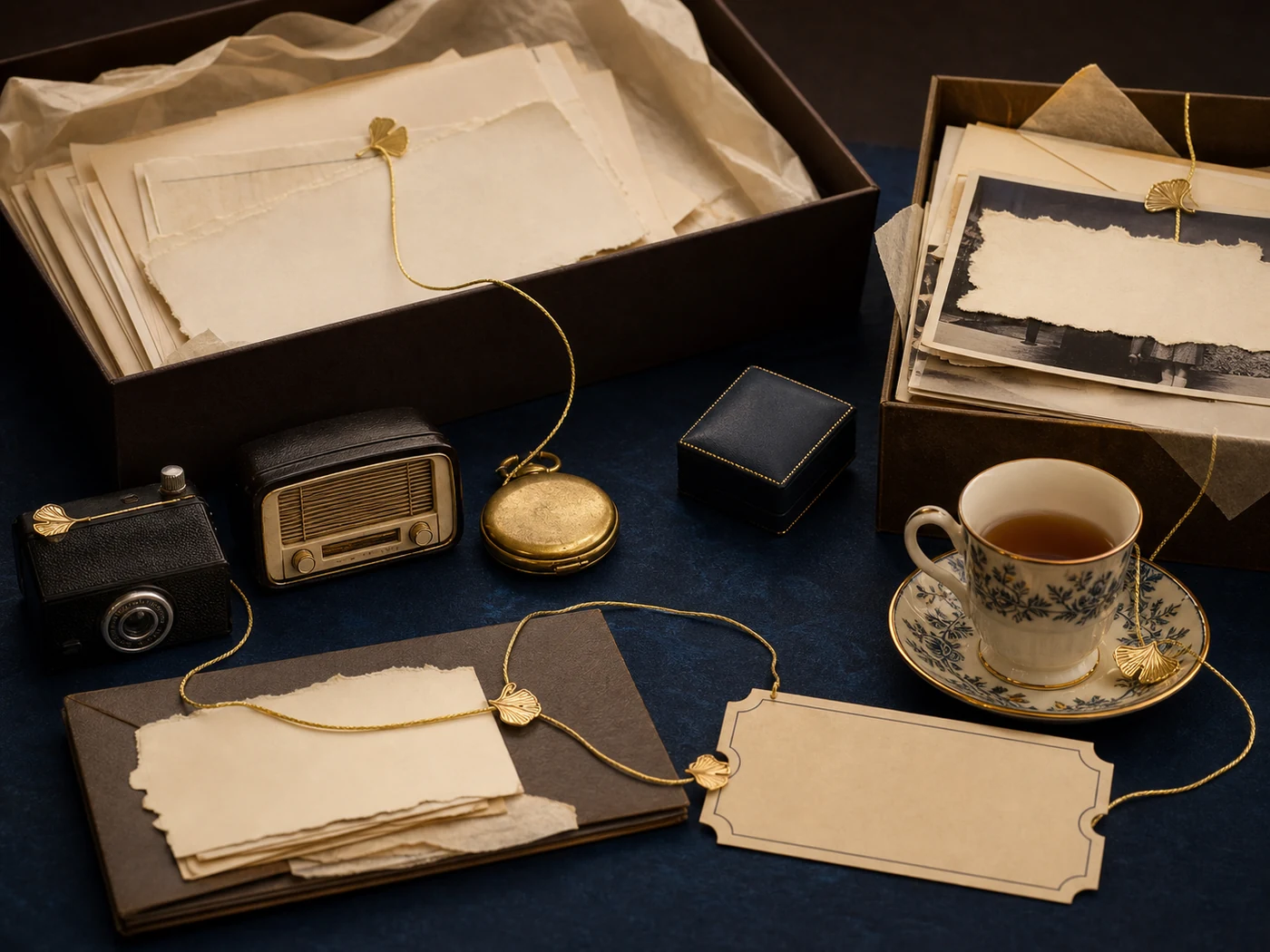
Recipient memory, direct witness, document, or family lore remains labeled until verified.
Distinct changes selected for meaning rather than equal coverage of every decade.
The ordinary choice that carried the relationship through changing rooms and roles.
A current ritual, pleasure, opinion, or plan keeps the couple alive beyond the archive.
The multigenerational chorus
Family or chosen-family contributors can describe what they received: a table where difficult news could be spoken, a skill passed on, a holiday adapted after a move, or an apology modeled in front of them. Limit each generation to one scene. Do not require children or grandchildren, assign perfect-family language, or make descendants the proof that the partnership mattered.
The chorus needs a simple image and a comfortable range. A younger listener can understand ‘you kept one chair beside the window’ without knowing every move behind it. A same-generation friend may hear additional layers. Use group vocals only if they support intelligibility and the couple wants them. Give the partners the lead or final line; a golden anniversary is about their continuing relationship, not only its legacy.
The relationship's own language, present choice, and corrections remain primary.
One action another generation experienced without claiming private knowledge.
A chair, lamp, route, meal, phrase, or song clear enough to carry across ages.
Only essential names enter the lyric; wider family appears in credits or accompanying archive.
Gold symbolism and accessible sound
Gold may represent warmth, repair, light, or a local anniversary tradition. Ask whether it matters. A real gold-edged cup, repaired frame, evening lamp, or piece of jewelry can support the image, but the lyric should not become a catalogue of precious-metal adjectives. Golden anniversary and fifty years share this page because they serve the same search and product job.
Classic orchestral pop offers clear melody and a formal lift; a jazz ballad supports conversational history and mature restraint; a family choir can create communal warmth when rehearsed and mixed below the lead. Ask about hearing preferences, familiar language, tempo, and room acoustics. Use shorter lines, stable notes for names, limited competing harmony, and large printed lyrics if welcome.
Clear lead, controlled strings, familiar melodic shape, and a formal final lift.
Conversational phrasing, piano and acoustic rhythm, restrained brass color, and room for names.
A simple response recorded or performed with consent, always secondary to intelligibility.
Moderate pace, comfortable range, tested volume, good seat, large lyric, and offline backup.
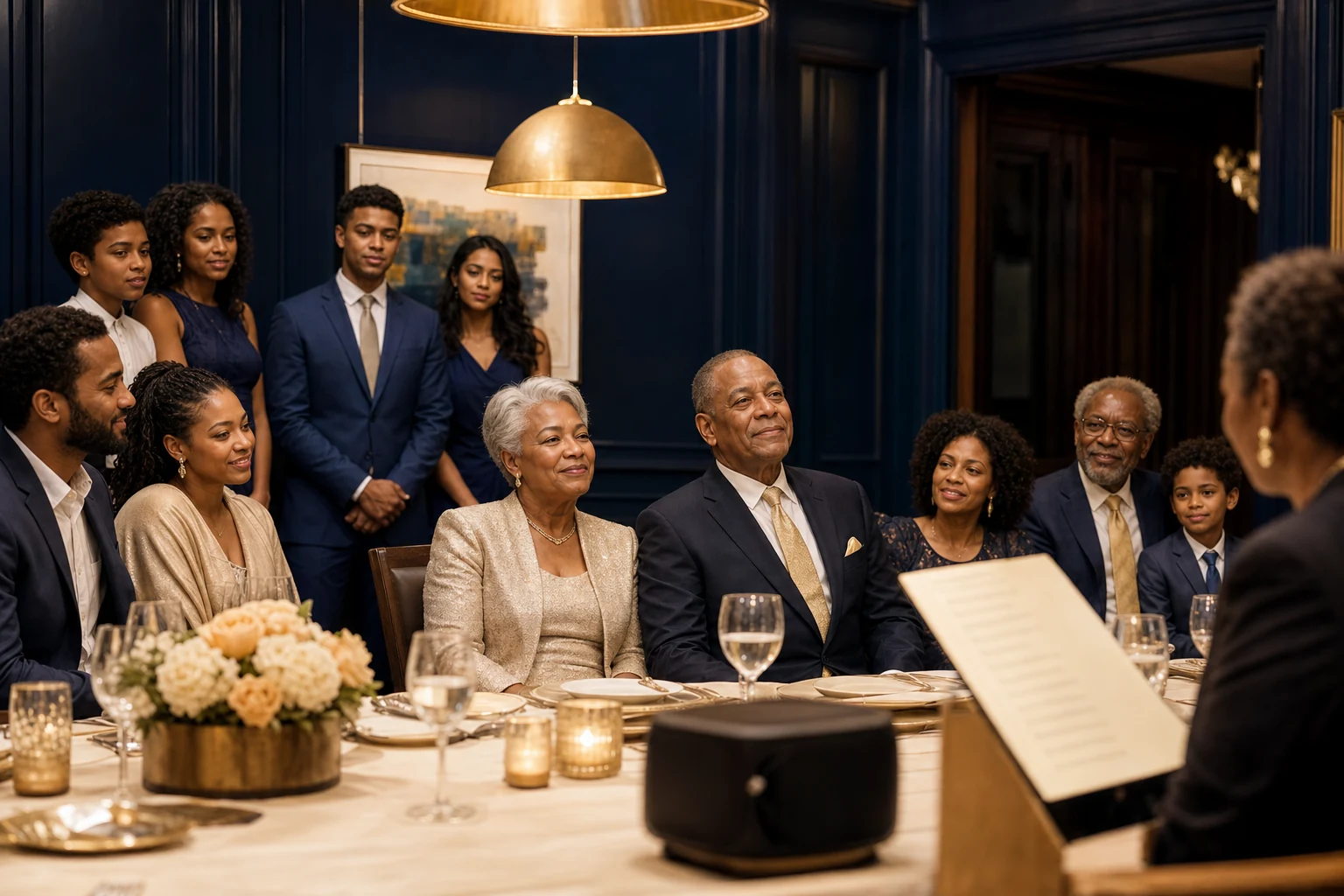
A banquet that the couple can actually experience
Verify facts with the couple whenever surprise secrecy is less important than accuracy. A song can still surprise through music. Difficult migration, war, health, bereavement, faith, finances, estrangement, sexuality, and family history require explicit consent. Check pronunciations, old images, names of absent people, and whether a private version is needed.
Place the couple where they can hear and see without being surrounded by recording phones. Test the vocal at banquet noise, label the file, keep copies on two devices, and give one coordinator the cue. Provide a shorter backup and printed lyrics in readable type. Afterward, return the audio, brief, sources, and images to the couple so they can correct the archive and decide what the next generation may keep.
Origin, eras, names, difficult history, and family lore are verified or clearly bounded.
Seat, volume, pace, sightline, lyric size, and length suit the couple rather than event spectacle.
One operator, labeled master, second device, short backup, and no streaming dependency.
The final materials return to the partners with correction and sharing control.
Story examples
These are transparent story examples, not fake audio demos. They show how real details become a creative direction and a singable lyrical moment.

Story Example
Marta and Evelyn mark fifty years. Their origin is verified by a letter from a community theater. Across several moves, one partner kept a lamp on when the other returned from late rehearsals; friends later experienced the same table as a safe place. Keep discrimination history and health private. Present joy is still attending new plays.
Direction: Jazz ballad with piano, upright bass, brushes, and muted brass color. Let the lamp recur through three rooms and end with current theater tickets rather than legacy language.
Story Example
Family creates a golden anniversary song for Ravi and Sita. Verified eras include a first rented room, a small shop, moving closer to adult children, and their current morning tea. The repeated choice is making decisions at the same window chair. Exclude financial hardship details and the family's interpretation of conflict.
Direction: Classic orchestral pop with piano, gentle rhythm, controlled strings, and a simple multigenerational response. Keep the couple central and use the chair as the clear image.
Story Example
Luis and Ana want a lively banquet song. Several generations know the cooking ritual, but only the couple knows the early years. Use one verified kitchen scene, a move, a later community meal, and their present argument about spice. No memorial language or family roll call. They prefer slower, clear lyrics.
Direction: Gentle orchestral soul with warm bass, piano, light strings, and a short family response after each chorus. Keep names out, leave space for laughter, and place the spice debate in the present verse.
Keep exploring
The life between the milestones
A couple's story, braided with the people who witnessed it
Many branches, one singable line
Questions before you create
Include a verified origin, three selected eras, one ordinary promise repeated across time, the couple's present joy, and one or two witness effects. Add uncertainty labels, private-history exclusions, golden-symbol relevance, name pronunciation, hearing and pacing preferences, event setup, and musical direction. The couple's voice must remain primary.
No for page intent. Golden anniversary is a common name for fifty years in some locales, so both belong on one page. Gold imagery is optional and should come from the couple's tradition or a real object. Creating a second near-identical page would duplicate the same user need and search intent.
Yes, through one directly witnessed effect or present-day scene each. They should not invent the couple's motives, dominate the narrative, or turn descendants into proof of relationship success. Limit names, let the couple correct the story, and keep a simple chorus younger listeners can understand without erasing complexity.
Use moderate tempo, shorter lines, stable notes for names, a vocal-forward mix, and limited harmony under important words. Test actual speakers and seating, provide large printed lyrics, label two offline copies, prepare a shorter backup, and choose one cue owner. Ask the couple about comfort rather than assuming hearing needs.
Only with explicit consent and accurate sourcing. Migration, war, bereavement, health, discrimination, faith, finances, estrangement, and family conflict can be meaningful but are not automatically public. Focus on a verified action, create a private version when needed, and never turn a golden anniversary into a memorial or suffering narrative.
Your turn
Bring its verified origin, three eras, one present joy, and the people who witnessed its effect. The agent will keep the couple at the center.
Create a 50th anniversary song