Origin
A verified place, household, gathering, route, occupation, or relationship that gives the first verse physical ground.

Many branches, one singable line
Start with the road people traveled, the recipe that changed countries, the phrase children repeat without knowing its origin, the table ritual, the elder's story, or the person whose absence is still part of the gathering. The agent edits many contributions into one arc instead of a roll call.
Start the song
Replace each blank with real names, moments, and details—the more specific you are, the less generic the song. Everything stays editable in the studio before anything is generated.
What you are making
Family reunions contain too much material: origin places, migrations, recipes, military service, farms, city apartments, marriages, divorces, chosen family, new children, lost languages, recurring jokes, absent relatives, and several versions of who started the tradition. A song cannot carry all of it. It needs a loom: one line moving from where people began, through how they moved and what they repeated, into the room that exists now.
Creatune asks who is included, which branches or chosen-family relationships are present, whose history has been verified, what traditions still live, which details remain private, and whether the track should support listening, dancing, a photo film, or call-and-response. Contributors provide one witnessed scene each. The agent organizes those scenes into an arc, while the family chooses names, pronunciation, faith, migration, adoption, estrangement, and remembrance language before lyrics are sung publicly.
The multi-generation story loom
A strong reunion song follows one thread across time instead of listing every relative and milestone.
Begin with an origin that can be verified: a town, block, farm, apartment, congregation, workplace, ship, train, road, school, or first gathering people still reference. Movement can be geographic or relational: migration, relocation, joining families, adoption, return, separation, or the annual drive that keeps distant branches connected. Avoid turning movement into a heroic myth when it also held loss, coercion, poverty, discrimination, or unfinished grief.
Choose one repeated ritual that survived or changed—bread folded a certain way, a game after dinner, names called across a yard, chairs borrowed from neighbors, a photograph retaken, or a phrase used before departure. Let the current gathering answer the origin. New partners, children, chosen family, and people joining remotely should not appear as footnotes to a fixed past; they are evidence that the family story is still being edited.
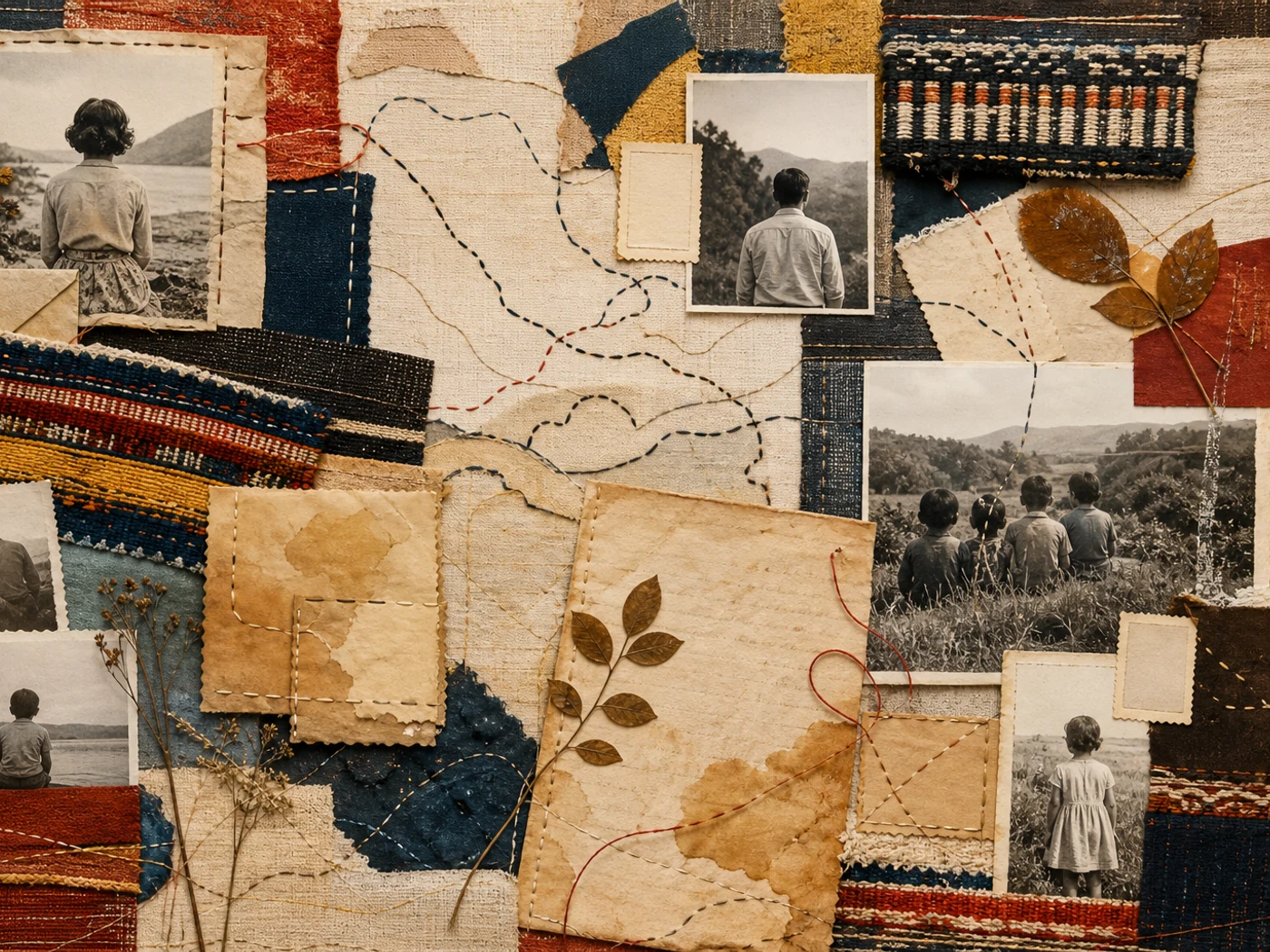
A verified place, household, gathering, route, occupation, or relationship that gives the first verse physical ground.
Migration, distance, joining, adoption, return, annual travel, or change described without flattening complexity.
One recipe, phrase, game, song, photograph, table habit, object, or recurring mishap that carries continuity.
Who is here now, who joins differently, what has changed, and which message the chorus can honestly share.
From many voices to one song
Send contributors a narrow request: describe one action, place, phrase, food, journey, object, or moment you personally witnessed. Ask for spelling, pronunciation, approximate date, people present, and whether the detail may be shared with the full room or online. Do not ask for a complete family history; that produces repeated praise, conflicting facts, and long paragraphs nobody can sing.
Group submissions into origin, movement, ritual, humor, care, change, and absence. Choose two or three scenes that create progression. Give one editor final responsibility and one representative from each major branch a fact review. Names can appear in a spoken introduction, program, lyric sheet, or contributor note; the track itself should use only the few names whose presence changes the story.
One witnessed scene per contributor with spelling, pronunciation, ownership, privacy, and public-sharing status.
Sort by narrative meaning rather than family rank, generation, submission order, or who wrote the longest paragraph.
Select the scenes that move from origin to gathering; preserve unused memories in a printed or digital family archive.
Use branch reviewers for facts and one final editor for lyric coherence, name density, timing, and public boundaries.
Belonging without erasure
Reunion lyrics often default to a family name and a single origin story. That can exclude adopted relatives, stepfamilies, spouses, unmarried partners, queer family, chosen family, descendants with different surnames, and branches whose history does not follow the dominant narrative. Ask how the group names itself and whether ‘blood,’ ‘legacy,’ ‘home,’ ‘our fathers,’ or similar language accurately includes the room.
Some relatives are absent because of death, distance, health, cost, visa restrictions, estrangement, conflict, or choice. Do not collapse these into one sentimental line. Confirm which absences may be named and whether the person would want inclusion. Faith, military history, migration, land, race, adoption, and family conflict require exact language. A song can hold complexity by choosing a modest shared truth rather than declaring unity that people do not experience.
Branches, partners, stepfamily, adopted relatives, chosen family, new children, remote participants, and people using other names.
Blood, legacy, homeland, faith, surname, patriarch, matriarch, and ‘where we come from’ may not fit everyone.
Separate remembrance, distance, access, health, conflict, and choice; do not explain an absence without permission.
A ritual, route, table, act of care, question, or commitment the room can claim without erasing difference.
The reunion room plan
A listening tribute can carry more narrative detail and a patient opening. A meal-time track needs clear vocals and enough restraint that people can hear lyrics across a long table. A dance version should orient quickly, use public-safe humor, and build a chorus before attention disperses. A call-and-response song needs short phrases, comfortable range, printed or projected words, and rehearsal with one confident leader.
Confirm room size, ages, hearing access, language needs, speaker placement, filming consent, and the person responsible for playback. Download two copies and remove autoplay. Pronounce every included name and place with a family reviewer. If the event will be posted, create a public-safe edit without private history or unapproved faces. End with a cue the room understands—applause, singing, photographs, a toast, dancing, or silence.
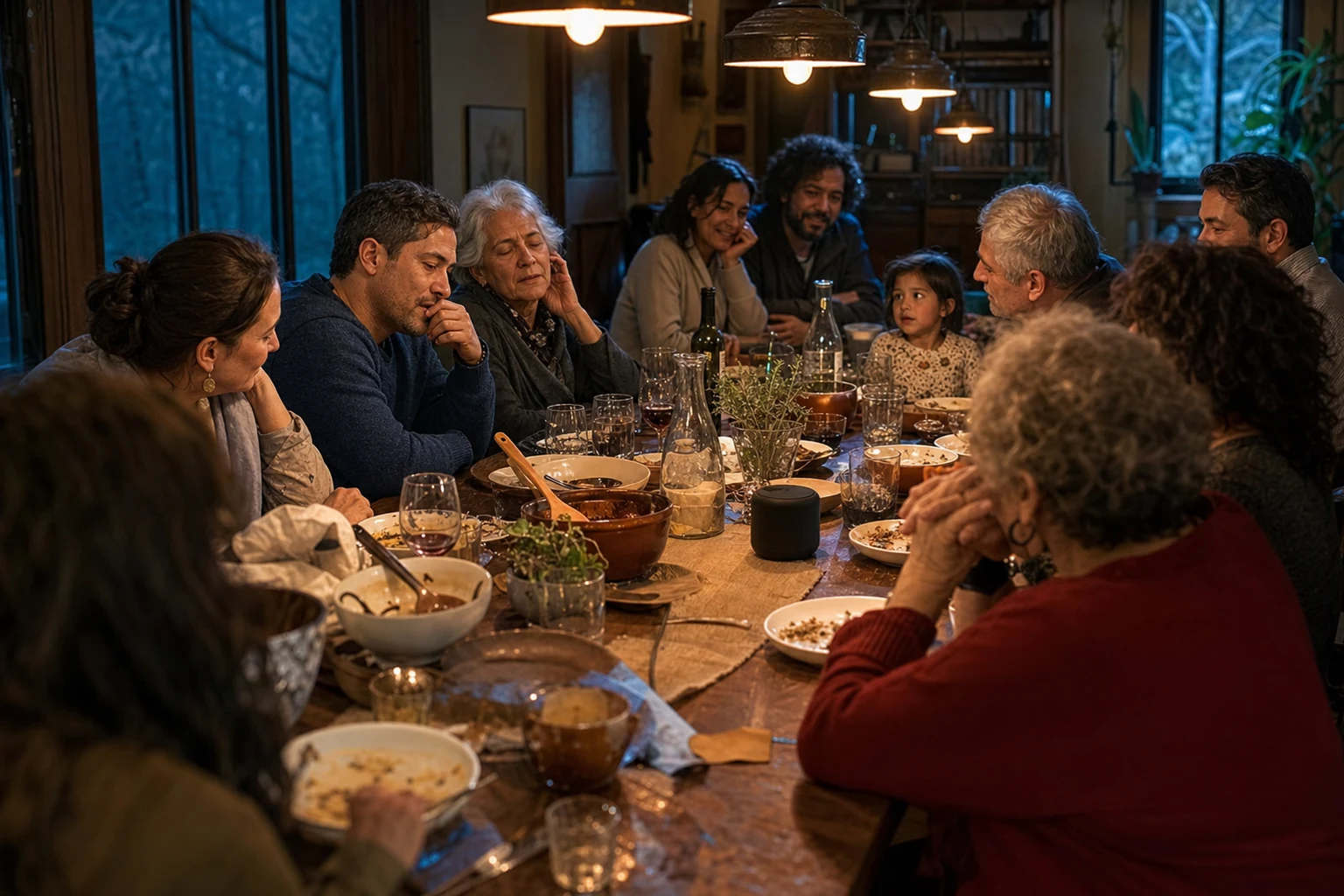
Narrative clarity, selected life detail, seated attention, lyric sheets when useful, and a planned transition afterward.
Moderate volume, clear vocal, references across generations, no private disclosure, and one person introducing the track.
Fast orientation, broad hook, approved humor, rhythmic lift, short verses, and a tested sound system.
Simple phrases, comfortable range, visible words, multilingual planning, one leader, and room for children and elders.
Story examples
These are transparent story examples, not fake audio demos. They show how real details become a creative direction and a singable lyrical moment.

Story Example
The Haddad family reunion includes relatives from Lebanon, Brazil, Canada, and France. Use great-grandmother Salma's flatbread technique, the flour tin carried to São Paulo, cousins comparing three versions of the recipe, and a video call with an uncle unable to travel. Verify Arabic and Portuguese pronunciation. Avoid claiming one migration story represents every branch.
Direction: Roots ensemble with oud-like plucked texture described generically, acoustic guitar, frame drum, bass, and multilingual call-and-response only for family-approved words. Let the recipe change across places and make adaptation—not purity—the shared chorus.
Story Example
Four generations of the Brooks family meet every July at a rented lakeside park. Include the photograph retaken on the same dock, aunt Lena arriving with folding chairs, teenagers teaching grandparents a new card game, and rain moving lunch under one shelter. Chosen-family partners are part of the group; avoid surname-only belonging.
Direction: Upbeat soul with punchy bass, handclaps, organ, and a chorus easy for the room. Use the dock photograph as continuity, make the changed card game evidence of two-way exchange, and write belonging around showing up rather than bloodline.
Story Example
The Singh-Reyes family gathers after six years apart and wants a reflective song before dinner. Four tables are pushed together; one place honors grandmother Lita through her orange-peel candy, but the gathering should not become a memorial. Include airport pickup signs, children meeting in person after video calls, and both Punjabi and Mexican family branches without merging their traditions.
Direction: Cinematic folk with acoustic guitar, bowed strings, hand percussion, and alternating voices. Let four tables be the structural image, give each tradition its own verified detail, hold Lita in one verse, and open the final chorus toward the children meeting now.
Keep exploring
Questions before you create
Include who will gather, the family branches and chosen-family relationships, one verified origin or route, one repeated ritual, two or three witnessed scenes, respectfully handled absences, a shared message, and the intended room use. Edit toward one arc instead of listing every person, date, achievement, and place.
Ask each contributor for one personally witnessed action, object, recipe, phrase, place, or journey plus spelling, pronunciation, date context, and sharing permission. Cluster submissions by meaning, appoint one editor, use branch reviewers for facts, put only essential names in lyrics, and preserve unused stories in a separate family archive.
Yes, with specific permission and distinct language. A deceased relative may be remembered through a verified ritual or phrase; someone absent because of distance, access, health, conflict, or choice should not be explained without consent. Decide whether absence is one thread, a spoken dedication, or material for a separate private version.
Ask how the group defines belonging and avoid defaulting to bloodline, one surname, one married couple, one faith, or one origin story. Use names and relationships people choose, include multiple branches accurately, and build the chorus around shared action, care, ritual, or return rather than inherited status.
Match the event: roots ensemble or cinematic folk for a listening story, upbeat soul or funk for a celebration, and short call-and-response for group singing. Consider ages, language, hearing access, vocal range, room acoustics, and public privacy. Test the system, provide lyrics when useful, and assign one playback leader.
Your turn
Tell the agent who is gathering, how the branches moved, what they still repeat, and which shared truth the whole room can sing.
Create a family-reunion song