Origin
A place, family practice, early fascination, or first responsibility that gives the listener a starting room.

Five chapters, one unmistakable chorus
Curate five scenes that reveal how they love, work, make, help, laugh, and begin again—then leave the final chorus open to what comes next.
Start the song
Replace each blank with real names, moments, and details—the more specific you are, the less generic the song. Everything stays editable in the studio before anything is generated.
What you are making
Fifty years contain too many people, places, jobs, rooms, jokes, losses, skills, and ordinary mornings for one track. The creative work is selection. A strong personalized 50th birthday song chooses five representative chapters and finds the behavior connecting them: welcoming newcomers, fixing what others abandon, asking the question nobody else will ask, making every gathering louder, or returning to a craft after long pauses.
Creatune's five-chapter curator helps contributors choose scenes rather than achievements. It controls how many names enter the lyric, separates verified memories from family lore, balances contribution with future curiosity, and asks whether the track is a private gift or a room event. Fifty is not automatically retirement, nostalgia, grandchildren, property, or a conventional life story. The song can honor what has accumulated while making clear that the subject is still creating the next chapter.
The five-chapter curator
Five chapters are enough to show range without flattening a person into a timeline.
Draft ten possible chapters, then keep five that change the emotional picture. One might be an origin place; another a friendship or chosen-family room; a third the craft or work through which the recipient affected others; a fourth an unexpected turn; and a fifth the life they inhabit now. A chapter is not ‘career.’ It is the first toolbox kept under a rented kitchen table, the classroom door held open late, the market stall assembled in rain, or the notebook that survived three job changes.
After selecting the scenes, identify the through-line. Perhaps the recipient always makes a spare place, translates confusion into a plan, turns scraps into useful things, or remembers the quiet person in the room. The chorus should name that repeated effect in language guests can recognize. Do not force every decade into equal space. Chronology is a scaffold; emotional truth comes from the recurring action that makes fifty years sound like one life rather than five unrelated anecdotes.

A place, family practice, early fascination, or first responsibility that gives the listener a starting room.
One friendship, partnership, family, or chosen-family scene that shows belonging through action.
A concrete work, care, art, teaching, making, or community scene rather than a list of roles.
One unplanned turn paired with a future curiosity that remains genuinely open.
Name-density control
A fiftieth celebration often gathers family, old friends, colleagues, teammates, neighbors, and people from different eras. Ask each group for one witnessed scene, then cluster their evidence by chapter. Names belong in the lyric only when recognition depends on them. Too many names turn the song into acknowledgments; too few can erase the relationships that made a chapter possible. Use group language carefully and never claim ‘we all’ when contributors have different histories.
Choose one room hook that many guests can recognize without needing their names included. It might be the recipient's phrase before every road trip, the copper pot always feeding one more person, the song started while washing dishes, or the way they arrive early with tape and scissors. Place contributor names in a printed note, video credits, or gift card when the lyric is already full. This preserves musical shape while honoring the collaborative archive behind it.
Each contributor supplies one action they personally saw rather than a borrowed family legend.
Memories are grouped by emotional function so several voices can support one concise scene.
A phrase, object, gesture, or ritual recognizable across eras and easy to carry in a chorus.
Contributor names, dates, photographs, and longer context can live in the card or film credits.
Legacy ↔ next adventure
Legacy does not need to sound monumental. It can be a method taught, a neighborhood table kept open, a family language preserved, a practical skill passed on, a friendship maintained across distance, or a child shown how to apologize. Use the word only when it fits the recipient. Contribution can be recognized without calling them selfless, indispensable, or responsible for everyone else's stability. The song should not reward a pattern that has exhausted them.
The future side needs the same specificity. Ask what they want more room for: a new garden, less hurried travel, performing again, a course, a business idea, grandchildren only if real and welcome, deeper community work, or nothing grander than unclaimed Saturdays. Classic soul creates warmth and cross-generational recognition. Celebratory rock adds a public hook. Elegant pop holds a polished event without sounding nostalgic. In each direction, the final chorus should face forward.
Warm rhythm section, organ or brass color, call-and-response potential, and a hook guests of different ages can carry.
Live drums, guitar lift, direct room energy, and enough lyrical space for a signature phrase.
Polished arrangement, clear story pacing, restrained sentiment, and a future-facing final section.
Fewer chapters, one relationship point of view, and more space for a change not suited to the banquet room.
A room that knows the hook
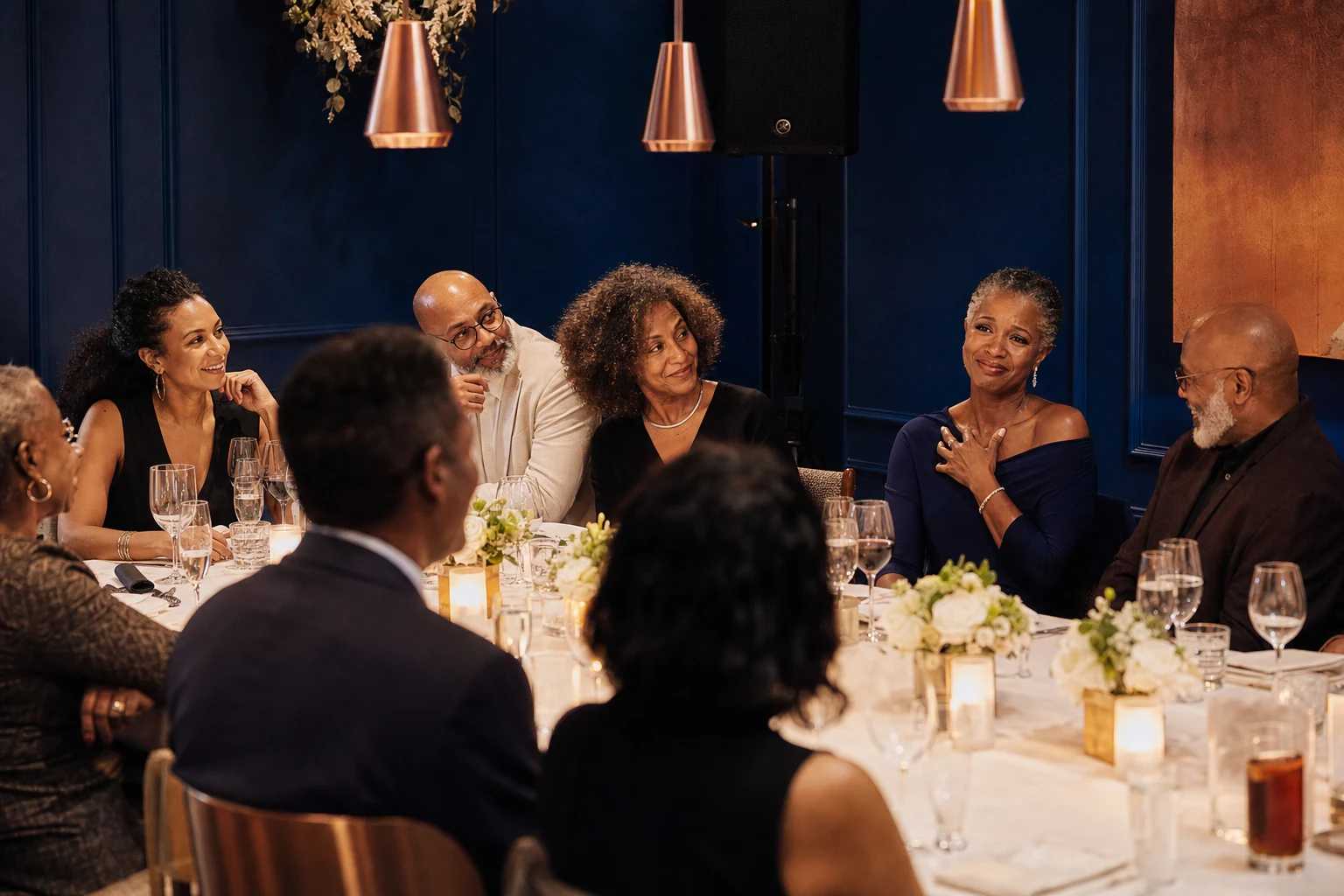
For a banquet, send the final lyric to a small fact-check group, verify every pronunciation, and decide who owns the cue. Test the song through the actual sound system while the room is occupied if possible; speech-heavy venues swallow words. Keep a downloaded master and a shorter backup edit. Place the track before the longest speeches, when guests still have attention. Introduce it in one sentence and let the recipient listen without a camera blocking their view of the people represented.
A five-object display or photo sequence can echo the chapters, but avoid turning the song into a slideshow caption. Let images breathe across several lines and include current photographs so the story does not finish in the past. If the recipient dislikes public emotion, offer the full track privately and use an instrumental or shorter chorus at the party. The gift works when the person feels accurately seen, not when the room obtains the largest visible response.
Two or three trusted listeners verify dates, pronunciations, ownership, public safety, and the balance between eras.
One operator, tested vocal level, notifications off, downloaded master, and a short backup version.
Objects or images support chapter transitions without demanding literal illustration of every line.
The recipient hears the full story without an audience; the event uses a shorter or less intimate edit.
Story examples
These are transparent story examples, not fake audio demos. They show how real details become a creative direction and a singable lyrical moment.

Story Example
Marisol turns fifty at a banquet. Five chapters include her coastal childhood, moving alone to a new country, the salon she built, Sunday tables for new arrivals, and the drawing course she has just started. Contributors want one recognizable hook about always finding another chair. Exclude immigration paperwork, finances, divorce, and any claim that she is retiring.
Direction: Classic soul with warm bass, drums, organ, restrained brass, and a call-and-response chorus. Give each chapter one tactile scene, use the chair as the through-line, and turn the final verse toward drawing and future travel.
Story Example
Devon turns fifty and has worked as a stage technician, parent, community-theater mentor, and furniture maker. His children remember learning knots backstage and the tiny toolbox under the kitchen table. The party should be energetic but avoid health, hair, money, and ‘old man’ jokes. His next plan is to build sets for a youth production.
Direction: Celebratory rock with live drums, guitar, organ, and a compact chantable hook. Use five versions of the toolbox to connect work, parenting, mentoring, making, and the next youth show without listing job titles.
Story Example
Mei turns fifty privately. Her partner wants to honor research, caregiving for a parent, a return to piano, and their habit of marking future train routes on a paper map. Do not use sacrifice language or name a difficult sibling conflict. The future should feel curious rather than pressured.
Direction: Elegant pop with piano, muted electronic percussion, low strings, and a close vocal. Keep four chapters compact, let the paper map open the chorus, and frame white space as permission rather than incompleteness.
Keep exploring
A birthday song that knows the person
Four decades, edited by what matters now
Contribution around them, possibility ahead
Questions before you create
Choose five representative chapters, at least two directly witnessed scenes, one behavior or object connecting the eras, and a future curiosity. Also define contributor roles, name limits, public and private topics, humor boundaries, playback setting, and musical direction. Selection makes a half-century feel coherent without reducing it to achievements.
Name only people required for emotional recognition. Several contributors can supply memories without appearing in the lyric. Cluster their evidence by chapter and credit them in a card, booklet, or video. A smaller number of meaningful names usually produces a clearer hook and avoids making the track sound like event acknowledgments.
No. Fifty does not imply retirement, career closure, grandchildren, a particular family structure, or a slower life. Mention work or a next chapter only in the recipient's own terms. The page deliberately balances contribution with unfinished curiosity so the final chorus does not turn the birthday into a farewell.
Yes. Give each group one chapter or directly witnessed scene, then appoint a small fact-check circle to resolve dates, names, privacy, and repeated stories. Avoid voting on the recipient's identity. The final editor should preserve different perspectives while selecting one through-line and one room-sized chorus.
Classic soul supports cross-generational warmth, celebratory rock creates a strong room hook, and elegant pop gives a polished, less nostalgic option. Choose from the recipient's actual taste and venue. Test lyric clarity on the event speakers, download a backup, and consider a shorter public edit if the full story is intimate.
Your turn
Bring one object, one action, and one witness from each era. The agent will find the through-line and leave the final chapter open.
Create a 50th birthday song