Welcome guests
Fast emotional orientation, light story detail, and enough energy to sit under greetings and movement.
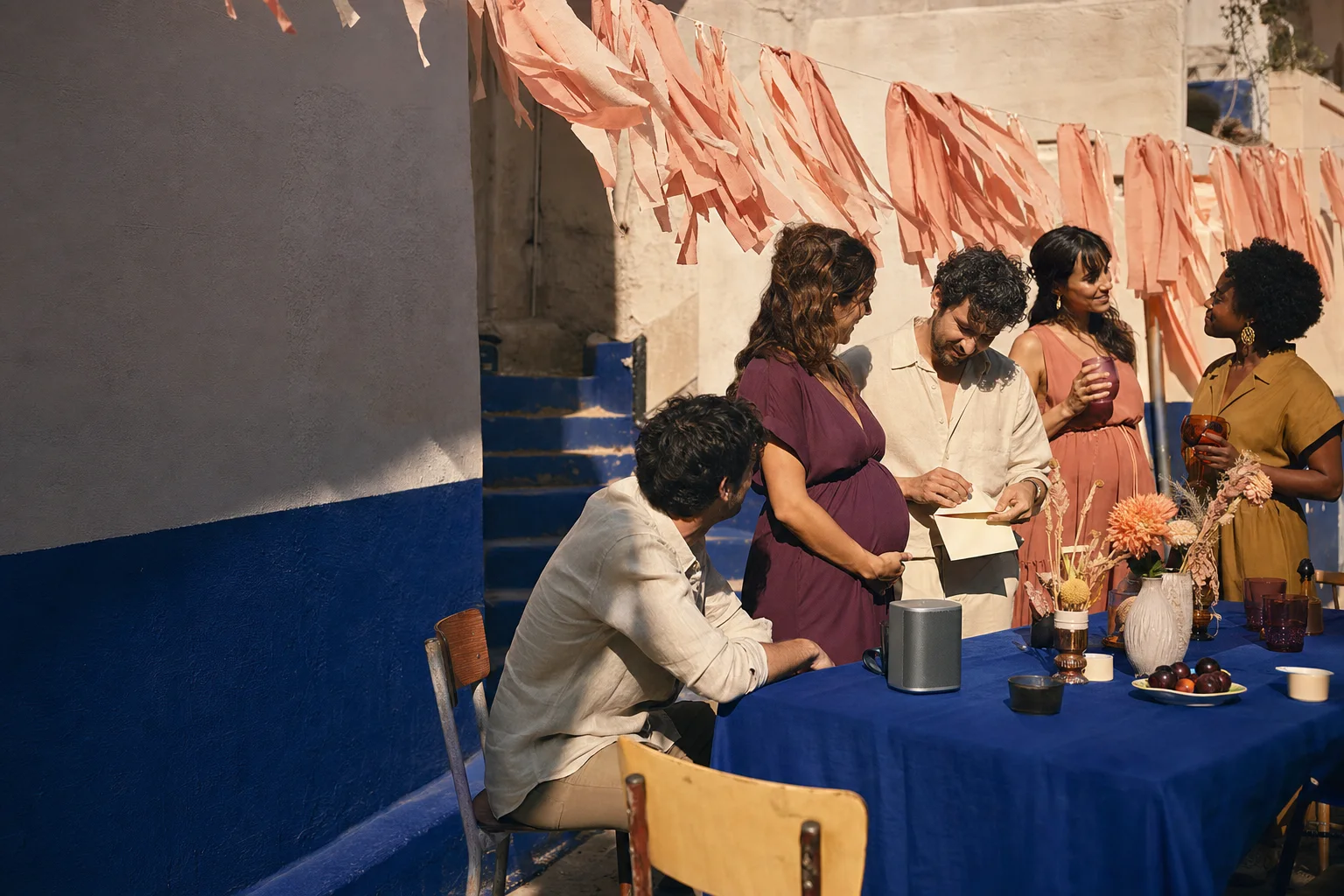
Plan the song around the shower moment
Welcome the guests, surprise the parents, reveal a name, or turn the friend group's memories into a chorus. Start by deciding what the song must do—and what it must not reveal too early.
Start the song
Replace each blank with real names, moments, and details—the more specific you are, the less generic the song. Everything stays editable in the studio before anything is generated.
What you are making
The same family story needs different treatment when the track welcomes guests, accompanies a photo montage, delivers a gift from friends, or reveals information nobody in the room knows yet. A useful custom baby shower song has a clear cue, an audience-safe level of detail, and an ending that supports what happens next.
Begin with the song's job, then use the Creatune prompt to record the host or giver, the parents' preferred names, what is already public, what must remain hidden, how the guests know one another, and whether the room should listen quietly or join the chorus.

Event role
A guest-welcome track should establish warmth quickly and avoid a dense family history people cannot follow while arriving. A gift song can slow down, address the parents directly, and include more of the journey that friends witnessed. A montage song needs clear sections and enough space for photographs. A group singalong needs short lines, a repeated hook, and a range ordinary guests can attempt without rehearsal.
A reveal is a different design problem. The song must sound complete before the new information arrives, then create a clear moment of recognition. Decide whether the reveal appears in the final chorus, on the last line, or only after the music when the host opens an envelope or makes an announcement.
Fast emotional orientation, light story detail, and enough energy to sit under greetings and movement.
A direct point of view, more narrative space, and a message about the community waiting beside them.
Neutral early language, an exact reveal marker, and a final section that gives the room time to react.
A visible beginning, middle, and lift that supports images of the parents, family, and preparations.
Short verses, a predictable chorus, clean language, and a hook guests understand by the second repeat.
Reveal control
Put public information on one side: the pregnancy, the parents' nicknames, a nursery color, a shared joke, or the fact that guests traveled from several places. Put protected information on the other: the child's name, sex, due date, adoption or surrogacy details, a hidden guest, or a message one parent has not heard. The lyric plan should state exactly when protected material becomes available.
Review the title and filename as well as the lyrics. A track called ‘Welcome Baby Sofia’ can spoil a reveal before it plays. Use a neutral project name, listen through headphones, and send collaborators only the final version plus the cue they need. If two people are coordinating, write down who starts the music and who performs the reveal.
Parents, shared memories, public preparations, friendly jokes, and details already used in invitations.
Name, sex, surprise giver, hidden relatives, or any personal history not yet shared by the parents.
Use a title that cannot appear in notifications, Bluetooth menus, shared folders, or the event playlist and reveal the answer.
Leave an instrumental bar or a clean ending after the reveal so applause and conversation are not competing with another verse.
Friends and family as source material
Ask contributors for one concrete memory or observation each. ‘You will be amazing parents’ gives the song nowhere to go; ‘you practiced installing the car seat three weekends in a row’ creates character, humor, and a scene. Group the material into themes such as preparation, community, inherited traditions, and the future everyone hopes to share.
Edit contributions for privacy and balance. One loud friend should not occupy the whole song, and an inside joke should not confuse or embarrass the wider room. Let one or two memories establish the verses, then use the chorus for the collective message. Names can appear selectively; the feeling of a group does not require listing every guest.
Request one action, object, place, or sentence the contributor genuinely witnessed.
Sort details into preparation, relationship, family tradition, humor, and future support before writing.
Remove unexplained jokes, pregnancy disclosures, conflict, and medical detail that do not belong at the event.
Let individual memories change across verses while the whole room shares one uncomplicated promise of support.
The actual shower
Test the speaker in the space, download the track, and decide whether guests need printed lyrics or a simple verbal invitation to join. For a montage, confirm the exact video length and whether the song should begin before the first image. For a gift, seat the parents where they can listen without also managing food, photographs, and the next game.
If the event will be filmed, choose public-safe lyrics and confirm the people shown are comfortable with sharing. Keep a backup on a second phone and disable notifications on the playback device. After the reveal or final chorus, stop the playlist from rolling immediately into an unrelated song.
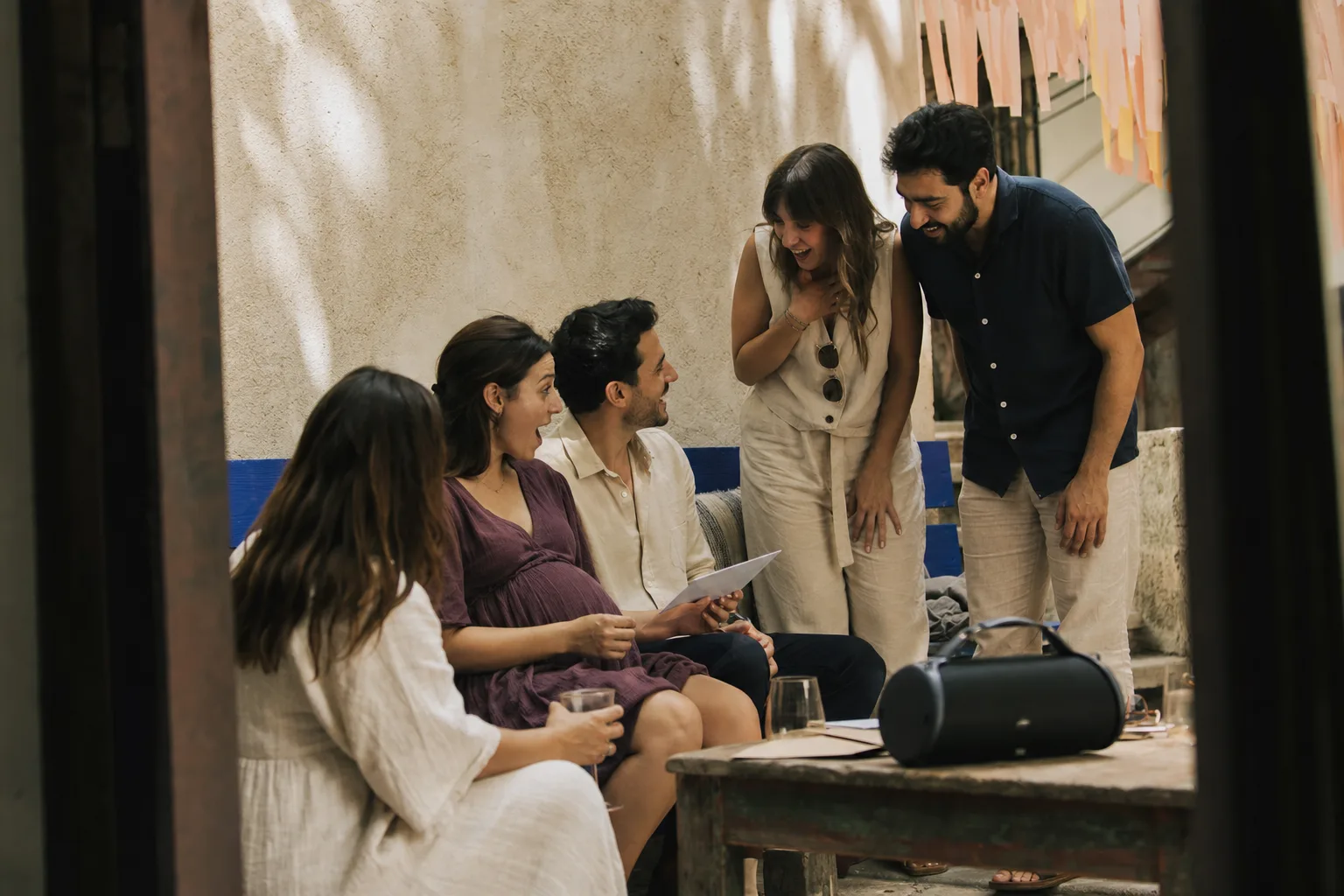
Write the exact sentence or action that starts the track, especially when a reveal depends on timing.
Check volume against conversation, outdoor noise, and the distance between speaker and guests.
Store the final version on two devices and label it clearly for the person responsible for playback.
Turn off autoplay and leave room for the parents, guests, photographs, and any announcement that follows.
Story examples
These are transparent story examples, not fake audio demos. They show how real details become a creative direction and a singable lyrical moment.
Story Example
Six friends create a gift for Maya and Jo. Include the Sunday they all painted the small nursery, Jo measuring the crib twice, Maya keeping a notebook of family recipes, and the promise that the child will grow up with many trusted adults. No name or sex is public yet.
Direction: Tender acoustic folk with alternating voices and a collective final chorus. Use preparation scenes, avoid baby-name placeholders in the audible lyric, and keep the final message focused on community support.
Story Example
At the end of the shower, the grandparents will open a gold envelope revealing the name ‘Elena.’ Guests know the parents met in a record shop and call the baby ‘Little B’ for now. The real name must appear only once in the final line.
Direction: Playful sixties-inspired pop with handclaps and brass punctuation. Keep every early reference neutral, build to a hard stop before the final sung name, then leave two bars for the room reaction.
Story Example
A shower montage follows childhood photos of both parents, their long-distance years, the family members traveling to attend, and the half-finished home they are preparing. The last image shows everyone gathered in the courtyard.
Direction: Warm group soul with a quiet opening, a mid-song rhythmic lift for the couple's shared life, and a final chorus timed to the courtyard group photograph.
Keep exploring
Creatune Personalized Songs
A welcome made from the first true details
A first-year time capsule made to be heard twice
Questions before you create
A custom baby shower song becomes personal through real details about the parents, their community, preparations, shared jokes, family traditions, and the song's role at the event. Start with what guests or givers genuinely witnessed, then choose a public-safe message the room can understand.
Yes. Mark which information is protected and choose the exact reveal point: final chorus, final line, or after the song. Use a neutral filename, review every lyric for accidental clues, and coordinate the playback cue with the person making the announcement.
Yes. Ask each person for one concrete scene rather than a general compliment, then group the memories into a coherent arc. Use selected details in the verses and one shared support message in the chorus so the track sounds like a song rather than a list of signatures.
Yes. Provide the montage length, opening and final images, major photo eras, and any spoken audio that needs space. The song can use clear sections and an emotional lift without narrating every photograph. Test the exact exported audio against the finished edit before the event.
Download the final file to two devices, test the speaker in the real space, assign one person to playback, and write down the cue. Turn off notifications and autoplay. For a reveal, confirm who starts the music, who reveals the information, and what happens after the final line.
Your turn
Choose whether the song welcomes, gives, reveals, or gathers the room—then add what only this group would know.
Create a baby shower song