Cue to doors
Operator start, announcement, door movement, and enough audio margin before the first person appears.
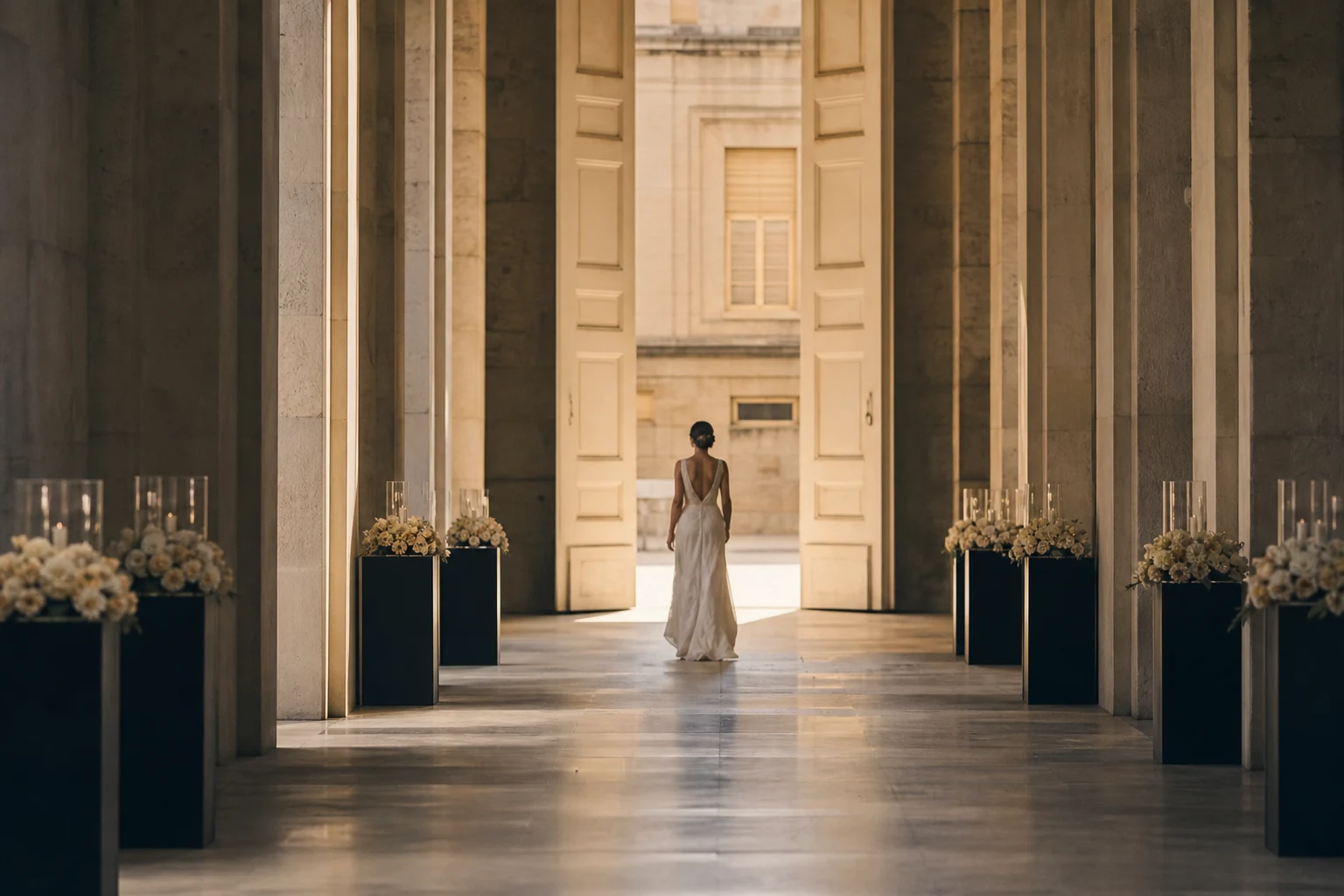
Doors open, aisle unfolds, music arrives with the person
Measure the procession, choose the opening cue, build, instrumental hold, and arrival peak, then add only the story the moving moment can carry.
Start the song
Replace each blank with real names, moments, and details—the more specific you are, the less generic the song. Everything stays editable in the studio before anything is generated.
What you are making
An entrance can involve one person, the couple, wedding party, family groups, or several processions moving at different speeds. The music needs an unmistakable start, a predictable emotional rise, enough instrumental room for walking, and an arrival section that can hold if the route takes longer. A song built only from lyrical emotion can peak while doors are still closed or finish before the final person reaches the front.
Creatune's walk-length mapper starts with procession order, venue, and measured seconds. The agent plans doors open, aisle, hold zone, and arrival, then decides where a small amount of story or vocal belongs. It also creates coordinator notes for the cue owner, audio operator, file, backup, and variable pace. This page covers general ceremony entrance intent; more specific bride or groom entry needs a separate people-and-procession decision only when search intent remains distinct.
Doors open → aisle → arrival
Distance is not timing until someone walks it in the actual setting.
Walk the route from the audio cue to the final position. Measure doors opening, any turn or threshold, aisle length, pauses, photography congestion, stairs, terrain, and seating. Time each group in shoes and attire when possible. Children, elders, mobility aids, wide clothing, bouquets, and emotion can change pace; they should never be rushed to fit an edit.
Build an introduction for the operator and doors, a controlled rise for the aisle, a musical hold that can repeat or extend without sounding broken, and an arrival peak. If several groups use one track, mark each entrance zone. If they use separate tracks, plan transitions and silence. A reliable structure tolerates ten extra seconds without forcing the coordinator to fade mid-phrase.
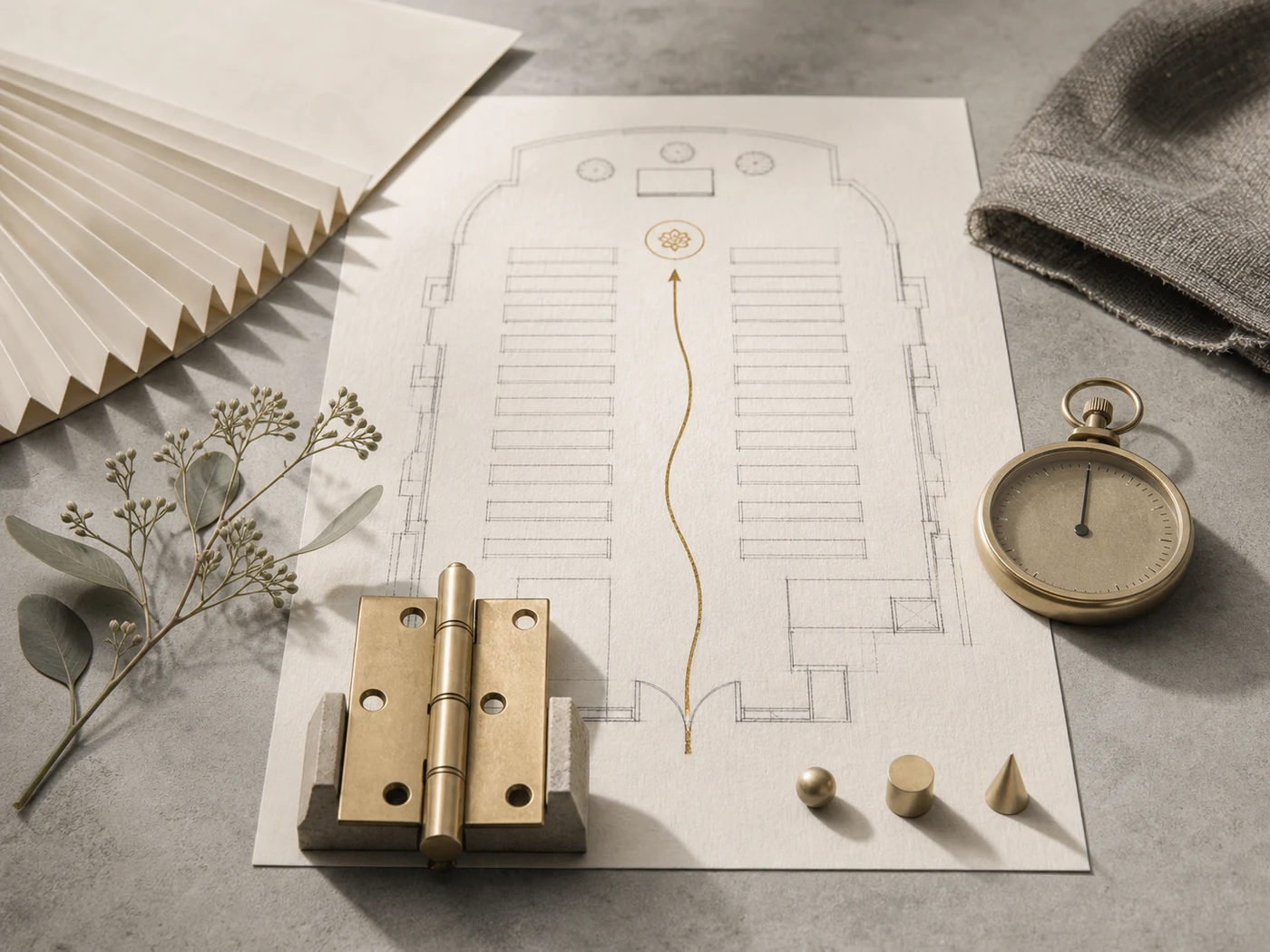
Operator start, announcement, door movement, and enough audio margin before the first person appears.
Measured route at ceremony pace with stairs, turns, photographers, attire, and group spacing included.
Instrumental material that can extend or absorb delay without exposing a broken loop or stranded lyric.
A clear musical landing when the person reaches position, followed by usable sustain or transition.
Story around the movement
Lyrics before the doors open can introduce a relationship image, family phrase, or place. During the walk, dense narrative competes with movement and venue acoustics. Use a short refrain, name only when desired, or an instrumental center. Important vows and private memories usually belong before or after the processional rather than under footsteps, greetings, and camera shutters.
Choose the emotional peak deliberately. It may be the doors opening, first sight, midpoint, final steps, or arrival. Do not assume louder is more emotional. A chamber texture can open space; a bass entrance can mark the threshold; one high string or vocal harmony can signal arrival. The story should support the visual moment rather than ask guests to choose between watching and understanding.
A compact origin image or message can play while guests settle and the procession prepares.
Simple language, stable melody, and room for footsteps, room noise, and visual attention.
The safest place for variable pace, group spacing, and photography interruptions.
A final phrase after position is reached, when guests can hear without missing the entrance.
Venue-aware musical directions
Cinematic acoustic combines a clear pulse with guitar, piano, strings, or percussion that can build without overwhelming vows. Chamber pop offers articulated phrases and elegant instrumental space. Ambient soul adds warmth and a slow pulse while maintaining a modern entrance. Check venue rules, musicians, reverberation, power, and whether recorded vocals are appropriate to the ceremony.
Long halls smear dense lyrics; outdoor spaces lose quiet details; small rooms magnify bass and volume. Test the actual system, not a phone. Give the operator a file with an audible opening marker and no accidental silence. If live musicians will use the composition, provide a separate arrangement plan; do not assume a generated master can substitute for parts, rehearsal, and rights discussion.
Clear opening marker, natural instruments, controlled rise, and an instrumental aisle center.
Articulated strings or piano, measured phrases, elegant restraint, and a precise arrival cadence.
Warm pulse, spacious harmony, modern emotional color, and room for a short refrain.
Reverberation, outdoor loss, speaker position, volume, power, rules, and operator workflow checked onsite.
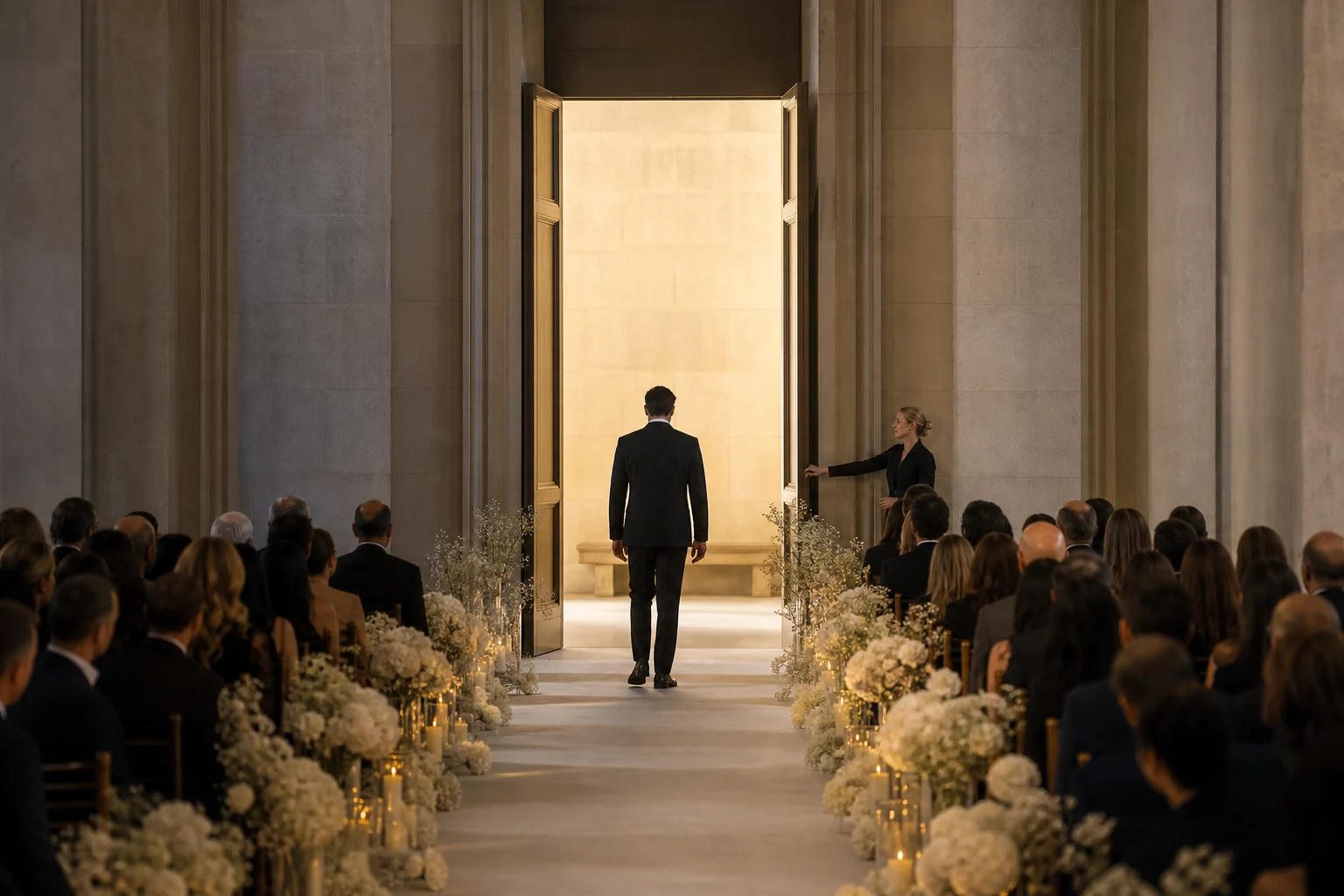
Coordinator-ready entrance file
The cue sheet should name every group, expected entry time, exact start marker, doors-open point, hold section, arrival cue, and what the operator does if walking runs early or late. Give the coordinator and audio operator the same labeled file before rehearsal. Avoid vague notes such as ‘start when ready.’ One person calls the cue; one person operates audio.
At rehearsal, walk the route with the final master, doors, attire approximation, and group spacing. Test the hold and early-arrival plan. Keep offline copies on two devices and a simple fallback track if playback fails. On the wedding day, no one should be editing audio in a corridor. Afterward, preserve the master and cue sheet for the wedding film, where the edit can use more of the story than the live procession could carry.
Group order, timing, spacing, cue owner, audio operator, and each musical landmark written clearly.
A hold, loop, sustain, skip, or safe fade defined before rehearsal rather than improvised.
Actual route, doors, group spacing, final file, and venue system used together.
Two labeled copies and a simple backup track available without network or account access.
Story examples
These are transparent story examples, not fake audio demos. They show how real details become a creative direction and a singable lyrical moment.
Story Example
One partner enters through double doors and walks a 46-second indoor aisle. The doors open at 12 seconds; the desired emotional peak is first sight around 22 seconds; arrival should land by 52–58 seconds with a hold available. Use a short image about meeting in a library, but keep the aisle mostly instrumental.
Direction: Cinematic acoustic with piano, guitar harmonics, low pulse, and strings rising at first sight. Put two lyric lines before the doors, instrumentalize the walk, and create a sustained arrival cadence with an eight-bar hold.
Story Example
Two family groups and the couple enter an outdoor ceremony. Measured times are 28, 32, and 45 seconds with pauses. The track needs three distinct but related cues, no names, an instrumental hold for children, and a final arrival that does not sound religious. Story imagery is a shared coastal path.
Direction: Chamber pop with piano, pizzicato then sustained strings, light percussion, and three clear phrase openings. Build a flexible middle hold and reserve the widest harmony for the couple's arrival.
Story Example
The wedding party and couple use one 3:10 track on a garden route that may slow after rain. The couple wants a warm modern pulse, a lyric refrain, and an operator-safe loop between procession groups. Exclude private vows. The coordinator needs obvious visual waveform landmarks.
Direction: Ambient soul with warm bass, soft drums, electric piano, and a short repeating refrain. Create a seamless 24-second instrumental hold and a clear harmonic arrival for the couple.
Keep exploring
Your story, composed for the room
A love story designed for bodies moving in a real room
One entrance, one person-to-partner message
Questions before you create
Include procession order, measured walk times, venue and route, doors-open cue, desired emotional peak, vocal versus instrumental balance, a variable-time hold, arrival cadence, and coordinator instructions. Add accessibility, attire, surface, audio-system, venue-rule, file-label, rehearsal, and offline-backup details before finalizing the track.
Walk the real route at ceremony pace from operator cue to final position. Include doors, turns, stairs, spacing, photographers, attire, children, elders, and pauses. Time every group separately, then build for the slowest realistic version with a hold section. Do not calculate length from aisle distance alone.
It can, but movement usually benefits from low lyric density. Place a compact story before doors open, use a simple refrain or instrumental center during the aisle, and reserve an arrival phrase for after position is reached. Dense verses compete with visual attention, footsteps, camera shutters, and reverberant rooms.
Use a preplanned instrumental hold, loop, sustain, or safe transition that the operator understands. Mark it in the cue sheet and test it at rehearsal. Avoid placing a critical lyric or arrival cadence where a delay would force an awkward repeat. Keep a simple backup track if the audio workflow fails.
A ceremony entrance song maps doors, procession order, variable walking time, instrumental space, and arrival. A first dance song maps couple movement, comfortable tempo, chorus placement, turns, guest invitation, and ending. Both need cues, but the physical jobs, lyric density, and failure plans are different.
Your turn
Bring the procession order, seconds, venue, doors-open cue, hold zone, and arrival. The agent will turn them into a coordinator-ready entrance structure.
Create a ceremony entrance song