Walk-in
Measured seconds, announcement or door cue, path to position, and enough introduction to arrive without rushing.
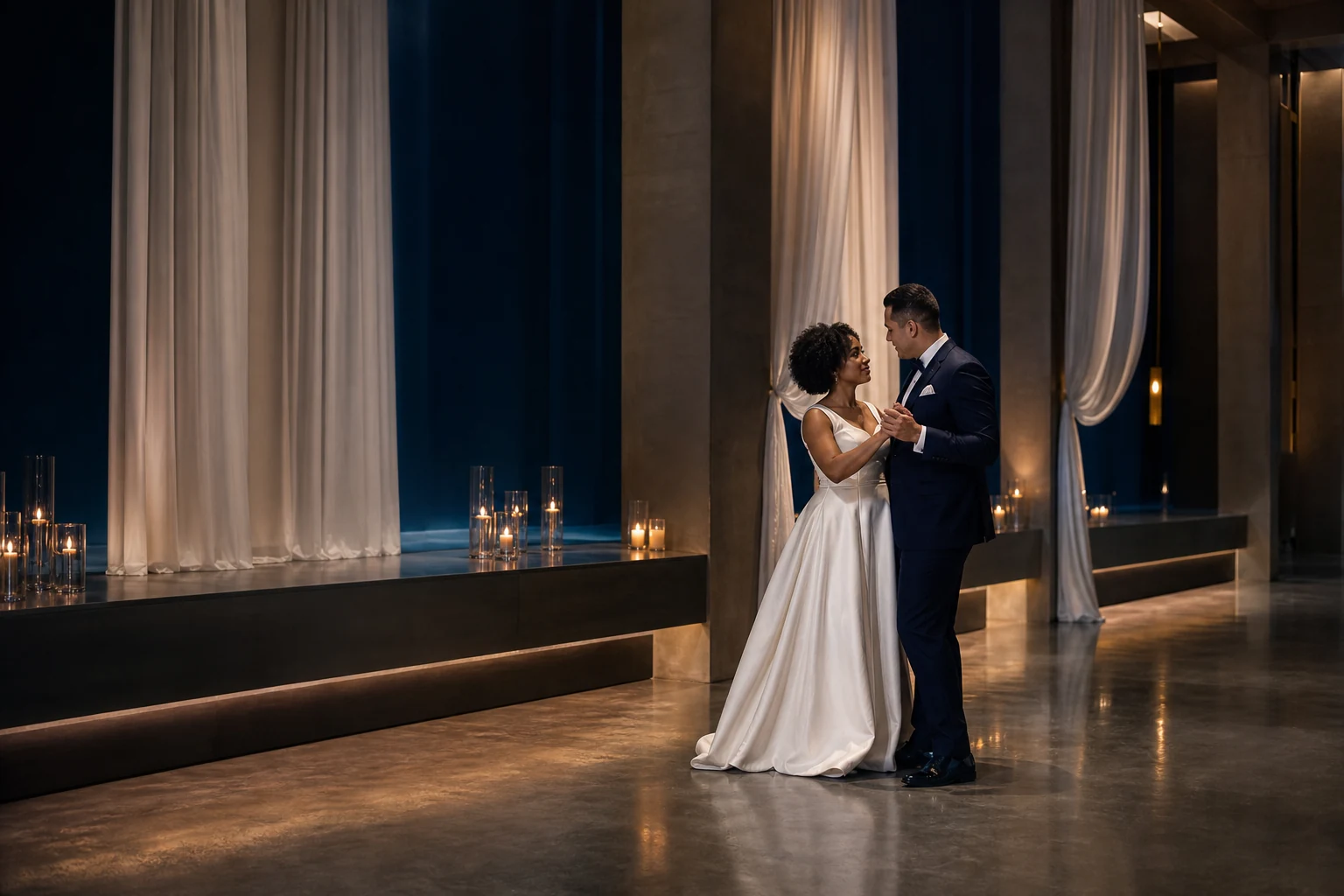
A love story designed for bodies moving in a real room
Plan the walk-in, settle, first chorus, turn or lift, guest invitation, and ending alongside the story so the track is beautiful to hear and comfortable to dance.
Start the song
Replace each blank with real names, moments, and details—the more specific you are, the less generic the song. Everything stays editable in the studio before anything is generated.
What you are making
A romantic song can fail on a dance floor when the introduction is too long, tempo feels unstable, the first chorus arrives before the couple settles, lyrics leave no space to move, or the ending gives the DJ no clear cue. A personalized first dance song should begin with what happens in the room: entrance, comfortable step, first musical arrival, optional turn or lift, and the way the dance ends.
Creatune's dance-floor structure planner combines those actions with two or three relationship details. The agent asks about dance confidence, shoes and clothing, floor, tempo, target duration, edit points, and privacy. It reduces lyric density under movement, provides a stable chorus phrase, and makes the final pose, fade, or guest invitation musically obvious. The result can feel cinematic without asking the couple to perform beyond what they can safely rehearse.
Walk in → settle → chorus → lift or turn → ending
The floor determines structure more reliably than a generic romantic mood.
Measure the walk from the room entrance or announced cue to the place where the couple will dance. Decide whether they stop, face each other, take a breath, or begin moving immediately. The first chorus should arrive after they are settled, not while one person is navigating a dress, crowd, cable, or photographer. A clear downbeat or sustained chord can provide the start without a spoken count audible to guests.
If there is a turn, dip, lift, choreography change, or guest invitation, place it on a musical landmark and reduce verbal density around it. Do not design movement from a fantasy edit. Check floor size and surface, attire, shoes, mobility, visibility, and the couple's real skill. The ending needs a choice: held final note and pose, clean stop, DJ fade after a chorus, or a section that opens naturally for guests.
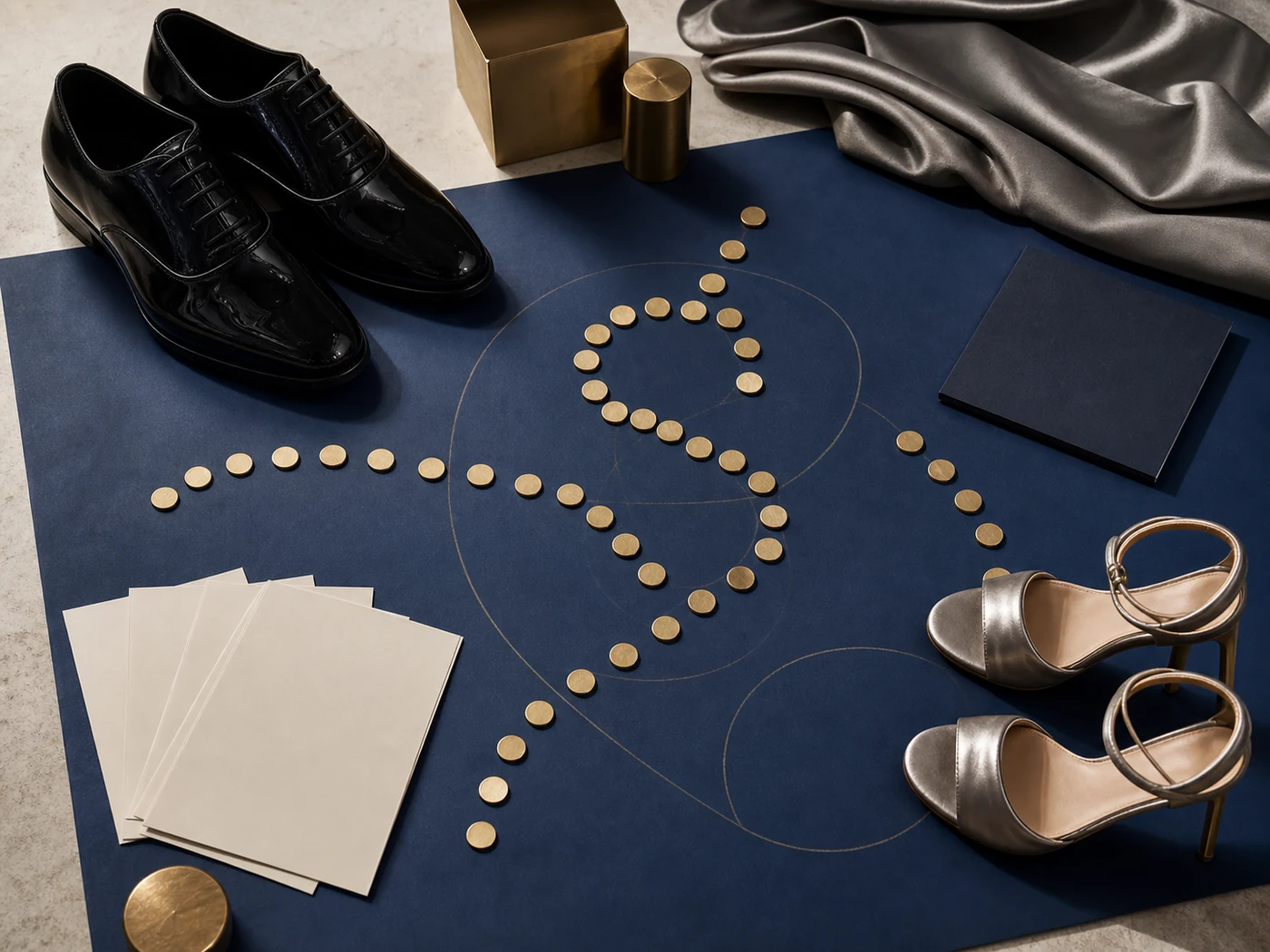
Measured seconds, announcement or door cue, path to position, and enough introduction to arrive without rushing.
A stable groove and low lyric density while the couple finds frame, breath, balance, and sightline.
A memorable phrase after the couple is ready, with tempo and harmony comfortable for their basic step.
Final pose, clean stop, planned fade, or guest invitation clearly marked for the couple and DJ.
Story beats under movement
Use one opening image, one shared-life detail, and one promise. The first verse can set the origin while the couple enters. The chorus should carry the sentence they want to hear during the dance, not a dense list of names. A second verse can show ordinary life, but only if the target length allows the couple to keep moving comfortably. Private vows and difficult periods should not surprise either partner in front of guests.
Match story beats to actions. A lyric about getting lost can precede a first turn; a line about home can land as the couple settles; a future promise can support the final pose. Do not force literal mime or choreography. The relationship detail gives emotional timing, while the music remains usable. If the story needs more space than the dance, create a full listening version and a shorter dance edit with the same chorus.
One place, object, mistake, or first-meeting action heard during walk-in or initial settle.
The central promise placed after the couple finds the groove and can register the lyric.
Instrumental bars or simpler lines around turns, lifts, transitions, and guest invitation.
Same emotional core, different length and density when the story exceeds comfortable floor time.
Comfortable BPM before genre prestige
Slow soul provides a steady pulse, warm bass, and room for a simple sway without becoming motionless. An acoustic waltz-feel can support rotating movement when the couple is comfortable in three, but a 6/8 ballad is not automatically a formal waltz. Cinematic pop offers a controlled build and large chorus, yet drums should become clear early enough for the couple to find time.
Test candidate tempo in the actual shoes and approximate clothing. A track that feels slow while seated can feel exposed while dancing. Avoid abrupt tempo changes, rubato intros without a cue, and long breakdowns that leave the couple stranded. Translate artist references into pulse, instruments, vocal texture, and dynamic arc. The mix must remain clear on venue speakers without overwhelming conversation.
Steady pulse, warm bass, intimate verse, and a chorus with enough motion for a comfortable sway.
Rotational flow and gentle lift only when the couple has tested movement in three or six.
Early rhythmic cue, controlled build, broad chorus, and an ending designed rather than abruptly faded.
Rehearse full length in shoes and clothing, then shorten or adjust before final generation and handoff.
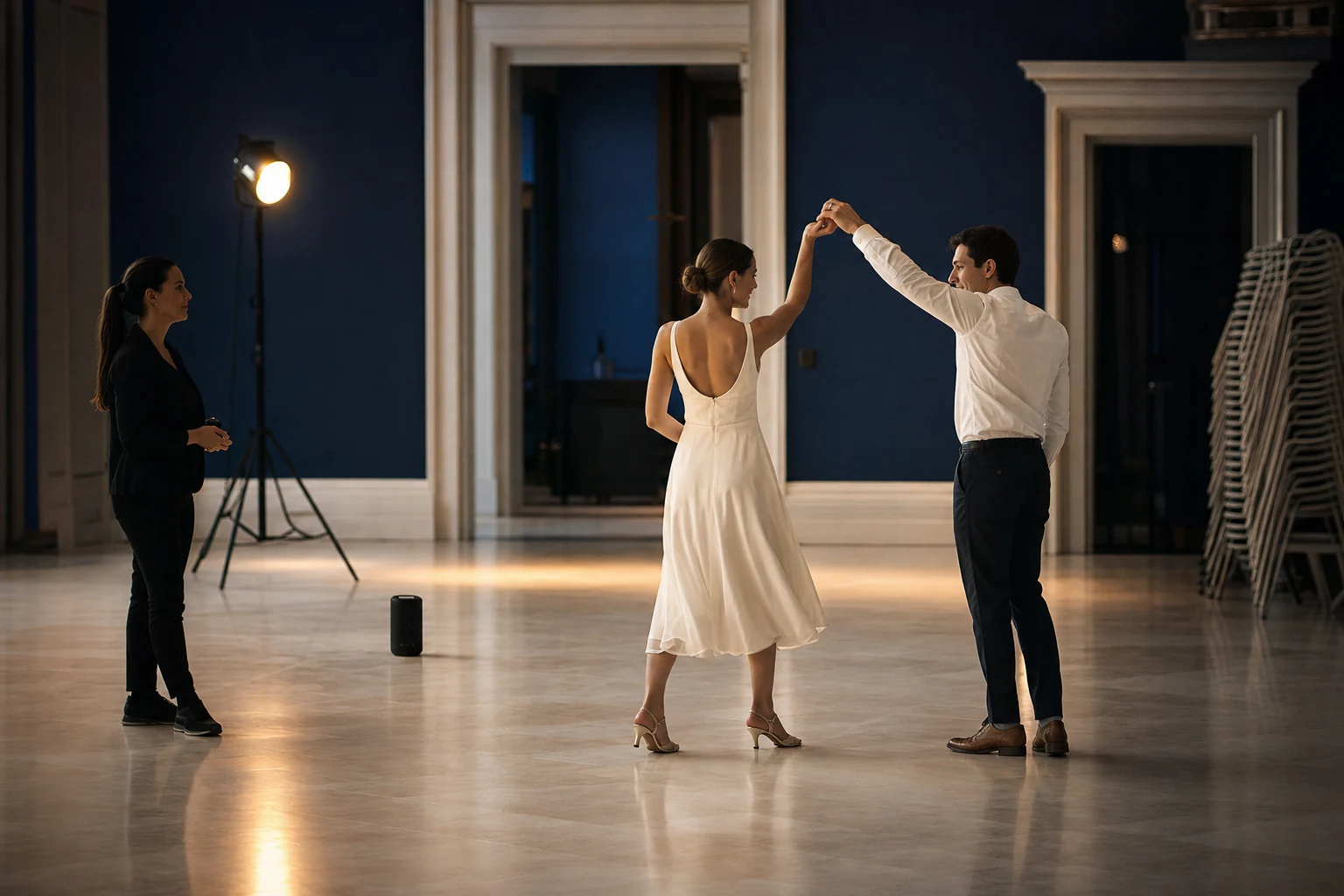
Rehearsal, DJ file, and backup
Export and label the exact final version. Send it to the DJ or coordinator before the wedding with written notes: start cue, target duration, any planned fade, guest invitation, and whether the couple needs a count or signal. Do not rely on a streaming link. Keep copies on two devices and verify that the DJ has replaced every earlier draft.
Rehearse with the final mix on a floor close to the wedding size. Test the walk-in, first chorus, any movement feature, and ending. Give the photographer the visual cue without placing them in the path. On the day, avoid last-minute lyric or arrangement changes. After the wedding, preserve the full listening version and dance edit separately so the song can live beyond the choreography.
One unmistakable filename with version date and no earlier drafts in the DJ handoff folder.
Start, settle, chorus, movement landmark, ending, fade, guest invitation, and backup owner.
Actual final audio, approximate shoes and clothing, floor dimensions, and comfortable complete duration.
Dance edit for the wedding and fuller story version for film, private listening, or future anniversaries.
Story examples
These are transparent story examples, not fake audio demos. They show how real details become a creative direction and a singable lyrical moment.

Story Example
Ava and Brooke met while both hid in a crowded kitchen at a party. They want a 2:40 first dance with a ten-second walk-in, simple sway, one easy turn at the second chorus, and a final pose. Include Sunday market walks and the promise to keep making quiet inside noisy weeks. No private conflict or guest names.
Direction: Slow soul at a steady comfortable pulse with warm bass, drums, electric piano, and clear vocal. Let the kitchen scene cover the walk-in, place the promise in chorus one, simplify lyrics under the turn, and end on a held chord.
Story Example
Mateo and Lin practice a gentle three-step and want a 2:20 track. They enter from beside the band, settle within eight bars, rotate after chorus one, and invite parents at the final chorus. Story details are a missed train, a window-seat ritual, and choosing the same route home.
Direction: Acoustic 6/8 with guitar, piano, upright bass, brushed percussion, and clear eight-bar phrases. Give the DJ a clean guest-invitation marker and do not imply formal waltz choreography beyond their rehearsal.
Story Example
Sam and Nia have a rehearsed 3:05 dance with a twenty-second entrance, first turn before chorus one, a safe low dip in the bridge, and a clean final stop. They want a story about meeting on a volunteer build and making breakfast after night shifts. The bridge needs instrumental space; no vow quotes.
Direction: Cinematic pop with an early pulse, piano, restrained synth, live drums, and widening strings. Mark the turn with the first lift, reduce words around the dip, and provide a final two-beat stop.
Keep exploring
Your story, composed for the room
Doors open, aisle unfolds, music arrives with the person
Compose for the edit, not an imaginary highlight reel
Questions before you create
Include the couple's point of view, dance comfort, walk-in and settle time, comfortable tempo, two or three story beats, first-chorus placement, movement landmarks, target duration, and the ending. Add privacy exclusions, floor and attire considerations, DJ cue notes, a labeled offline file, and a backup.
The comfortable length depends on dance confidence, choreography, venue, and whether guests join. Many couples prefer a concise edit rather than using an entire long song. Rehearse the full track in realistic shoes, time the walk-in and ending, and shorten it before the wedding if attention or movement feels strained.
Yes. Choose a steady pulse, comfortable tempo, clear early beat, and predictable phrases. Keep the first chorus after the couple settles and avoid long rubato sections. A simple sway can still feel intentional when the story, musical landmarks, and ending are planned around the couple rather than complex choreography.
Send one clearly labeled final file and a short cue sheet covering start, duration, movement landmarks, guest invitation, fade or stop, and backup. Deliver it before the wedding, remove old drafts, test it on the venue system, and keep identical offline copies with the coordinator and one trusted backup person.
Yes. Keep the same chorus and emotional core while reducing verses, names, and instrumental sections for the floor. Use the shorter version for rehearsal and wedding playback, and preserve the full version for private listening, wedding film, or future anniversaries. Label both files so the DJ cannot select the wrong one.
Your turn
Bring the walk-in, comfortable step, two story beats, movement landmarks, and ending. The agent will design the song for the real floor.
Create a first dance song