Arrival
The road, station, airport, weather, keys, hallway noise, or first phrase that means everyone is finally home.
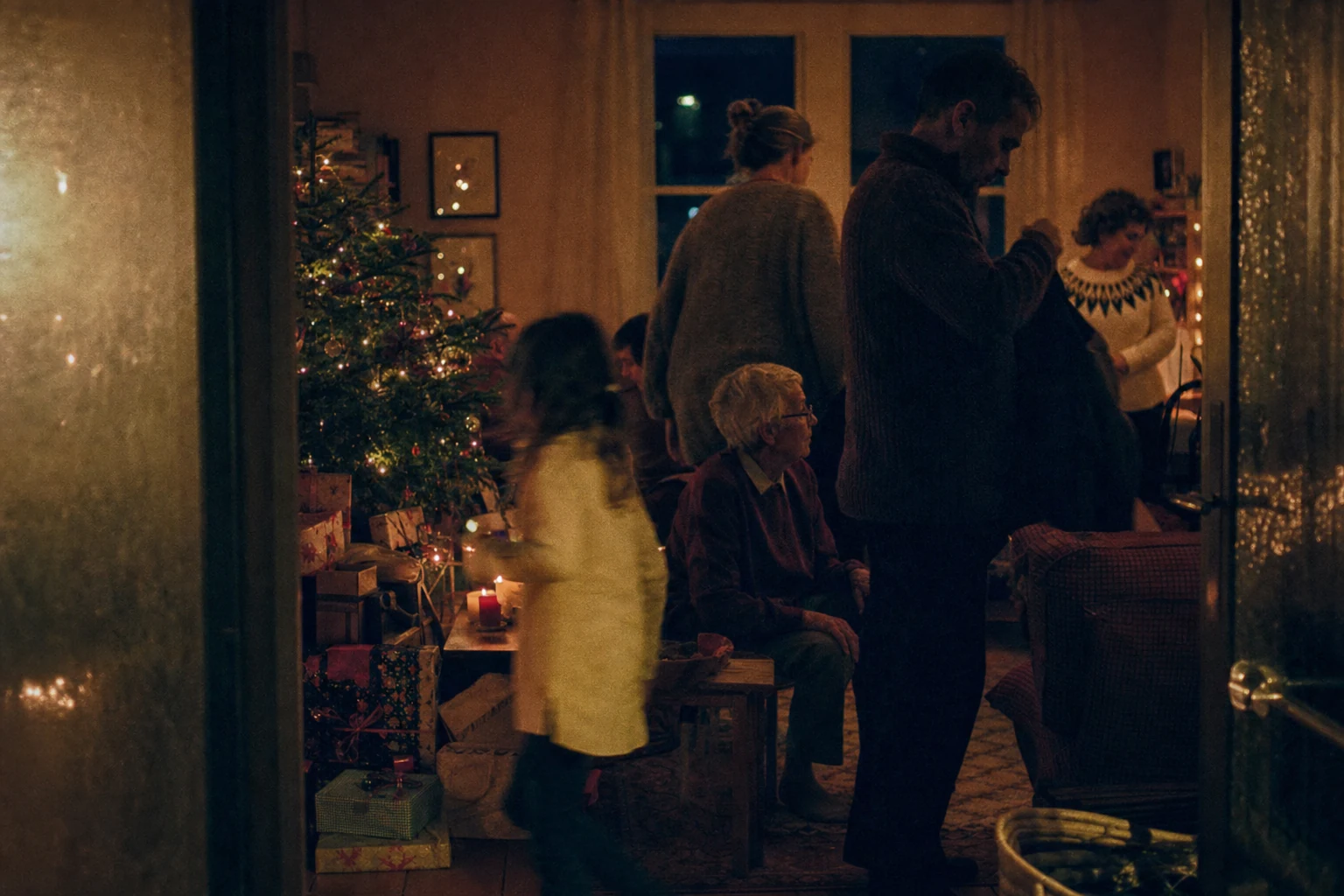
The tradition only your family would recognize
Use the inherited ornament nobody hangs straight, the airport arrival, the recipe argued over every year, the prayer spoken before dinner, the missing chair, or the game that becomes too competitive. Create a Christmas song gift shaped around this family—not a generic perfect holiday.
Start the song
Replace each blank with real names, moments, and details—the more specific you are, the less generic the song. Everything stays editable in the studio before anything is generated.
What you are making
The strongest Christmas material is repetitive by nature: the route home, an inherited decoration, a particular dish, the timing of a phone call, the argument everyone now retells, a faith practice, or a place at the table. Repetition gives the chorus something real to return to and lets several generations recognize the same family through different memories.
Creatune asks which tradition holds the story, who will be present, who is absent, and whether the family wants religious, secular, comic, reflective, or memorial language. It then separates public holiday warmth from private family history and plans the arrangement for arrival, dinner, gift opening, a photo film, or a quiet first listen.
The tradition map
Start with a repeated event rather than a list of seasonal objects. The family may drive the same road, open one gift on Christmas Eve, cook from an unmeasured recipe, sing in church, call relatives in another country, take a photograph on the stairs, or wait until the youngest child wakes everyone. The ritual establishes place, timing, characters, and sound in one move.
Trace how the ritual changed. A child now cooks the grandparent's dish; a partner learned the family game; a once-crowded house gathers on a video call; a new baby occupies the blanket used in old photographs. Do not force a neat history. Christmas traditions survive partly because families adapt them, argue about them, and keep choosing which parts deserve another year.

The road, station, airport, weather, keys, hallway noise, or first phrase that means everyone is finally home.
Recipes, seating, improvised dishes, inherited objects, recurring debates, and who quietly makes room.
Worship, music, games, gifts, photographs, calls, walks, or the one action repeated at the same hour.
A new person, different home, altered tradition, missing voice, or role passed from one generation to another.
Tone and belief language
A festive family track can use comic timing, movement, and a chorus people understand before dessert. A reflective song may focus on traveling home, the year's changes, and the quiet after a gathering. A remembrance thread can name an absent person's ritual without turning the entire holiday into grief. Choose the emotional proportion before writing, especially when family members experience the season differently.
Religious language must come from the family's own tradition and request. Ask which names, prayers, scripture phrases, worship settings, or theological ideas are welcome, and whether recorded music is appropriate near a service. A secular Christmas song can still be meaningful through hospitality, reunion, winter, generosity, and inherited family practice. Never add doctrine or remove faith merely because one style seems easier to rhyme.
Fast recognition, family humor, physical movement, and a chorus suitable for a room with children and conversation.
Travel, changing roles, quiet gratitude, and the feeling of returning to or rebuilding a familiar place.
One approved detail of the absent person, no invented afterlife claim, and space for mixed family responses.
Only the family's stated sacred vocabulary, checked for pronunciation, meaning, setting, and officiant requirements.
A song for the whole room
Ask older relatives for the origin of one tradition and younger relatives for what they notice now. A grandparent may remember saving an ornament through several moves; a child may only know that everyone laughs when it falls sideways. Both belong in the same song because one supplies history and the other proves the ritual is still alive.
Edit names carefully. A Christmas song can become a family roll call that excludes the person accidentally omitted. Use roles and shared action in the chorus, then place selected names or phrases in the verses when pronunciation and inclusion are clear. For blended, chosen, foster, or geographically separated families, describe who gathers and how they belong without ranking one form of connection above another.
Origins, migrations, inherited objects, lost places, and why the family still repeats a particular ritual.
Sounds, games, food, jokes, impatient waiting, and the concrete detail that marks this year's version.
Partners, babies, chosen family, and guests learning or reshaping a tradition without being treated as outsiders.
Time zones, calls, mailed objects, recorded messages, and the next gathering planned without pretending distance is easy.
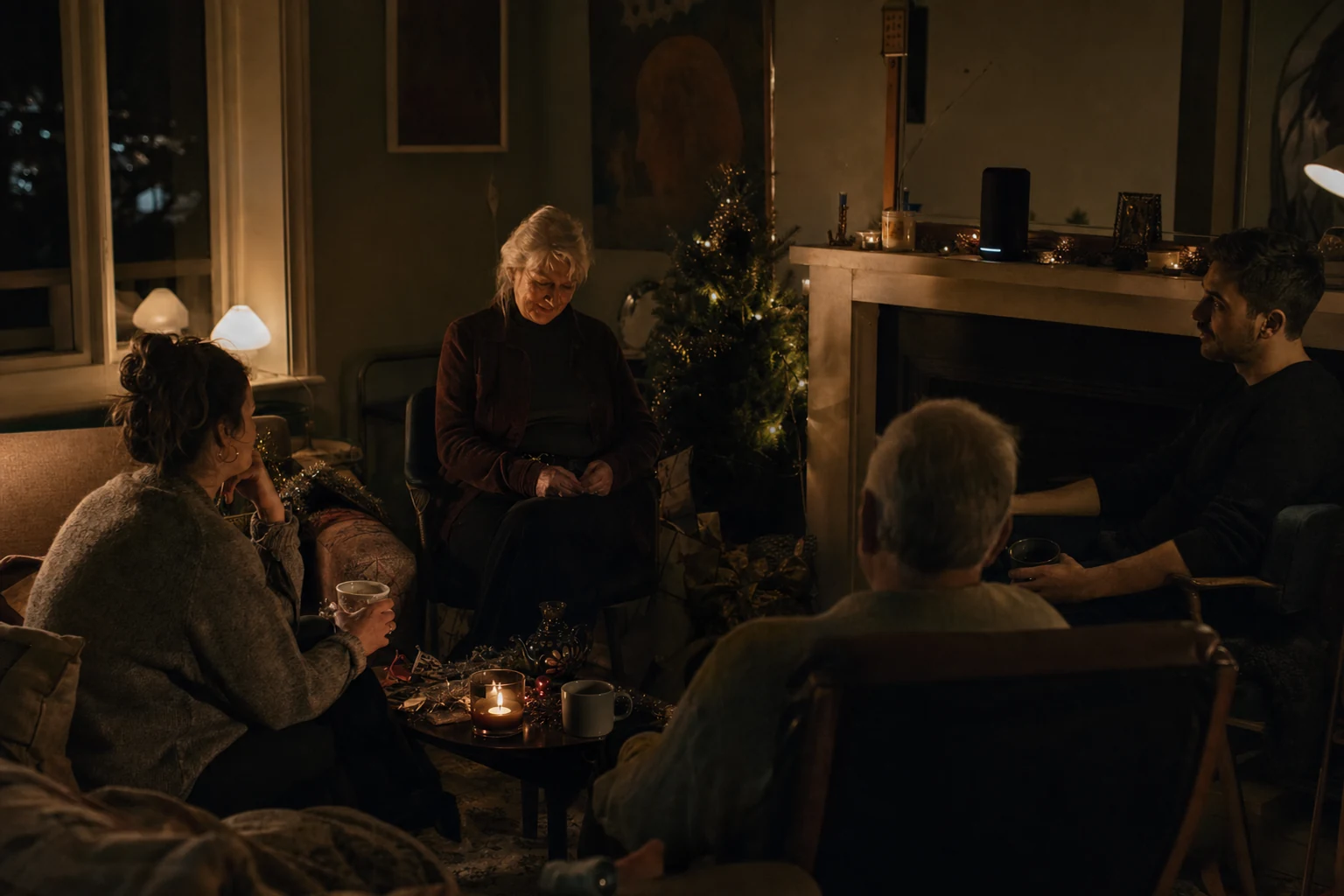
The holiday room
Choose the moment deliberately. Arrival music can play under movement and use lighter story detail. A dinner gift needs a clear pause when people can hear the words. A photo film should be tested against the final edit. A remembrance track may belong before guests arrive or after children go to bed rather than inside the loudest part of the gathering.
Download the audio to two devices, test the speaker, label the final version clearly for the host, and turn off notifications and autoplay. Confirm which lyrics are safe if the gathering will be filmed or shared. The song should support the family's ritual, not require everyone to stop being themselves and perform a perfect holiday reaction.
A quick emotional opening and enough musical room for greetings, luggage, children, and the noise of reunion.
One assigned host, a brief introduction, public-safe lyrics, tested volume, and a clean ending.
A visible arc across generations, final export timing, and a rights check before any public or promoted post.
A smaller audience, no surprise public grief, and space after the song for silence or conversation.
Story examples
These are transparent story examples, not fake audio demos. They show how real details become a creative direction and a singable lyrical moment.
Story Example
The Ahmed family creates a secular Christmas song for three generations. Include the paper star that always leans left, Grandad burning the first tray of rolls, cousins arguing over a card game, and the extra place set for whoever has nowhere else to go. Keep the humor inclusive and the chorus easy to join.
Direction: Joyful soul with warm organ, hand percussion, and restrained brass. Use the crooked star as the recurring image; let the chorus define Christmas through making room rather than perfect decoration.
Story Example
Ana makes a song for her brother who returns by the last train each Christmas Eve. Their mother waits with orange peel simmering on the stove, the siblings exchange one gift before bed, and snow is rare in their coastal town. Avoid generic sleigh or snowfall imagery.
Direction: Cinematic folk with low strings, acoustic pulse, and field-like station ambience. Build from the platform to the orange-peel kitchen and let the final chorus make arrival—not winter weather—the holiday signal.
Story Example
A family remembers Aunt June, who died two years ago. She hung a small red glass bird last, taught every child to wrap gifts badly, and disliked sad speeches. The song will play privately while the ornament is placed. No religious or afterlife language.
Direction: Luminous chamber pop with piano, soft woodwinds, and a gentle lift instead of a funeral tone. Let the red bird and crooked wrapping keep her humor present; do not resolve grief or claim where she is.
Keep exploring
Creatune Personalized Songs
Many branches, one singable line
A real year, edited into one honest turning point
AI Christmas song generator
Questions before you create
A personalized Christmas song is an original holiday track built from a family's real traditions, people, places, humor, faith language, travel, and changes across generations. It can be festive, reflective, secular, religious, long-distance, or include a careful remembrance thread instead of imitating a familiar Christmas carol.
Use one repeated ritual, one sensory object or recipe, one arrival or gathering detail, and one way the tradition has changed. Inherited ornaments, train journeys, table habits, games, prayers, recurring mishaps, and the person who always makes room create stronger recognition than generic snow, bells, or perfect-family imagery.
Yes. Provide the family's exact faith tradition, approved sacred terms, pronunciation, and intended setting. Confirm whether scripture or prayer language may be adapted and whether recorded music is allowed near a service. The agent should never invent doctrine, mix traditions casually, or remove faith from a story that explicitly depends on it.
Yes. Use a verified ritual, phrase, object, recipe, or piece of humor the family associates with the person. Decide whether remembrance is one thread or the central purpose, avoid unrequested afterlife claims, and choose a first-listen setting where nobody is surprised into public grief.
Choose arrival, dinner, gifts, a photo film, or a quiet moment based on the lyric. Assign one host, download two copies, test the speaker, disable notifications and autoplay, and make a public-safe version if the gathering will be filmed or shared beyond the family.
Your turn
Tell the agent how it began, how it changed, and which voices should be heard around the room this Christmas.
Create a Christmas song