One phrase
A repeated instruction, welcome, joke, or question that students can confirm and that remains appropriate outside the classroom.
The lesson that leaves the classroom
Collect the phrase everyone heard, the experiment that finally worked, the paper stars above the board, the laugh after a difficult morning, and the new thing students believe they can do because one teacher kept making room for it.
Start the song
Replace each blank with real names, moments, and details—the more specific you are, the less generic the song. Everything stays editable in the studio before anything is generated.
What you are making
A class remembers in fragments. One child remembers the morning question on the board, another the way mistakes were handled, another the plant everyone forgot to water, and another the sentence that made a difficult subject feel possible. If every contribution is placed into the lyrics separately, the song becomes a roll call. The better job is to discover the shared pattern: this teacher made curiosity safe, taught the class to listen, gave nervous students a way into the room, or turned practice into something students learned to trust.
Creatune's guided conversation collects the teacher's preferred name and pronunciation, the students' age, reason for the goodbye, class rituals, subject, public-safe humor, learning moments, continuing impact, contributor process, school privacy rules, performance setting, vocal range, and rehearsal time. It distinguishes a private thank-you from a whole-class singalong, because the number of voices, lyric complexity, length, key, and emotional intensity all change when children must perform the song together.
The class memory collector
Fair contribution does not require every student to receive one lyric line.
Ask each student for one concrete answer at the appropriate reading level: a thing the teacher said, a classroom object, a moment they felt proud, a routine they will miss, or something they can do now. Younger children can draw or choose from picture prompts; older students can submit a sentence privately. Teachers or school staff should review collection methods when minors are involved. Do not request grades, diagnoses, disciplinary stories, immigration details, family circumstances, or material that identifies a child's vulnerability.
Sort the contributions into clusters such as welcome, curiosity, patience, humor, courage, and independence. Choose two or three clusters with repeated evidence. If seven students mention the teacher waiting after a wrong answer, that pattern can become a verse about thinking time. If several remember the same phrase, confirm the wording and use it as a returning line. Credit every contributor in a card, booklet, or project note rather than forcing a crowded list of names into the song. The class should hear its collective experience without any child being exposed or treated as the emotional example.
A repeated instruction, welcome, joke, or question that students can confirm and that remains appropriate outside the classroom.
Morning check-in, reading circle, lab cleanup, music cue, paper star, quiet minute, or end-of-week tradition.
What students can now attempt, ask, notice, practice, or believe about themselves because the class made it possible.
The behavior the class will keep doing after the teacher leaves: listening twice, revising, sharing materials, or asking better questions.
The age-appropriate lyric check
Early-primary lyrics need short sentences, concrete images, repetition, and a narrow melody. The children may sing about the yellow reading rug, a hand raised bravely, or the phrase that starts every morning. Upper-primary students can hold a clearer story arc and gentle humor, but the language should still sound like words they would use. Teenagers can write with more reflection, irony, subject-specific detail, and awareness that the teacher changed how they think rather than simply made class fun.
Do not ask children to perform adult sentiment or public grief they have not chosen. A teacher's retirement, illness-free departure, transfer, or year-end goodbye can be emotional without telling students they are heartbroken. Let the class name gratitude, uncertainty, and pride at a truthful intensity. Check the key with the real singers, remove breathless lines, decide whether verses are solo or group, and create a spoken section when students want to contribute without singing. The teacher should be able to receive the gift without being pressured to react in a particular way.
Concrete room details, repeated response, narrow range, simple rhythm, and one clear idea per line.
Shared stories, light humor, growing independence, and a chorus that can hold more language without becoming a speech.
Subject-specific evidence, honest complexity, future impact, and language that avoids forced childhood nostalgia.
Use an easy common chorus, then assign spoken memories or short verses at the appropriate level.
Private gift or whole-class performance
A private recording can include detailed gratitude from one student or family, subject to the teacher's and child's privacy. It can move slowly and leave space for the teacher to listen without an audience. A whole-class singalong needs a clear starting note, short introduction, predictable form, limited range, and a chorus students can recover if someone enters early. A school assembly needs microphone planning, a strict duration, school approval, a version suitable for every age present, and a teacher name that every singer pronounces the same way.
A final-classroom playback can combine a recording with student voices: play the verses, then let the room join the last chorus. If rehearsal time is short, prioritize one confident chorus rather than a complicated full performance. If the teacher is retiring, avoid summarizing an entire career from a single class's limited view. Speak from what these students witnessed and let staff or alumni add separate material when invited. The song becomes more honest when it knows whose experience it represents.
One student or family, closer language, no forced public reaction, and a file the teacher can revisit privately.
Simple key, repeated chorus, age-appropriate range, lyric sheet, and clear choices about solo and group lines.
Approved content, fixed length, reliable microphones, backup playback, and no private student information.
Several short student voices woven around a stable musical chorus without ranking or overexposing contributors.
The final lesson
Confirm the teacher's name and pronunciation, then let a school-approved adult review every lyric. Ask whether photographs, student voices, classroom interiors, school logos, and names may be recorded or shared. Permission to perform inside a classroom is not permission to upload children permanently. If a family or parent group is organizing the gift, coordinate with the school before collecting recordings, contact details, or images. Keep the project focused on the goodbye rather than turning participation into another assignment.
On the day, provide a local audio file, a second device, printed lyrics, and one adult who knows the cue. Test the room at speaking volume; classrooms and halls can make music much louder and less clear than expected. Allow the teacher to listen without standing in the center of a camera circle. Afterward, give them the final track and a separate class memory card that credits contributions. The most durable farewell is not the performance footage. It is the sentence the class will still recognize when it practices what the teacher helped it learn.
Confirm content, minors' privacy, recording rules, use of names, logos, classroom images, and public sharing before the event.
Practice the first entrance, final ending, pronunciation, breathing, and recovery point if the group loses its place.
Use a downloaded file, second device, tested speaker or school system, and one adult cue owner.
Share the final file and a separate memory booklet so the teacher receives every contribution without overcrowding the lyric.
Story examples
These are transparent story examples, not fake audio demos. They show how real details become a creative direction and a singable lyrical moment.
Story Example
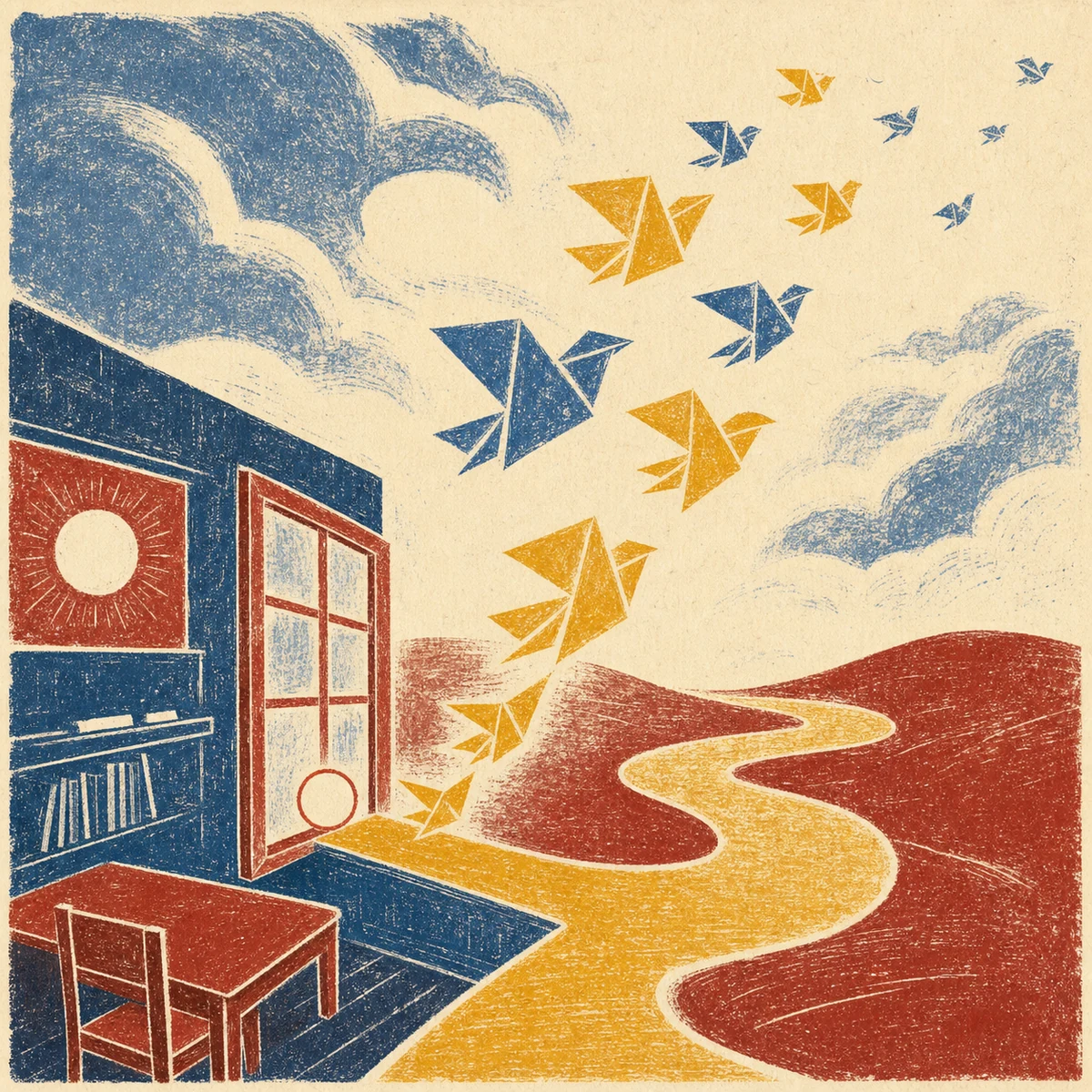
Twenty-four students are saying goodbye to Ms. Imani after their final primary year. They remember her writing one unusual question on the board each morning, letting the class think before answering, and saying ‘try another door’ when a first method failed. The song will be played in the classroom, with students joining the final chorus. Do not include grades, family stories, or individual student names.
Direction: Bright acoustic pop with hand percussion, short recorded verses, a narrow singalong chorus, and a small pause before the class response. Make the morning question the opening ritual and ‘another door’ the image of future problem-solving rather than a copied slogan.
Story Example
A secondary science class thanks Mr. Chen for insisting that failed experiments were data, remembering which students preferred to observe before speaking, and hanging every lab apron on the same crooked row of hooks. It is one class's retirement contribution, not a summary of his full career. School staff will review the lyrics before an assembly.
Direction: Gentle pop with piano, brushed drums, and a spoken student bridge. Use the crooked hooks as the shared visual, give failed experiments dignity, and keep the chorus about continuing to ask precise questions rather than declaring that one teacher changed every life.
Story Example
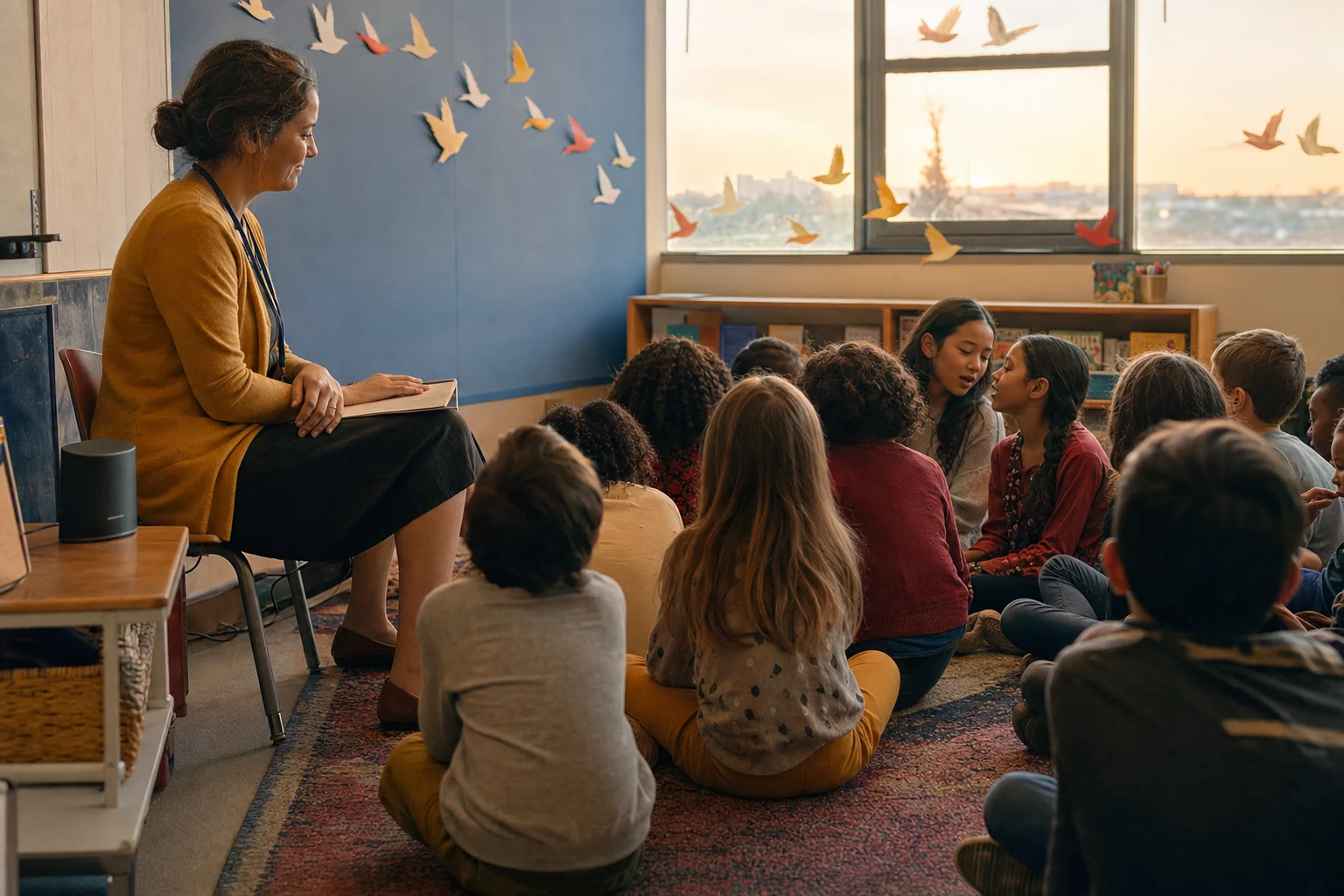
A first-grade class is saying goodbye to a teacher transferring schools. Children remember the yellow rug, a welcome song, paper birds above the window, and how she always made a place in the circle for someone arriving late or nervous. The words must be easy for six-year-olds and no child will sing alone.
Direction: Choir-friendly folk with ukulele kept soft, handclaps, very small melodic range, and two repeating lines. Keep every image concrete, make the chorus collective, and let the paper birds suggest carrying the lesson onward without asking children to perform sadness.
Keep exploring
Creatune Personalized Songs
Make the work behind the milestone audible
Thank the method, not an abstract hero
Questions before you create
Include the teacher's preferred name and pronunciation, the students' age, why the class is saying goodbye, two recognizable classroom rituals, one learning moment, and what students will keep doing because of the teacher. Also define the performance setting, school privacy rules, vocal range, rehearsal time, and subjects that must stay out.
Collect one concrete memory from each student, group the answers into repeated themes, and write two or three shared patterns. Credit every contribution in a booklet or card rather than forcing a roster into the song. This keeps the lyric coherent while letting the class recognize its collective evidence.
Yes. Use short concrete lines, repetition, a narrow melody, an obvious starting note, and one shared chorus. Test the key with the real age group, avoid long phrases, and use spoken memories or a recorded verse when children want to participate without singing alone.
Exclude grades, diagnoses, discipline, family circumstances, immigration status, private conversations, conflict, and any story that identifies a child's vulnerability. Follow school rules for names, voices, photographs, classroom footage, and public sharing. An adult approved by the school should review the final lyrics.
Only with the school's approval, the applicable guardian permissions, participant consent, and the usage rights included with the relevant Creatune plan. A classroom performance is not automatic permission to post minors, names, voices, or school interiors. Consider sharing the audio privately instead.
Your turn
Bring one ritual, one changed belief, and the words students can genuinely sing. The agent will help shape many small memories into a class-sized thank-you.
Create the teacher farewell song