Starting point
A bounded learning behavior or classroom experience—not a label, diagnosis, grade, or story the student does not own publicly.
Thank the method, not an abstract hero
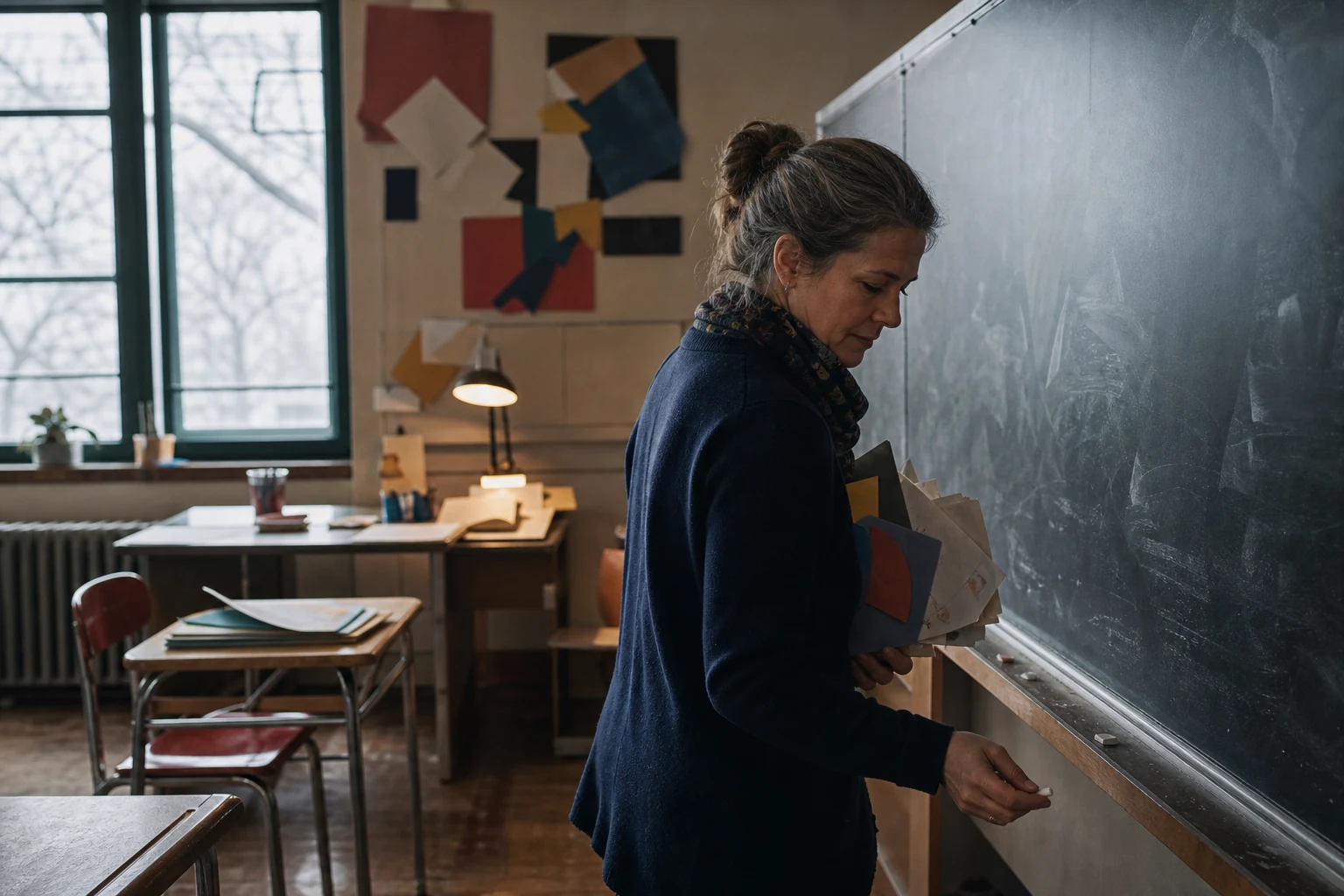
Start with the question left on the board, the margin note that named the next step, the extra thinking time, the seat made inside a group, or the experiment treated as useful after it failed.
Start the song
Replace each blank with real names, moments, and details—the more specific you are, the less generic the song. Everything stays editable in the studio before anything is generated.
What you are making
Teacher appreciation becomes credible when the lyric names a method. A teacher waits seven seconds after a question, draws the same diagram three ways, marks one useful sentence before correcting the page, welcomes a nervous student without announcing the nerves, treats a failed experiment as evidence, or recommends a book at exactly the right difficulty. The song can then show the change: a student raises a hand, revises instead of hiding, attempts a problem, joins the group, reads independently, or keeps asking better questions after the course ends.
Creatune asks who is speaking—a student, parent, family, former student, or class—and what age, subject, occasion, and setting should shape the result. The agent records the teacher's preferred name and pronunciation, one teaching action, a turning point, the student's observable change, a lasting habit, appropriate humor, school privacy rules, and whether the gift is private or classroom-ready. This evergreen page supports appreciation, birthdays, end-of-term gratitude, and personal thank-yous; a whole-class farewell with performance logistics belongs on the Goodbye Teacher page.
The teacher-impact chain
A strong lyric makes the causal chain visible without claiming one adult created the student's whole future.
Write four lines in prose before writing lyrics. First, the starting condition: the student avoided reading aloud, rushed every calculation, believed mistakes ended the task, stood outside group conversation, or could not organize a long project. Second, the teacher action: a question, demonstration, routine, feedback pattern, seating choice, resource, or carefully timed challenge. Third, the observable change: the student attempted, revised, returned, explained, performed, collaborated, or made an independent choice. Fourth, the lasting practice: what they still do beyond that classroom. Keep every claim within what the giver witnessed or the student has chosen to share.
Do not turn a teacher into a clinician, parent replacement, rescuer, or sole cause of achievement. ‘You saved my child’ may hide a network of care and place an impossible emotional burden on the recipient. Write instead that the teacher noticed a learning pattern, made a task reachable, offered accurate feedback, or created a room where practice felt safe. If disability, diagnosis, bullying, family circumstances, language learning, discipline, grades, or mental health sit behind the change, include only the educational action and public-safe outcome unless the student and school explicitly approve more.
A bounded learning behavior or classroom experience—not a label, diagnosis, grade, or story the student does not own publicly.
The precise question, routine, explanation, material, feedback, invitation, or amount of time the teacher changed.
Something observable: attempting, revising, asking, presenting, reading, collaborating, explaining, or returning to the work.
The practice that continues beyond the class and gives the chorus a future without grand destiny claims.
Student, parent, family, or class
A young student needs concrete room details, short sentences, repetition, and a narrow emotional claim: the blue reading rug, the science tray, the song that starts cleanup, or a hand signal that means there is time to think. A teenager can use subject-specific language, dry humor, and a clearer account of trust, but should not be made to perform adult gratitude. A former student can connect one old method to current work without claiming the teacher predicted a career. A parent can describe what they observed at home while keeping the child's private explanation and academic record out.
For a class or parent group, collect one answer per contributor and cluster repeated evidence. The chorus might say the room learned to ask a second question, try another method, or make a place for someone arriving uncertain. Do not give one vulnerable student the role of emotional proof. Credit contributors in a card rather than naming children in the track. Use ‘we’ only for reviewed shared experience. If the central task is saying goodbye, coordinating many child voices, and rehearsing a performance, move to the Goodbye Teacher page; this page is designed around continuing educational impact.
Concrete classroom objects, simple vocabulary, repeated melody, and one learning action the child recognizes now.
Subject detail, honest restraint, safe humor, and no public disclosure disguised as a moving tribute.
One method carried into later life, accurate timescale, and gratitude that does not assign the teacher sole authorship.
Observed change, reviewed ‘we,’ school-safe collection, and contributor credit outside the song.
Evergreen appreciation
Teacher Appreciation Week can support a short public-safe track and a handwritten note with the source details. A birthday gift should remain professional and avoid age jokes, family assumptions, or pressure to share personal life. End-of-term gratitude can look forward to the practice the student will keep without implying a permanent goodbye. A private former-student thank-you may contain more reflective language but should still respect contact boundaries and avoid presenting the teacher with confidential information about third parties.
Gentle pop supports clear lyrics, warm movement, and a chorus suitable for a family or small classroom. Acoustic ensemble can mirror collaboration with piano, guitar, light percussion, and several voices without becoming a children's jingle. Light jazz suits a teacher who values curiosity and conversational phrasing when the arrangement is described through brushwork, bass, piano, and harmonic warmth rather than a real artist. A sparse piano or folk setting can hold a private message. Match range, duration, and lyric density to the actual listeners and performers.
One precise action, one observed change, compact public-safe length, and a note that preserves the fuller source story.
Warm professional recognition, age-safe humor, no assumptions about family or private life, and a sound the teacher enjoys.
The lasting practice moves forward; the song does not need farewell language unless someone is actually leaving.
Closer reflection, clear boundaries, no demand for reply, and no confidential information about other students or staff.
School-safe delivery
For a private student or family gift, use the teacher's professional contact route only when permitted, send one clearly labeled file, and state that no response is required. For classroom or parent-group playback, ask a school-approved adult to review every lyric, participant name, recorded voice, photograph, logo, room image, and plan to share. A teacher may appreciate the song and still prefer not to be filmed. A student may contribute a memory and still not have permission to appear online.
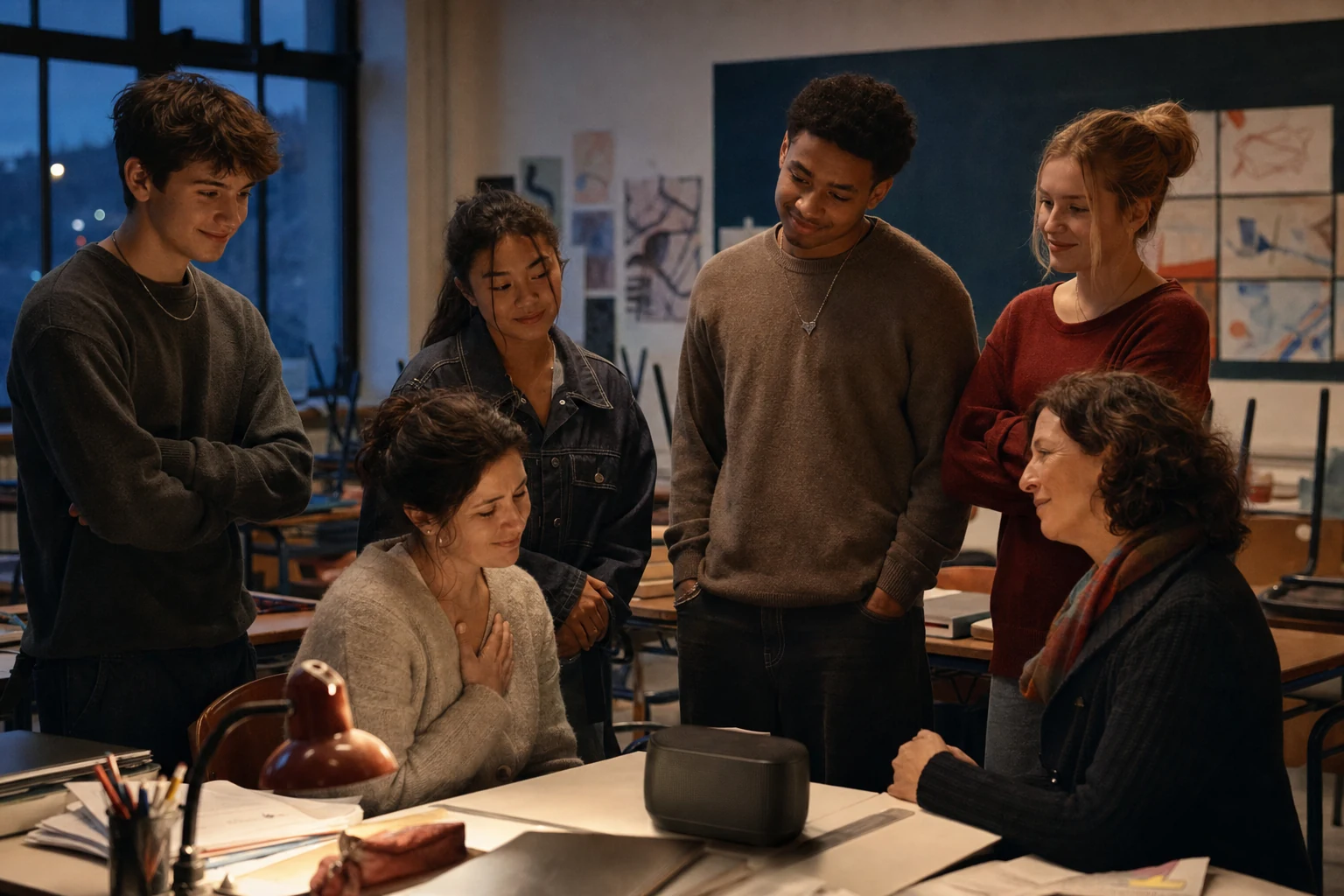
Download the final track, test the real speaker at speaking volume, print lyrics large enough to read, and choose one cue owner. Keep the introduction factual and let the teacher listen without standing inside a reaction circle. Afterward, give the source note or card that explains the specific impact chain. Do not upload the performance unless the school, guardians where required, participants, and teacher have approved the exact use. Usage rights in a Creatune plan do not replace privacy, school, or recording permission.
Approved contact channel, clear filename, no response requirement, and no public tag or post without later consent.
School review, safe content, tested sound, one cue owner, and a teacher free to receive the gift off camera.
Transparent contributor process, reviewed ‘we,’ no ranking of students, and no child information used as emotional proof.
A source card preserves the teaching action and student change without overloading lyrics or exposing the classroom.
Story examples
These are transparent story examples, not fake audio demos. They show how real details become a creative direction and a singable lyrical moment.
Story Example
Mira thanks mathematics teacher Ms. Okafor during Teacher Appreciation Week. Ms. Okafor waits seven seconds after asking a question, writes more than one method on the board, and once marked the useful assumption in Mira's incorrect proof. Mira now revises before discarding work. Do not mention grades, anxiety, or other students. The track will be sent privately through an approved school channel.
Direction: Gentle pop with piano, soft drums, and a clear close vocal. Make the seven seconds audible through a small pause, connect the marked assumption to revision, and keep the chorus about a practice rather than claiming the teacher changed Mira's entire life.
Story Example
A parent and ten-year-old thank science teacher Mr. Bell for placing lab aprons on the same low hook, treating failed experiments as data, and asking students to draw what they observed before explaining it. At home the child now keeps a small experiment notebook. Exclude diagnosis, test results, and classmates. The song can play at a small class appreciation morning after school review.
Direction: Acoustic ensemble with guitar, piano, hand percussion, and a narrow child-friendly refrain. Use the low hook and drawing-first routine as evidence, let the parent voice appear only in one verse, and keep the child at the center of the observed change.
Story Example
Jon thanks former writing teacher Dr. Reyes on her birthday. She wrote ‘one more draft, then decide’ beside an essay and recommended a short-story collection at the right level. Jon now edits community newsletters and uses the same revision question with volunteers. Do not mention publication income, a former class conflict, or imply Dr. Reyes created his career.
Direction: Light jazz with brushed drums, upright bass, piano, and an understated melodic refrain. Let the margin note move from essay to community table, credit Jon's later practice, and keep the birthday tone warm but professional.
Keep exploring
Creatune Personalized Songs
The lesson that leaves the classroom
Gratitude with evidence
Questions before you create
Include the speaker's point of view and age, the teacher's preferred name and pronunciation, subject or setting, one precise teaching action, an observable student change, a lasting habit, the appreciation occasion, public or private setting, school privacy rules, and an age-appropriate musical direction.
This page is evergreen and centers continuing educational impact for appreciation, birthdays, end-of-term thanks, or a private message. The Goodbye Teacher page centers farewell intent, whole-class memory collection, age-appropriate group performance, rehearsal, assembly logistics, and what the class will carry after someone leaves.
Yes. Ask each contributor for one teaching action and one observed change, then cluster repeated evidence. Review any use of ‘we,’ protect children from being singled out as emotional proof, credit contributions outside the lyric, and have a school-approved adult review the result before classroom playback.
Exclude grades, diagnosis, discipline, bullying, family circumstances, legal or immigration information, private conversations, health, identity disclosure, and comparisons with other students unless the student and school have explicitly approved a narrowly defined use. The teaching action can remain specific without naming the sensitive context.
Only with the school's approval and the specific permissions required from the teacher, students, guardians, and other participants. Permission to give or play a song is not permission to publish faces, voices, names, logos, classroom interiors, or reactions. Creatune usage rights do not replace privacy and school rules.
Your turn
Bring one question, routine, or piece of feedback and the thing a student can now do. The agent will shape specific gratitude without exposing the classroom.
Create a song for a teacher