Old friend
One early era, one present practice, and honest acknowledgment that closeness may change shape across years.

Closeness at the size that is true
Start with the coffee left after a night shift, the weekly bench, the first message that became a routine, the neighbor who brought tools, or the friend who made one unfamiliar place easier to enter.
Start the song
Replace each blank with real names, moments, and details—the more specific you are, the less generic the song. Everything stays editable in the studio before anything is generated.
What you are making
Friend can mean the person known since primary school, someone met three months ago, a neighbor who changed an isolated year, an online friend never met in person, a teammate, a fellow parent, a language-exchange partner, or one member of a wider group. The writing job is to establish context and closeness before choosing emotional intensity. One verified act can explain why the relationship matters without declaring this person the giver's closest, oldest, or permanent companion.
Creatune identifies the friendship type, length, current rhythm, giver format, occasion, and public or private setting. The agent asks for one act of care, one shared place or ritual, an appropriate message, an intimacy red line, and the sound the friend would enjoy. It prevents new or context-specific friendships from receiving invented history, prevents group gifts from hiding minority voices inside a casual ‘we,’ and keeps appreciation open-handed rather than ranking the recipient against every other friend.
The friendship-type selector
Old, new, neighborhood, online, activity, work-adjacent, and long-distance friendships each create different evidence and boundaries.
An old friend can use one early era and show how the relationship changed, but longevity alone does not prove intimacy. A new friend should stay in the present: the first easy conversation, the invitation that reduced uncertainty, or a recent act of care. A neighbor friendship lives in routes, keys, tools, plants, pets, shared walls, and everyday mutual help, with address and household privacy protected. An online friendship may be built from a recurring game, creative exchange, voice-note ritual, moderation work, or time-zone accommodation; never imply physical meetings or identity details that have not been shared safely.
Activity friends—running partners, choir members, classmates, volunteers, hobby groups, fellow parents—often have a real bond inside a defined context. The song can honor how someone changes that space without claiming access to their whole life. A long-distance friend needs evidence of maintenance: who schedules, remembers, sends, visits, or accepts changing frequency. A work-adjacent friend may need stronger confidentiality rules; if the central evidence is workplace contribution and the song will play at work, use the colleague page instead. Choose the page and intimacy level based on the job, not the most flattering label.

One early era, one present practice, and honest acknowledgment that closeness may change shape across years.
Recent evidence, present gratitude, and no invented promise or biography used to make the song feel larger.
Routes, tools, pets, gardens, shared space, and mutual help with home and location privacy protected.
Platform-safe details, time zones, creative or conversational rituals, and no unconfirmed offline or identity claims.
Evidence before importance
Write the act as a scene: where it happened, what the friend noticed, what they did, and what became easier afterward. ‘They supported me’ becomes a thermos outside the rehearsal room, a translated form, a chair saved at the first meeting, a message that did not require an explanation, a toolbox carried upstairs, or a quiet walk scheduled after a difficult week. Then identify the quality without exaggeration. The act may reveal attention, practical generosity, social courage, reliability, humor, boundary respect, curiosity, or the ability to make belonging feel ordinary.
Avoid debt language. A gift should not imply that the friend rescued the giver, must remain available, or deserves repayment through closeness. If the act occurred during illness, grief, divorce, job loss, housing instability, identity exploration, conflict, or another sensitive period, describe only what the recipient has permission to hear sung. The lyric can say ‘you brought soup to the step and left’ without naming the diagnosis. It can say ‘you made room in a new city’ without identifying a legal or financial situation. Privacy does not make the evidence less specific; it changes which layer holds the meaning.
A need, silence, uncertainty, exclusion, practical problem, or opportunity the friend recognized without claiming total understanding.
One bounded action—invite, message, ride, meal, repair, introduction, walk, explanation, or protected pause.
Attention, humor, reliability, courage, respect, curiosity, or another quality supported by the action.
The day, room, routine, or sense of belonging became more manageable—not a claim that the friend fixed an entire life.
One giver or a group
A solo giver can choose a narrow point of view and one scene. A group should collect contributions with the same prompt, then cluster them into a shared pattern rather than write a roster. Three people may all remember that the friend notices newcomers, changes plans when someone is overwhelmed, or brings one ridiculous snack. Use the pattern in the chorus and give the verses different contexts. Do not allow the loudest contributor to turn the song into a private in-joke, and do not use ‘we all’ for an opinion the group has not reviewed.
Acoustic pop suits direct appreciation and a small gathering. Playful funk can carry group habits, neighborhood motion, or a birthday room without pretending to be emotionally intimate. Mellow indie supports newer, online, or long-distance friendships with quieter claims. Light soul can hold gratitude when the friend welcomes direct language. Describe drums, bass, guitar, keys, tempo, vocal texture, and chorus size rather than copying a real artist. Choose a melody the actual group can sing only when participation is part of the plan.
One voice, one verified act, and an intimacy level that does not imply the giver speaks for a larger group.
One prompt per contributor, clustered evidence, reviewed use of ‘we,’ and credits outside the lyric.
Funk or indie movement, recognizable routine, safe humor, and a chorus suitable for a birthday or casual room.
Acoustic or soul texture, conversational vocal, one act in focus, and no obligation placed on the listener.
An ordinary setting can be enough
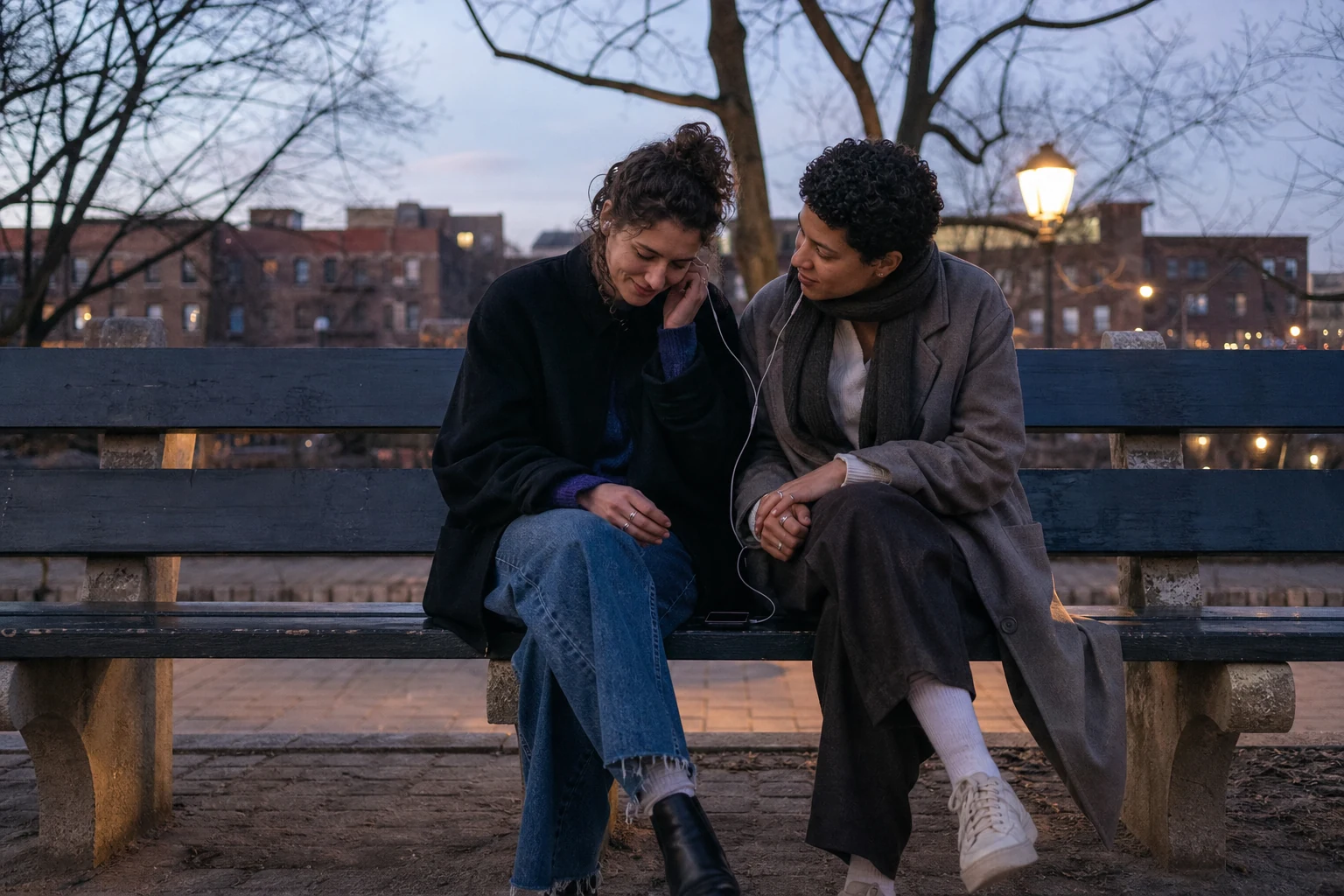
A park bench with shared headphones, the cafe where plans usually begin, a walk after class, a game lobby, a small birthday table, or a private message can make the gift feel proportional. Introduce it simply: ‘I made this from the story about that day.’ Let the friend listen without an audience when the relationship is new, online, recently changed, or connected to sensitive support. Do not make the song a test of whether they consider the giver equally close.
For a group birthday or thank-you, review names and jokes, remove home addresses, handles, workplace identifiers, children's details, health information, and stories owned by mutual friends. Download the track, test volume, keep the intro short, and let the recipient decide whether the file may be posted. If the friend is moving away, end with a realistic next action rather than a promise that distance changes nothing. A specific plan can be warmer than a dramatic forever claim.
Low-pressure, side-by-side listening for a message that is personal but not designed for a public reaction.
Useful for online or long-distance friendship, with a neutral title, clear context, and no expectation of an immediate reply.
Safe details, contributor review, tested sound, and a chorus whose intimacy fits everyone in the room.
Name what the friendship has already made possible and one next practice both people can realistically choose.
Story examples
These are transparent story examples, not fake audio demos. They show how real details become a creative direction and a singable lyrical moment.

Story Example
Inez writes a thank-you song for Rowan, a friend she met six months ago in community theater. Before Inez's first performance, Rowan left tea in a thermos by the side door and sent one message saying no reply was needed. They now walk home after rehearsals. Do not imply lifelong closeness, mention anxiety, or use romantic language. The song will be sent privately.
Direction: Mellow indie with muted guitar, soft electronic drums, and a close conversational vocal. Keep the six-month scale visible, make the no-reply message evidence of boundary-respecting care, and let the chorus thank the friendship for making one room easier to enter.
Story Example
Tom and Asha thank neighbor Ren for watering the basil, lending tools, and turning hallway encounters into Saturday coffee. They have known each other for two years. Keep the apartment number, travel dates, children's names, and building conflict out. The track can play at a courtyard birthday.
Direction: Playful funk with dry bass, hand percussion, bright guitar, and a compact group hook. Use the basil and mismatched tools as public-safe details, keep the neighborhood energy light, and avoid claiming Ren became family unless they use that language themselves.
Story Example
Sora creates a birthday song for online friend Alex. They met in a collaborative drawing community, exchange one unfinished sketch every Friday, and learned to schedule rather than apologize for delayed replies. They have not met offline. Use first names only, omit platform handles and location, and keep the message warm but non-exclusive.
Direction: Acoustic-electronic blend with plucked strings, soft pulse, and two textural layers trading space. Make the unfinished sketch the friendship ritual, acknowledge time-zone delay without promising constant access, and never invent a physical scene.
Keep exploring
Creatune Personalized Songs
Chosen history, without a romantic script
Gratitude with evidence
Questions before you create
Include the friendship type and length, the occasion, one verified act of care, one shared place or ritual, what that action revealed, an intimacy level the relationship supports, whether the giver is one person or a group, public or private boundaries, and a musical direction the friend would enjoy.
The general friend page does not assume the closest label, a long history, or multiple friendship eras. It works for new, neighborhood, online, activity, long-distance, and context-specific friends. A best-friend song must prove why that deeper label is accurate through a turning point and tested chosen care.
Yes. Use real digital rituals, creative exchanges, time-zone habits, voice notes, games, or support actions. Do not invent an offline meeting, expose handles or location, or disclose identity details the friend has not made safe to use. Keep the delivery private unless they approve public sharing.
Yes. Collect one object, action, or routine from each person using the same prompt. Cluster repeated evidence, review any use of ‘we,’ and credit all contributors outside the lyric. Avoid a roll call or a song dominated by one person's private joke.
Set the relationship type and intimacy boundary first. Stay with one act, a present-tense thank-you, and a modest next practice. Avoid best-friend ranking, soulmate language, permanent promises, debt, or claims that the recipient fixed the giver's life. Choose light funk, acoustic pop, or mellow indie when that fits the relationship's natural volume.
Your turn
Tell the agent what kind of friend they are, what they did, and how close the message should stand. The song can be meaningful without claiming more history than you share.
Create a song for your friend