Before anyone asks
An action he initiates because he notices the household, relationship, or person—not because a gendered role assigned it.
The life he helps steady
Start with the lunch packed before a difficult day, the loose hinge fixed without a speech, the joke that resets a tired kitchen, the bedtime routine he protects, or the part of himself he keeps making room to become.
Start the song
Replace each blank with real names, moments, and details—the more specific you are, the less generic the song. Everything stays editable in the studio before anything is generated.
What you are making
Marriage makes some forms of care so repetitive that they disappear into the structure of the day. A husband may be the person who checks the back door, absorbs the complicated school pickup, notices when a family gathering is becoming too much, repairs a lamp, makes the same terrible joke, or takes the early shift after a sleepless night. Those actions matter, but a strong song does not simply thank him for being useful. It asks what judgment, humor, tenderness, patience, or vulnerability becomes visible through the action—and who he remains when no role needs filling.
Creatune keeps the narrator in a spouse point of view. The agent records the stage of marriage, current chapter, daily handoffs, invisible support, private humor, a difficult season that is safe to mention, parenting or caregiving only when relevant, what the giver admires beyond service, how affection is expressed, and where he will hear the track. The result can include family life without becoming a Father's Day song, and it can honor years together without turning into a date-led anniversary biography.
The visible / invisible support inventory
Recognition becomes intimate when it moves from function to character without glorifying overload.
Divide the shared day into four zones: before anyone asks, during the handoff, when plans fail, and after the room goes quiet. What does he anticipate? Which responsibility does he make easier to share? When a plan fails, does he improvise, protect humor, listen, build a checklist, or admit that he needs help? Afterward, what restores him—music, a run, a project, friends, stillness, or time with the giver? Select details with sensory edges: the coffee left beside a laptop, one porch light, a toy repaired twice, the watch placed by the sink, or the phrase that tells everyone the crisis has shrunk back to size.
Then audit the praise. ‘You hold everything together’ can sound loving while rewarding an impossible burden. Replace it with a truthful contribution and reciprocal promise: he protected one quiet hour, and the giver wants to protect his; he stayed calm during the move, and both people learned to ask sooner; he carries school mornings, and the household is changing the load together. If work, money, caregiving, or emotional labor is unequal, do not solve that tension with a heroic chorus. The song may recognize what he has done while still describing partnership as shared work.

An action he initiates because he notices the household, relationship, or person—not because a gendered role assigned it.
The judgment, humor, patience, craft, or honesty he brings when the expected route stops working.
A friendship, ambition, interest, creative practice, rest ritual, or quality the marriage should make room for.
The responsibility, attention, rest, or future adjustment the giver commits to sharing rather than applauding from the sidelines.
Keep the spouse in the room
A whole-family version can celebrate the father, stepfather, uncle, caregiver, or steady adult children know. A spouse version has access to different evidence: the look exchanged after guests leave, the negotiation behind a smooth morning, the fear shared only after everyone else is safe, the private joke behind a formal event, or the desire that remains inside a highly scheduled life. If children contribute memories, use them as one section of evidence rather than replacing the spouse narrator with a family committee.
Choose a dominant lens. Playful spouse celebrates chemistry and recognizable habits. Intimate partner names affection, desire, vulnerability, and private recognition. Whole-family point of view works for a birthday room, but needs a spouse-only bridge if the gift is meant to come from the marriage. Hard-season gratitude should describe what both people learned without presenting endurance as proof that he must always be strong. If the central message is from children to their father, move to the Dad page; if the date and relationship timeline are doing most of the work, use Anniversary.
Shared timing, recurring jokes, minor habits, chemistry, and one sincere turn that does not erase the fun.
What the giver sees after the public roles end: uncertainty, desire, softness, private ambition, and chosen closeness.
A public-safe chorus with carefully credited family details, while the spouse point of view remains clear.
Specific teamwork, requests for help, change, and mutual care—not a monument to silent suffering.
Match the emotional volume
Warm rock can hold tools, drives, household motion, and a chorus with lift without turning the husband into a rugged archetype. Mature soul gives room to reciprocal desire and gratitude. Restrained acoustic suits a person who hears directness better through conversational language. Playful indie can carry domestic details, imperfect routines, and a bridge that becomes serious for only a few lines. Describe tempo, instrumentation, vocal closeness, groove, and emotional restraint instead of asking for a real artist's style.
Map the arrangement to the message. A visible-support song benefits from rhythm and forward motion. Invisible care often needs space around the vocal so a small line can land. Family voices can enter only in the final chorus rather than occupying every verse. If the giver wants to apologize, announce a major decision, repair unresolved conflict, or ask for a change, do not hide that job inside a praise song. A gift can open a conversation, but it should not make him accept a conclusion in front of an audience.
Organic drums, textured guitar, lived-in energy, and a chorus strong enough for a birthday or porch gathering.
Electric piano, restrained bass, close vocal, and room for gratitude and desire to coexist.
Low-density arrangement, clear lyric, and emotional directness without a forced cinematic peak.
Domestic movement, dry humor, unexpected objects, and one sincere bridge kept proportional to the relationship.
Spouse first
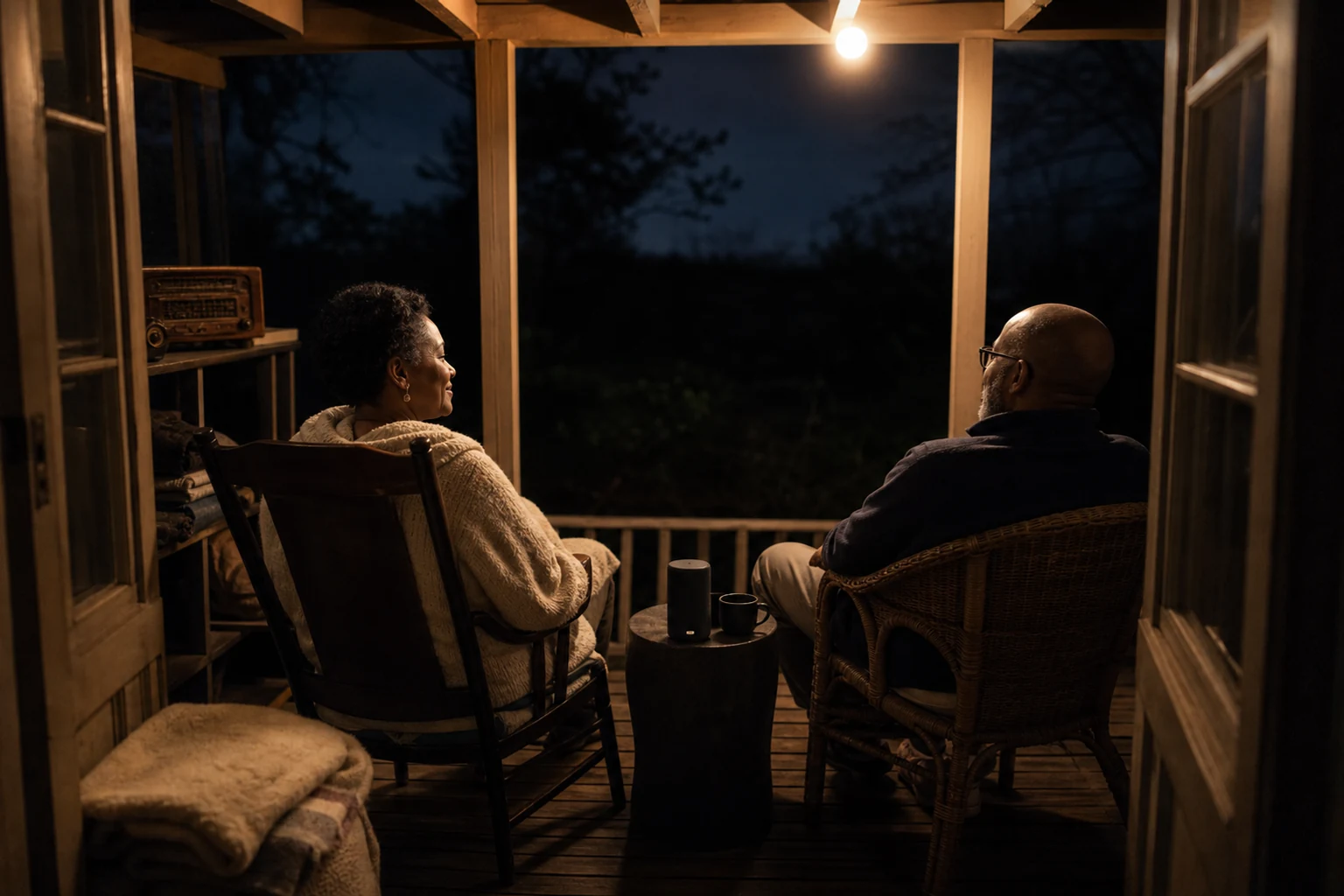
A porch after bedtime, parked car, quiet kitchen, workshop doorway, or walk can give the words enough privacy. If the song mentions desire, conflict, exhaustion, finances, health, parenting stress, work pressure, grief, family boundaries, or a moment he has not shared publicly, keep the first listen between spouses. Turn off notifications, use a neutral file title when surprise matters, and let the track finish without filming his face or asking for a speech. The emotional job is recognition, not reaction capture.
For a birthday or family gathering, create a public-safe version. Confirm children's names and permissions, remove private marriage language, and avoid jokes about age, body, earning, emotional reserve, or household competence. Download two copies, test the actual speaker, and give him control over later sharing. A song about the life he helps hold together should also return control: he decides whether the personal version stays on the porch or moves into the family archive.
A natural setting for mature gratitude, ordinary-life detail, and a spouse-first listen without household interruption.
Side-by-side listening for a restrained husband who may prefer less eye contact and time before responding.
Use humor and family recognition, but remove private desire, conflict, pressure, and details he has not approved.
Keep the public chorus broad enough for others while preserving the full spouse message in the private master.
Story examples
These are transparent story examples, not fake audio demos. They show how real details become a creative direction and a singable lyrical moment.
Story Example
Leah wants a birthday song for her husband Marcus. He takes the early breakfast shift, repairs their son's wooden train, notices when Leah needs ten quiet minutes after work, and restores old radios on the porch. They came through a difficult year of schedule changes by asking for help earlier. The full song is private; a shorter family-safe chorus can play at dinner.
Direction: Warm rock with dry drums, textured electric guitar, and honey-toned organ. Use the porch radio and wooden train as separate images, let the quiet ten minutes reveal his attention, and make the chorus reciprocal: both partners protecting the light for each other.
Story Example
Omar is writing for his husband Ben after two years of marriage and a chaotic apartment move. Ben labels boxes with drawings because both lose the marker, makes sandwiches when decisions stall, and admits when he needs a break instead of pushing through. The song should be funny and affectionate, with no promise language beyond continuing to build the current life.
Direction: Playful indie with clipped guitar, roomy drums, and hand percussion made from box-like textures. Keep the missing marker joke in verse one, turn the requested break into emotional evidence, and let the chorus celebrate changing the list together.
Story Example
Mei thanks her husband Adrian during a year when they have helped his mother recover. He keeps a coat on the third kitchen chair for hospital mornings, shares medical logistics with siblings, and still protects Friday noodles with Mei. Do not include diagnosis, treatment, finances, or call him strong for never struggling. The first listen will be private after dinner.
Direction: Mature soul with electric piano, soft bass, and no dramatic string swell. Let the coat represent the altered routine, use Friday noodles as the marriage returning to itself, and acknowledge that he asks for support rather than carrying everything alone.
Keep exploring
Creatune Personalized Songs
The marriage after the photographs
The life between the milestones
Questions before you create
Include the stage of marriage, one visible contribution, one form of quiet or invisible support, a joke or place he would recognize, what you admire beyond family roles, one shared challenge that is safe to mention, and the message you want him to hear. Add the occasion, audience, privacy boundary, and musical direction.
A husband song is person-led and can happen at any time. It focuses on who he is inside the current shared life and what the spouse notices now. An anniversary song is date-led and usually organizes the relationship from first meeting through milestones and future promise.
Yes, but keep the spouse point of view clear. Use one or two approved family details and let children join a public-safe chorus if appropriate. Do not include minors' private experiences, health, school, or vulnerable moments, and do not let the father role erase who he is as a partner and person.
Describe observable actions, judgment, humor, emotional honesty, craft, or care. Then say what those details mean to you and how support is reciprocated. Avoid praising self-sacrifice, emotional silence, overwork, earning, or the idea that he must carry the household alone.
Use a private first listen when the song includes desire, exhaustion, conflict, finances, health, work, caregiving, or vulnerable admiration. A family gathering can use an approved public-safe edit. Ask your husband before posting the track or a reaction, and confirm the applicable Creatune usage rights.
Your turn
Tell the agent what he does, what it reveals, and how you want the care to become reciprocal. The song can recognize a husband without turning him into a role.
Create a song for your husband