Child
Concrete joy, safety, curiosity, present routines, and words he can understand now rather than a speech for the future.

Preserve a version without trapping him there
Begin with the shoes he refused to take off, the questions asked from the back seat, the sketch folded into every pocket, the first job he handled his own way, or the care he now gives to someone smaller than himself.
Start the song
Replace each blank with real names, moments, and details—the more specific you are, the less generic the song. Everything stays editable in the studio before anything is generated.
What you are making
Parents often carry several sons in memory at once: the child who slept in shoes, the teenager who answered through headphones, the adult loading a first apartment, the person navigating work or love, or the father caring for a child of his own. A song can connect those versions without implying that the earliest one was the truest. The craft lies in choosing one small early behavior, then showing how a present quality has grown from it through his choices—not through a destiny the family claims to have predicted.
Creatune begins by setting the age lens: child, teen, adult, or parent himself. The agent records the giver's point of view, preferred name, an early physical detail, current character, a challenge or transition safe to mention, what the parent admires, family language, the intended message, pressure-sensitive topics, occasion, and playback setting. It checks pride for hidden instructions about achievement, masculinity, career, marriage, parenthood, money, or emotional control before those expectations enter the chorus.
The age-lens timeline
One early image can open the story; the present must decide what the image means.
For a child, use concrete language, short phrases, favorite actions, current safety, and joy. For a teenager, respect privacy, changing identity, friendships, and the fact that public praise can feel like exposure. An adult-son song can connect family memory to his independent choices, work, relationships, place, craft, or way of caring without assessing whether he followed the expected route. When the son is now a parent, the song may recognize the caregiving observed now, but should not imply that parenthood completed him or that every adult son should want it.
Choose an early detail that remains emotionally useful. Changing shoe sizes may frame movement without saying where he must go. A childhood drawing can become evidence of persistent curiosity, not a failed prediction about becoming an artist. Back-seat questions can connect to how he now investigates problems. Then ask what changed. The adult may be quieter, more cautious, less competitive, newly expressive, or rebuilding after a difficult period. Let the current evidence revise the family story rather than forcing him to fulfill it.

Concrete joy, safety, curiosity, present routines, and words he can understand now rather than a speech for the future.
Respect for privacy, emerging identity, imperfect communication, current interests, and encouragement without public exposure.
Independent choices, learned values, changing relationship with parents, and support that does not evaluate his route.
Observed care and adaptation without saying fatherhood completed him or repeating gendered expectations.
The pride-versus-pressure check
Read every line beginning with ‘I hope you’ and ask whether it gives support or issues a plan. Hoping he stays curious may still feel controlling if it is tied to a career he is leaving. Telling him to be strong can imply that grief, fear, dependence, or uncertainty would disappoint the family. Praising leadership may erase the value of collaboration or rest. Replace the instruction with evidence and availability: the parent saw him ask for help, choose fairness, begin again, protect a boundary, or care for someone without needing credit—and will remain available as his next chapter takes shape.
Pride can name effort, judgment, creativity, humor, gentleness, accountability, persistence, or the courage to change direction. It should not rank him against siblings or peers. Avoid claims about being the man of the house, carrying a family name, continuing a legacy, providing, winning, marrying, or giving grandchildren unless he welcomes those ideas. If the relationship includes regret, distance, or repair, choose one honest job. Do not make a celebration song demand forgiveness or use his milestone as a stage for a parent's apology.
A choice he made under ordinary or difficult conditions, shown through action rather than a fixed family label.
Keep siblings, peers, grades, earnings, milestones, and family expectations out of the proof for his worth.
Availability, trust, room to change, and willingness to listen—not an instruction about which path will make the parent proud.
A gift may acknowledge distance, but should not demand reconciliation, absolution, or a public answer.
From small body to chosen direction
Choose three images at most: an early object, a threshold, and a present action. The early object may be too-large boots, a paper airplane, a red backpack, a wooden spoon, a library card, or a toy kept for years. The threshold could be a school gate, first solo journey, first shift, difficult call, changed course, new key, or moment he asked for help. The present action should show ownership: cooking for friends, returning to study, caring for a relative, building a shelf, tending a garden, learning a language, or choosing a quieter life.
Warm folk-rock gives a timeline physical movement and keeps the chorus grounded. Uplifting pop can suit a birthday or departure if its lift celebrates possibility rather than predicted success. Piano ballad works for a private adult message when the lyric remains restrained. A child-friendly acoustic song needs shorter lines, repetition, and no adult burden placed on the child. Describe musical traits rather than requesting a real artist, and choose a vocal point of view the son can comfortably hear from this parent or family group.
One item or repeated action that preserves a version of him without claiming it foretold his whole life.
A leaving, beginning, setback, request for help, boundary, or choice that changed the parent-son relationship.
Evidence of who he is now through a decision, practice, care, craft, friendship, or way of meeting difficulty.
A chorus that offers trust and belonging while leaving career, place, relationships, and identity in his hands.
Age changes the room
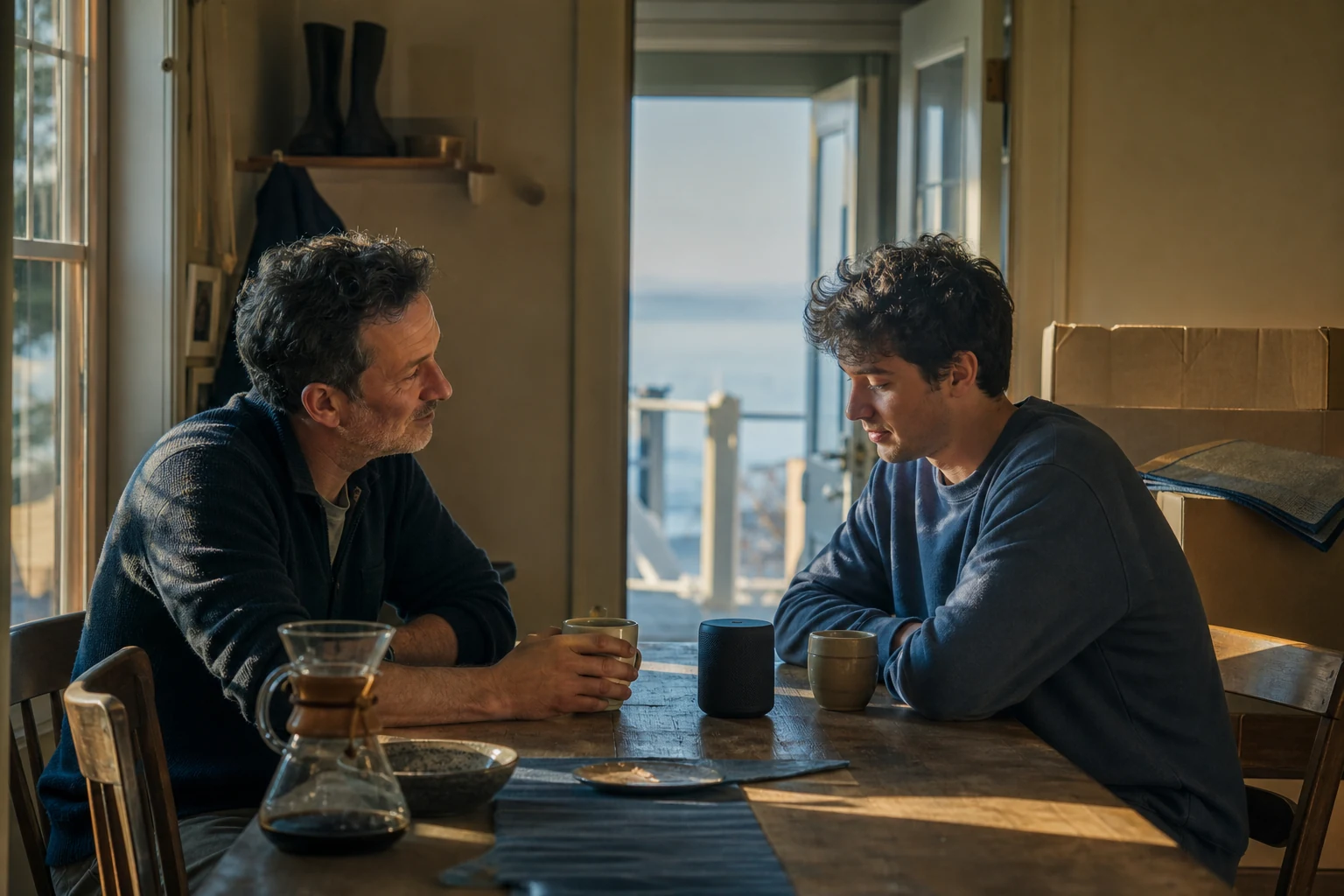
For a young child, play the track in a familiar room and keep the message safe, direct, and joyful. For a teenager, offer headphones or a private file before suggesting any family playback. A departure song can accompany packing or a final drive without framing leaving as abandonment. An adult son may prefer a quiet visit, workshop, porch, or direct message. If the song includes identity, relationships, health, work, money, grief, school, conflict, or a difficult transition, ask him before anyone else hears it.
Confirm the name and pronunciation, remove comparisons, and check that childhood stories are his to share. Download the track, test the speaker, and let him receive it without a camera. Parents often own the memory of caring for a child, but the adult described in that memory owns how it becomes public. If he wants to share later, create the appropriate edit. A song that promises support should demonstrate it through consent as well as lyrics.
Short, concrete, joyful, age-appropriate, and free from adult expectations or future family narratives.
Headphones, no forced family reaction, no school or identity exposure, and permission before public playback.
Pack, drive, or threshold imagery with trust and practical belonging—not guilt for moving forward.
Private, specific, and open-ended, with space after the song rather than a required answer or public response.
Story examples
These are transparent story examples, not fake audio demos. They show how real details become a creative direction and a singable lyrical moment.
Story Example
Rina writes for her 24-year-old son Caleb before he moves to another city. As a child he refused to remove red rain boots; now he walks to work in all weather and volunteers to repair bicycles on Saturdays. He changed career direction after a difficult first year. The message is that home remains available, not that he should return or prove the new path succeeds.
Direction: Warm folk-rock with brushed drums, acoustic guitar, and small electric lift in the chorus. Use the changing shoes as time evidence, make bicycle repair the present choice, and let the final line leave the door available without pulling him backward.
Story Example
Two parents create a private sixteenth-birthday song for son Leo. He asked endless astronomy questions from the back seat, now builds small radio projects, and recently chose to leave a competitive club that was making him unhappy. Do not mention grades, college, masculinity, or call quitting failure. He prefers upbeat music and will hear the song with headphones first.
Direction: Uplifting pop with light electronic drums, guitar, and a chorus that opens without becoming an achievement anthem. Connect the back-seat questions to current self-trust and treat leaving the club as a thoughtful boundary, not a detour from success.
Story Example
Elias writes for his adult son Jonah after watching him care for a new baby. Jonah tests food temperature with the same small spoon Elias once used for him, asks for help when exhausted, and sings improvised weather reports. Avoid saying fatherhood completed Jonah, discussing fertility, or comparing parenting styles. The song is private.
Direction: Restrained piano with a low close vocal and very light strings only at the end. Use the spoon as generational echo, make asking for help evidence of judgment, and celebrate one current chapter rather than defining Jonah by parenthood.
Keep exploring
Creatune Personalized Songs
Two stories, one family culture
Some fathers speak in actions
Questions before you create
Include his age and current life stage, one early action or object, two present-day qualities or choices, a challenge or transition safe to mention, what you admire, the message you want him to hear, and the occasion. Add privacy boundaries, name pronunciation, and musical direction.
Praise observed choices and character rather than outcomes or a prescribed path. Remove comparison, grades, earnings, career, masculinity, marriage, children, winning, and family legacy unless he welcomes them. Offer trust, availability, and room to change rather than instructions about what should happen next.
Yes. Address the person he is now, use childhood memory as one opening image, and focus on independent choices, current values, and the changing parent-son relationship. Do not freeze him inside childhood or publish stories he would prefer to keep private.
Yes, when he has agreed that the topic is safe. Focus on the choice, support, boundary, or quality that matters rather than diagnoses, conflict, money, failure, or private detail. A celebration song should not demand reconciliation, explain his life for him, or turn hardship into proof of worth.
Match the setting to his age and privacy. Give teens and adults a private first listen. Remove identity, relationships, health, school, work, conflict, and vulnerable childhood details from public versions. Ask before sharing the track or reaction, and confirm the applicable Creatune usage rights.
Your turn
Tell the agent what that early detail became in his own hands and what support sounds like now. The next direction remains his to choose.
Create a song for your son