Firsthand story
An event the grandparent told, with the wording, objects, location, and uncertain details kept visible rather than smoothed away.
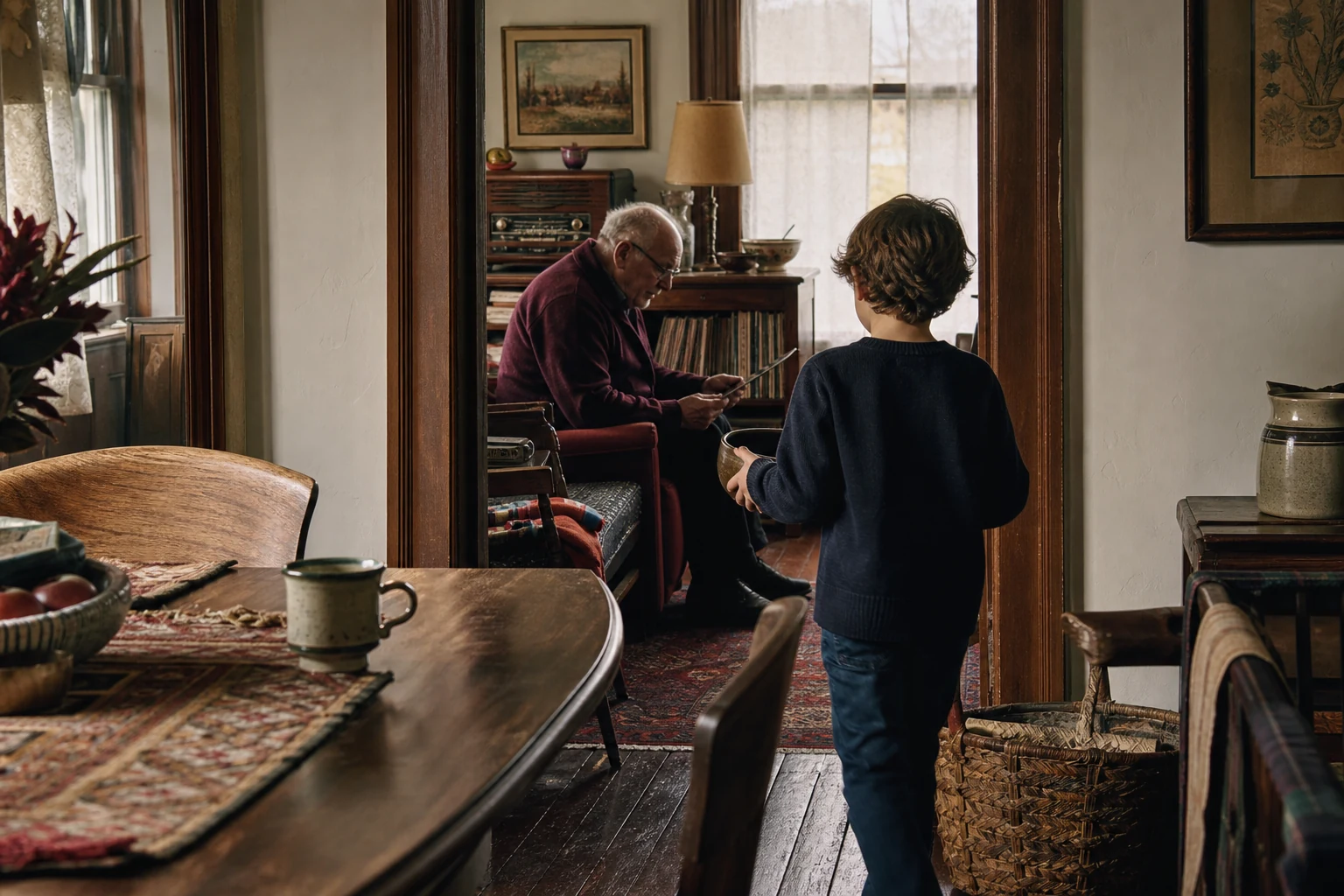
A family archive you can hear
Start with the recipe that was never measured, the road out of one town, the phrase everyone repeats, the chair saved at Sunday lunch, or the story grandchildren ask to hear again.
Start the song
Replace each blank with real names, moments, and details—the more specific you are, the less generic the song. Everything stays editable in the studio before anything is generated.
What you are making
Grandparents are often asked to stand for an entire family origin, culture, hardship, or moral code. The strongest song makes the scale smaller and more accurate. It begins with the flour added by touch, the blue tin of buttons, the bus route to a first job, the word said before every meal, the radio carried between rooms, or the story whose timing changes slightly at every telling. Those details allow a listener to hear a person and a household before the chorus names legacy.
Creatune asks whether the song is for one grandparent or two, which grandchildren or relatives are contributing, what languages and names belong in the lyrics, and what occasion will hold the first listen. The agent builds a legacy archive from stories, places, recipes, sayings, crafts, music, work, migration, family rituals, and values. It also records disagreements, missing information, permissions, translation decisions, health or grief boundaries, and whether the table needs a shorter public-safe version. The goal is continuity, not a polished myth.
Story, recipe, saying, place, value
Family memory becomes safer and more vivid when every large claim has a small source attached to it.
Create five folders. Story holds one event the grandparent has told directly. Recipe includes ingredients, sounds, gestures, and who learned beside them—not a claim that food alone defines a culture. Saying records the exact phrase, language, pronunciation, meaning, and who can confirm it. Place includes a room, street, landscape, workshop, garden, house of worship, or route with sensory detail. Value names what later generations actually practice: welcoming one more person, repairing before replacing, asking precise questions, sending food home, making music, saving letters, or learning a new place without erasing the old one.
Mark every source as firsthand, confirmed by several people, remembered differently, or still uncertain. A lyric can hold uncertainty beautifully: ‘the station changes in each telling’ is more honest than inventing a date. If the family story involves migration, war, poverty, discrimination, adoption, estrangement, illness, faith, or loss, ask what the grandparents want named and who else owns the account. Do not turn endurance into a demand that descendants be grateful, repeat sacrifice, or present the family as unified when its history is more complicated.
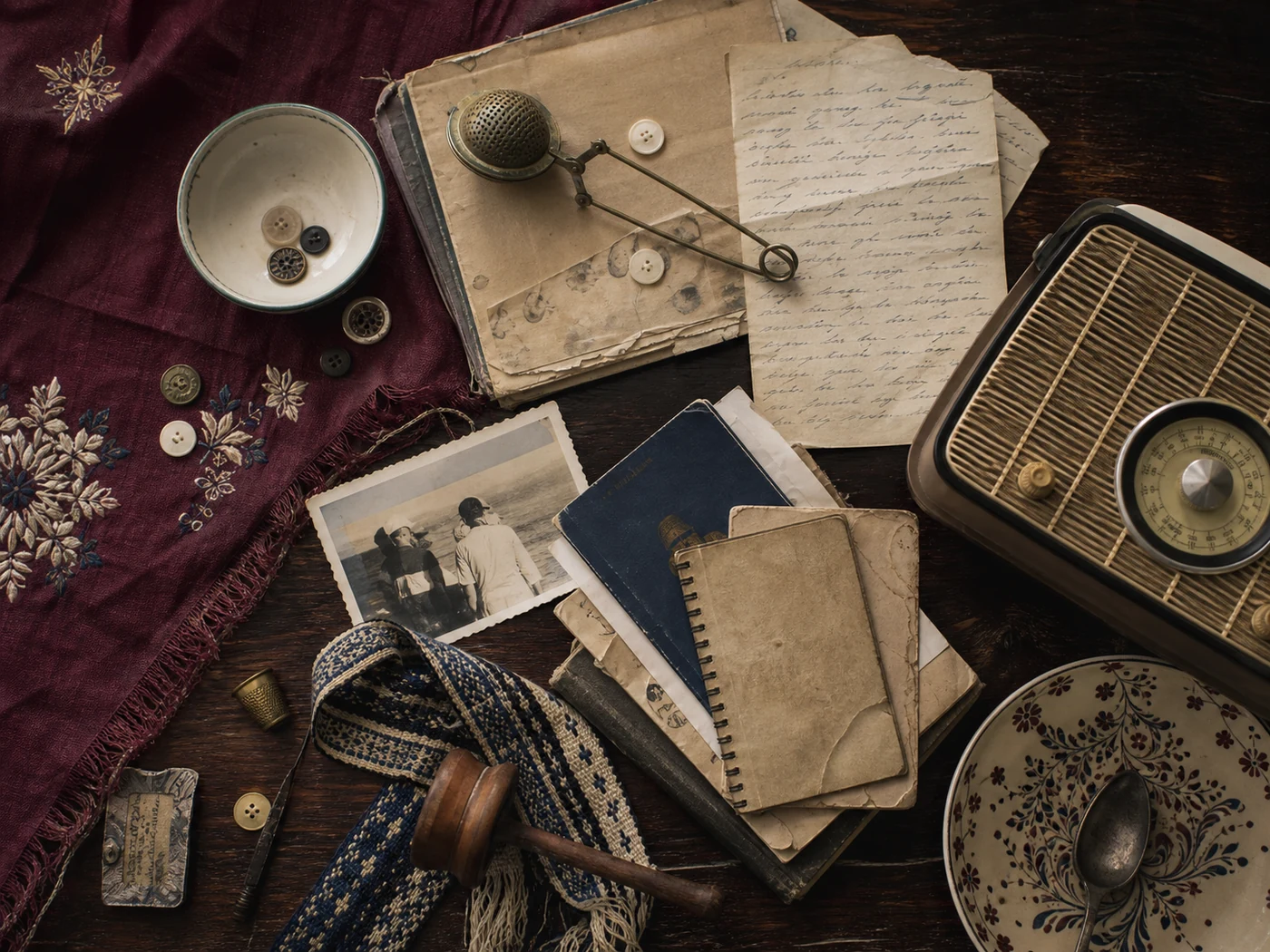
An event the grandparent told, with the wording, objects, location, and uncertain details kept visible rather than smoothed away.
A recipe, craft, song, greeting, tool, route, or weekly practice someone can still demonstrate or describe with the senses.
Preferred names, exact phrases, translations, and pronunciation reviewed by a speaker instead of guessed phonetically.
A behavior later generations actually continue, not a flattering virtue assigned to the grandparent after the fact.
The multigenerational memory board
Ask each contributor for one memory in the same compact format: an object, an action, a sentence, and what it changed. A young grandchild might remember the red stool and flour on the floor. An adult grandchild may remember being collected after a difficult exam. A son or daughter may hold an earlier account of a first apartment or night shift. Group the answers by repeated patterns—making room, teaching through work, playful stubbornness, keeping language alive, adapting a tradition—then choose two patterns for the song. Credit every contributor in a separate card or archive rather than forcing names into verses.
Be explicit about the narrator. ‘I’ works for one grandchild and can move between personal memory and a sourced older story. ‘We’ should be used only for experiences and values the contributors genuinely share. A duet can represent two generations without pretending to speak for the entire family. If the song is for two grandparents, give each person distinct evidence and show where their practices meet; do not make one grandparent an accessory in the other's biography. Confirm family titles such as Nana, Nonno, Abuela, Dadi, or chosen names exactly as the recipients prefer them.
A close first-person thread with a small number of sourced stories and no claim to represent every relative.
Shared collection prompt, clustered evidence, one coherent chorus, and contributor credit outside the lyric.
Separate objects, phrases, and character evidence before the song shows the household or practice they built together.
A reviewed phrase or refrain with correct pronunciation and meaning, never accent imitation or decorative foreign words.
Origin → adaptation → continuation
A useful timeline has three movements. Origin introduces the place, skill, object, or decision the grandparents describe themselves. Adaptation shows how the practice changed in a new house, country, job, family structure, or era. Continuation reveals what descendants do now because of it. The recipe may have lost an ingredient and gained a Sunday. A workshop habit may become the way grandchildren repair a bicycle. A repeated phrase may become a question the family asks before making decisions. The chorus should carry that living practice, not merely promise never to forget.
Choose musical age without using nostalgia as costume. Orchestral folk can connect acoustic instruments, patient storytelling, and a chorus large enough for several voices. Vintage jazz can reflect a real listening history when described through upright bass, brushed drums, piano, and close ensemble phrasing—not an imitation of a famous singer. Warm choral pop suits a table or family film when the melody remains singable. A single voice with sparse guitar may be more respectful when health, grief, or contested history needs quiet. The recipient's taste and hearing comfort matter more than a stereotyped ‘grandparent’ sound.
The story-bearing place, object, phrase, craft, decision, or route as the grandparents remember and describe it.
What changed across homes, languages, jobs, family structures, technology, distance, or time.
The specific action a child or grandchild practices now, with room for the next generation to adapt it again.
Tempo, range, length, vocal clarity, speaker volume, and arrangement chosen for the actual listeners at the table.
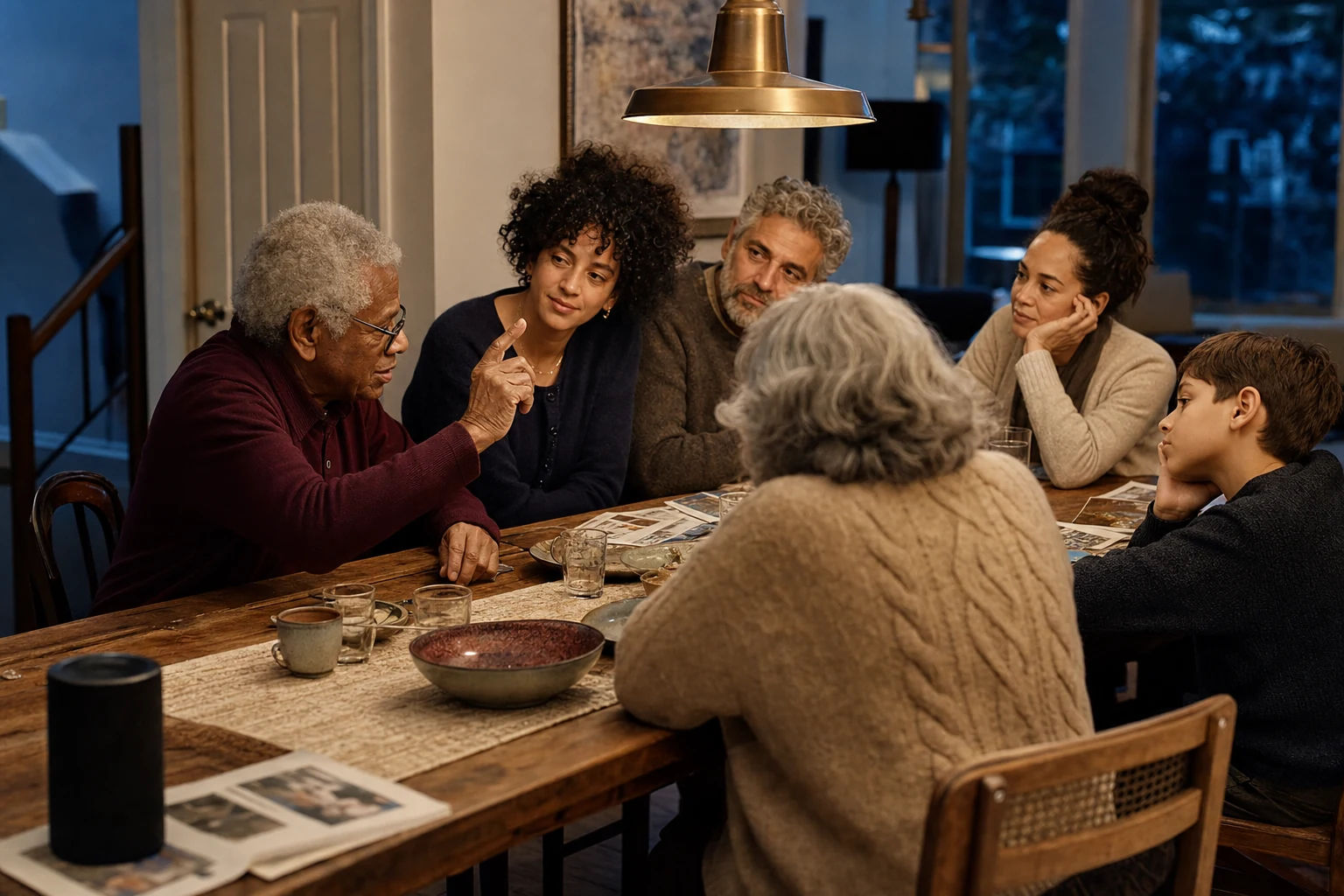
Archive and first listen
Before a birthday, anniversary, reunion, Grandparents' Day, or holiday table, send the brief and lyrics to one source reviewer and one privacy reviewer. Confirm names, dates, translations, relationships, photographs, religion, migration details, and the wording of any difficult period. Download the final track, test it at conversational volume, provide printed lyrics in readable type, and keep the introduction short. Let the grandparents correct the story afterward. Their revision can become part of the archive rather than an error that spoils the gift.
Pair the song with source material: a copied recipe, recorded oral-history excerpt, captioned photographs, a map marked by the grandparents, or a small booklet that credits each contributor. Store the audio and text in more than one family-controlled location. Do not post old documents, addresses, immigration records, children's faces, medical details, or a reaction video because they looked moving in the room. The most valuable outcome may be the conversation after the final note, when a grandparent says the road was different and begins telling it again.
A short reviewed introduction, readable lyrics, safe volume, a local file, and no camera circle demanding a reaction.
Full names, difficult history, intimate stories, and longer recordings kept only with the family's informed permission.
Verified captions and images supporting the timeline while the song focuses on one legacy thread instead of every milestone.
Invite the grandparents to correct, add, translate, or retell; preserve that new version alongside the song.
Story examples
These are transparent story examples, not fake audio demos. They show how real details become a creative direction and a singable lyrical moment.
Story Example
Three adult grandchildren write for Rosa and Gabriel's fiftieth anniversary. Rosa makes bread by touch and Gabriel always pulls an extra chair from the hallway. They moved cities early in their marriage, but the exact year differs across family accounts. Use their preferred Spanish family titles only after pronunciation review. Do not mention finances or frame migration as a single heroic sacrifice. The song will play at a long table.
Direction: Warm choral pop with nylon guitar, hand percussion, and three distinct verse voices joining a narrow final chorus. Let hands and the extra chair carry the legacy; keep the uncertain year out and make hospitality a practice descendants already continue.
Story Example
Priya creates a private birthday song for her grandmother Leela. Leela kept buttons in a blue biscuit tin, altered school uniforms for relatives, and taught Priya to mend a torn seam before buying something new. Include one confirmed phrase in Hindi with family-reviewed pronunciation. Do not imitate an accent or summarize hardships Leela has not chosen to discuss.
Direction: Orchestral folk with close female vocal, plucked strings, low harmonium color, and a small string lift only in the last chorus. Use the button tin as an archive of repair and let the confirmed phrase appear once, clearly, with the English meaning carried by the surrounding lines.
Story Example
Caleb thanks grandfather Arthur for repairing radios on Saturdays, labeling every screw, and asking grandchildren to explain how they knew an answer. Arthur loves small jazz ensembles. The song is for a private family film; exclude health changes, military history, and a dispute about the workshop. The continuing value is careful curiosity, not mechanical talent alone.
Direction: Vintage-jazz language through brushed drums, upright bass, muted brass, and conversational piano without copying a real recording. Let radio static become the opening texture, make the labeled screws a method, and put the question ‘how do you know?’ at the center only after confirming the wording.
Keep exploring
Creatune Personalized Songs
Two stories, one family culture
Many branches, one singable line
Questions before you create
Include whether the song is for one grandparent or two, the contributor point of view, one sourced family story, two sensory rituals or objects, preferred names and pronunciation, any reviewed phrase or translation, what the next generation continues, the occasion, and privacy boundaries. One strong legacy thread is better than a complete family timeline.
Ask each person for one object, action, sentence, and effect. Cluster repeated patterns and choose two for the lyric, then credit every contributor in a separate booklet or archive. Use distinct verse voices or one shared chorus only when the group truly shares the claim.
Yes, when a fluent reviewer confirms the exact wording, meaning, pronunciation, and whether the recipient wants it used. Keep the phrase purposeful and surrounded by enough context to carry meaning. Do not imitate an accent, invent phonetic spelling, or add decorative words from a language nobody on the project can verify.
Only with informed permission from the grandparents and other people who own the story. Mark uncertainty, avoid invented dates or heroic simplification, and make a private version when the material is not table-safe. The song should not use hardship to demand gratitude or portray a complicated family history as universally agreed.
Store the final audio, lyrics, source notes, pronunciation guide, translations, and contributor credits in at least two family-controlled locations. Pair the track with copied recipes, captioned photographs, or an oral-history recording when permission allows. Invite corrections and keep revised stories beside the song rather than treating it as the final official archive.
Your turn
Bring one source, one sensory ritual, and the practice your generation carries forward. The agent will help many memories become one honest song.
Create a song for your grandparents